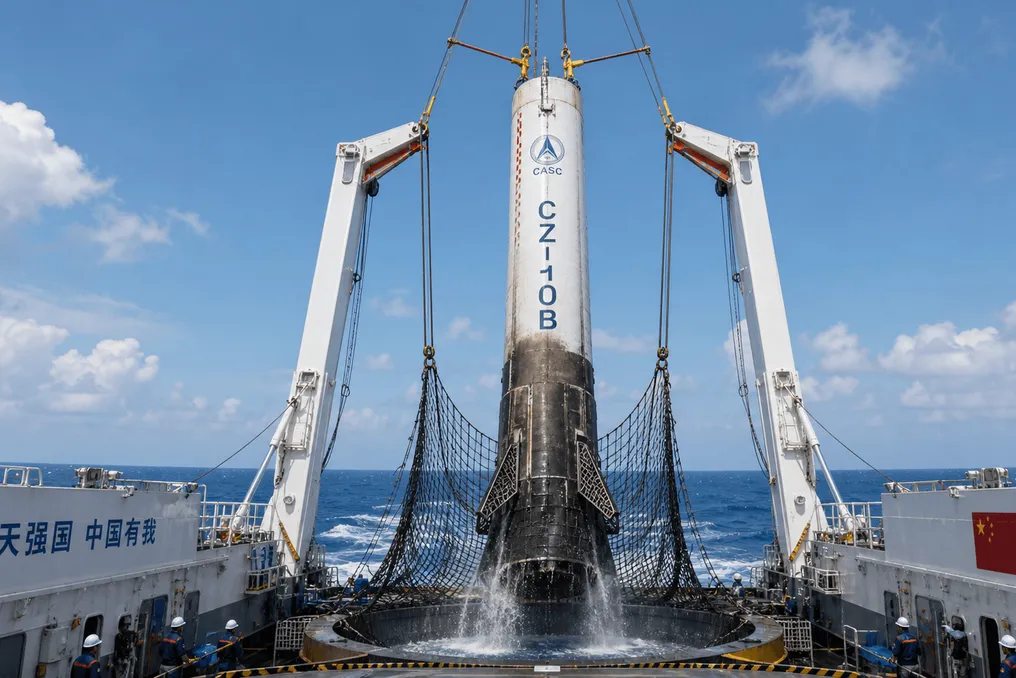
The successful demonstration of the reusability of the Long March 10B rocket by CASC has significantly changed the competitive landscape for private Chinese startups in the rocket industry. CZ-10B, developed by CASC—the same state-owned enterprise responsible for China's lunar and space station programs—showed that China's state sector is capable of producing a large reusable rocket that can compete with the SpaceX Falcon 9.
New Requirements for the Private Sector
For private companies, this raised the question of what competitive advantage they still possess. Over the last decade, Chinese private rocket companies have achieved significant successes: iSpace Hyperbola-1 became the first private rocket to reach orbit; LandSpace Zhuque-2 was the world's first methane and liquid oxygen rocket to reach orbit; and Space Pioneer Tianlong-2 was the first private liquid-fueled rocket in orbit.
Barriers in Rocket Development
However, only LandSpace Zhuque-3 has attempted first-stage recovery, and its attempt in December 2025 ended with an anomaly during landing. Obstacles exist in two aspects. Firstly, payload capacity: CZ-10B delivers about 16 tons to low Earth orbit in reusable mode. Zhuque-3 targets 21 tons in single-use mode and 14 tons in reusable mode. Tianlong-3 aims to deliver 17 tons in reusable mode and 22 tons in single-use mode, but the first flight of Tianlong-3 in 2025 failed, and the vehicle has not yet demonstrated recovery.
Only Zhuque-3 has conducted a recovery attempt, and achieving orbit with recovery remains unattainable for any Chinese private company. Secondly, there is operational reusability: even a successful single recovery does not create a reusable rocket program. Critical indicators include reflight cycles, turnaround time, and the cost per flight after multiple uses.
Alternative Strategies and Niche Advantages
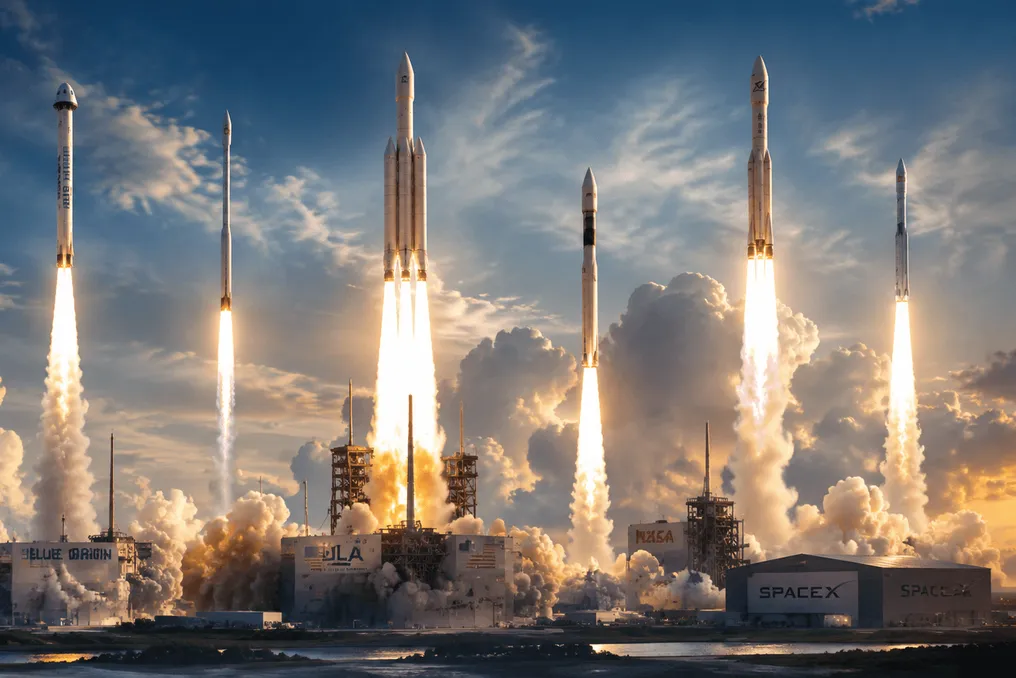
As the leading reusable rocket sets standards for cost and capability, alternative approaches—such as discontinuing the operation of Space Launch Delta IV Heavy due to uncompetitiveness against Falcon 9 pricing, MadeInSpace Curiosity's focus on solid-fuel rockets, or Orbis' pursuit of orbital servicing—underscore the complexity of competition. Nevertheless, private Chinese rockets can find their niche. LandSpace's methane engine technology surpasses all others except SpaceX Raptor in flight operational experience. Space Pioneer's stainless steel construction for Tianlong-3 allows for reduced costs and increased thermal cycle count compared to aluminum-lithium alloys. Furthermore, JianYuan Technology's approach to recovery using a 'pole' at sea could potentially provide faster turnaround times than net-based recovery.
The Future of the Launch Market
If private companies can achieve five or more launches with lower infrastructure costs than CZ-10B's sea operations, they can offer differentiated launch services. The growth of satellite internet constellations creates short-term demand that may be large enough for several players. However, private companies must quickly transition from the development stage to the operational stage. The era of demonstrating individual capabilities is ending; the era of reliable and cost-effective launch services is beginning. Private rockets that achieve operational reusability within the next 18 months will secure a place in the constellation market. Those remaining in development by 2028 will face increasingly fierce competition from state-owned reusable rockets and direct SpaceX services.