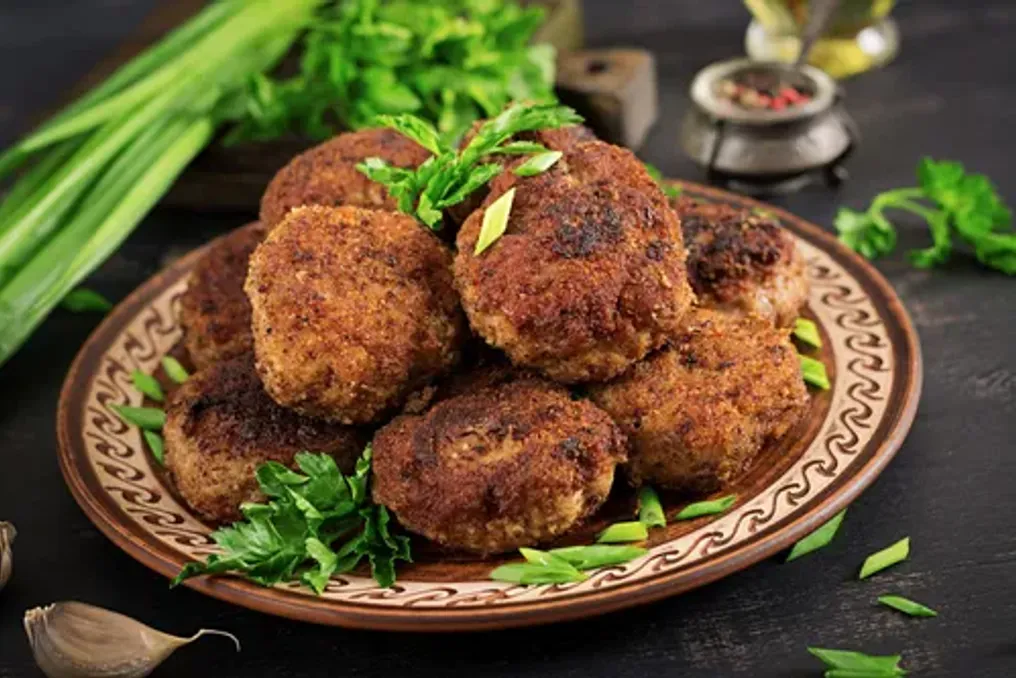
Homemade frykadelles are a versatile and simple dish often prepared in South Africa. However, even such a simple recipe can become difficult if they turn out dry inside or fall apart when frying.
Homemade frykadelles are a versatile and simple dish often prepared in South Africa. However, even such a simple recipe can become difficult if they turn out dry inside or fall apart when frying.
There is a reliable way to make frykadelles that does not require a large number of ingredients or complex techniques. These meat patties can be served with mashed potatoes and onion sauce, drizzled with tomato relish, added to a simple pasta, or used as a snack.
To prepare, you will need 700g of beef mince, one finely chopped onion, 1 tablespoon of grated garlic, 2 tablespoons of chopped parsley, 1 teaspoon of salt, 2 teaspoons of ground black pepper, four slices of stale white bread soaked in milk and lightly squeezed (or the equivalent amount of breadcrumbs), ½ teaspoon of chili flakes or finely chopped fresh chili (optional), and one egg.
First, all ingredients are mixed in a large bowl until evenly distributed. It is important to avoid overmixing the mince, as this can make the frykadelles tough instead of tender. After that, cover the bowl with plastic wrap and chill in the refrigerator for 30 minutes so the mixture firms up and is easier to shape.
Using clean hands, divide the mixture into equal portions, roll each into a ball, and then gently flatten it into a thick patty. Heat oil in a large pan over medium heat and fry the frykadelles until golden brown on both sides and fully cooked. This usually takes about five to seven minutes per side. It is recommended to let them rest slightly before serving.
The dryness of frykadelles is most often related to three factors. Using very lean mince leaves little fat to retain moisture during cooking; fattier mince yields a juicier result. Overmixing the meat makes the texture dense and tough, so mix only until uniform. Another main cause is overcooking. Frykadelles should be cooked through, but not left in the pan longer than necessary. The soaked bread also plays an important role, helping to retain moisture inside the meat.
If frykadelles fall apart while frying, it usually means the mixture does not hold together well enough. The egg acts as the main binding agent, and the soaked bread or breadcrumbs help absorb moisture and provide structure. Chilling the mixture before shaping also noticeably improves the situation by allowing all components to firm up. Another common mistake is turning them too early; you must allow the first side to form a good crust before flipping.
Frykadelles can be baked, which is a convenient option, especially when cooking for family or large batches. Preheat the oven to 200°C. Place the formed frykadelles on a baking sheet lined with parchment paper or greased with oil, leaving a small space between them. Bake for about 20–25 minutes, turning them halfway through for even browning. For a deeper color, you can switch to grill mode for the last two or three minutes, monitoring the process carefully.
Once you have mastered the basic recipe, it is easy to adapt. Adding one teaspoon of Worcestershire sauce can give the dish a rich flavor, and a tablespoon of tomato paste will enrich the meat mixture. You can also incorporate finely grated carrots or zucchini for extra moisture, substitute parsley with fresh coriander for a different flavor profile, or add spices such as smoked paprika, ground coriander, or a pinch of cumin. Adding a handful of grated cheddar cheese will make the filling richer, and finely chopped green onions or caramelized onions will add another layer of flavor.
Traditional side dishes include mashed potatoes, onion sauce, and seasonal vegetables. They also pair well with rice and tomato relish, can be wrapped in a bun with chutney, or added to a simple tomato sauce for a light weekday dinner. With a reliable frykadelle recipe, you can regularly cook this dish, as it is affordable, easily adaptable, and suitable for any occasion—from a family dinner to an informal weekend snack.
For those who wish to improve health monitoring and connectivity, there are options for smartwatches on sale on Amazon suitable for various profiles and needs.
The Samsung Galaxy Fit3 offers a 1.6-inch AMOLED screen, presenting a light and comfortable design for daily use. This model includes health monitoring, physical exercise tracking, water resistance, and has a long-lasting battery, ensuring Samsung's reliability.
Xiaomi has made the Redmi Watch 5 Active available as an economical and feature-rich alternative. This watch features a large screen, heart rate monitoring, sleep tracking, various sports modes, and good battery life, making it perfect for beginners in the smartwatch world who want to save money.
The Bettdow SmartWatch stands out due to its integration with the Alexa virtual assistant, in addition to having a touch screen and IP68 water certification. With over 100 sports modes, smartphone notifications, and an attractive design for both genders, it represents a versatile choice for those who prioritize functionality on their wrist.
Due to the quick availability of the promotional items, it is recommended to access the links, compare the options, and purchase the smartwatch before the prices change.
Alsace, an area historically marked by territorial conflicts that defined the two world wars, currently belongs to France but retains numerous Germanic origins.
This region, which oscillated between France and Germany over the last 160 years, is a recurring theme in history studies to understand the confrontations in Western Europe during the 19th and 20th centuries. The turbulent past of disputes is reflected today in the culture and architecture of Alsace.
Although it is French, Alsace exhibits many typical constructions of Germanic customs, visible in Strasbourg, its capital. The region is also famous for its award-winning wines and preserved medieval villages, dating back to periods before identity disputes.
The French call the area Alsace, while the Germans call it Elsass. Located further east of the current French territory, the region was under the Holy Roman Empire for centuries, which gave it a notable Germanic influence. In Strasbourg, for example, Johannes Gutenberg significantly advanced the development of printing from the 15th century, transforming communications and religion.
German dominance only began to be challenged in the 17th century, when the reign of Louis XIV sought to incorporate these lands into France, initiating a process of territorial dispute in subsequent centuries. Although a large part of the territory formally belongs to France, the long presence of German power remained evident in the language, customs, and local laws.
The reconquest of the region became a frequent reason for wars between neighbors. In 1871, Germany annexed the area after the Franco-Prussian War. However, the story did not end there: Alsace was a central point of disagreement during the First World War, returning to French possession after the Allied victory. During the Second World War, Hitler also aimed to reclaim Alsace, and the Germans again raised their flag in the region. France regained control of Alsace in 1945, maintaining it since then.
The successive occupations left deep marks, making Alsace a unique area within France, distinct from the more uniform national identity found in other parts of the country. Strasbourg deserves a visit to experience this historical and geographical mix, featuring half-timbered buildings traditionally associated with the Germans, contrasting with French flags.
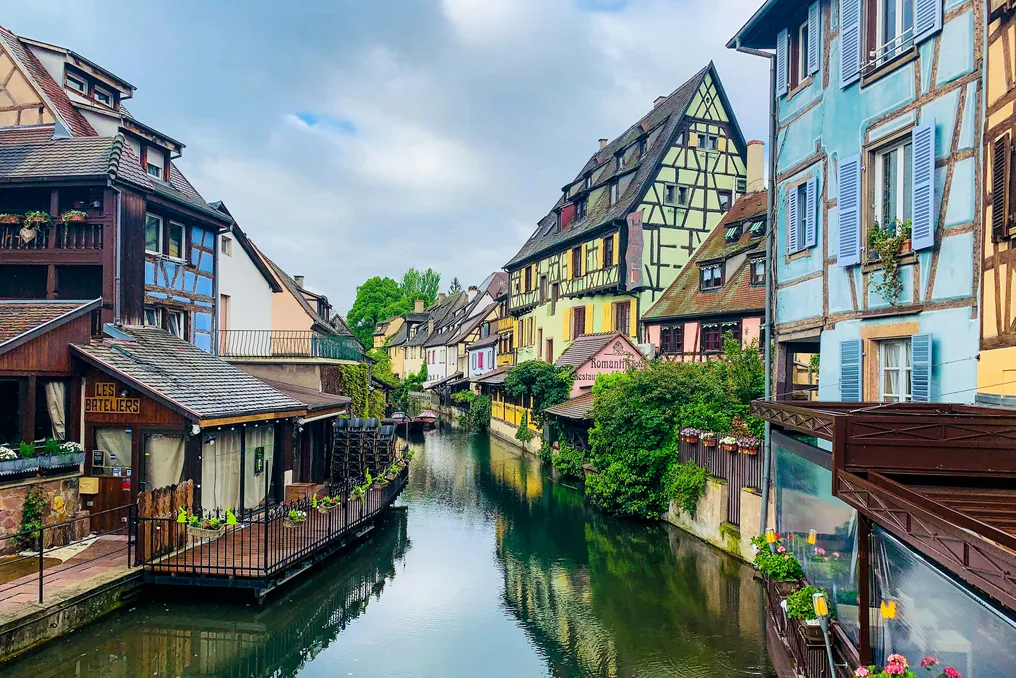
At the end of the year, Strasbourg transforms into the 'Christmas Capital,' hosting Christmas markets similar to those found across the border. Furthermore, smaller towns are worth exploring at other times. Colmar, with roots in the 9th century, is known for its Christmas market and has an old area with canals, earning the nickname Petite Venise (Little Venice).
Riquewihr, a neighboring town, shows a remarkable Germanic influence even in its name. With only a thousand inhabitants, the locality preserves almost intact 16th-century buildings, without new constructions, and is part of routes celebrating local wine tradition.
Wine tourism lovers can travel the Route des Vins d’Alsace, which covers 170 km of producer properties. The area is famous for its white wines, whose grape varieties, such as Riesling, Gewürztraminer, and Pinot Gris, carry German references in their names.
Another relevant tourist spot is the imposing castle of Haut-Kœnigsbourg. Probably originating in the 12th century, this fortress stands out for its privileged position on a cliff in the Vosges mountains, 757 meters above sea level, offering a panoramic view and being one of the most visited places.
The project team provided a description of the Casa Muda L11 property. This project is located on an agricultural plot designated in the Muda Detail Plan, within the Rural Impact Zone – South, in the municipality of Grandola.
The land area is quite large, amounting to about 5 hectares. This allows for the construction of a 500 m2 building, which will be situated away from the access road and neighboring plots.
The new structure was placed in the central part of the plot, adjacent to the western limit of the construction. It is located in an area where a small clearing was previously situated, on the border between pine vegetation and a small stream, near other types of trees such as deciduous species.