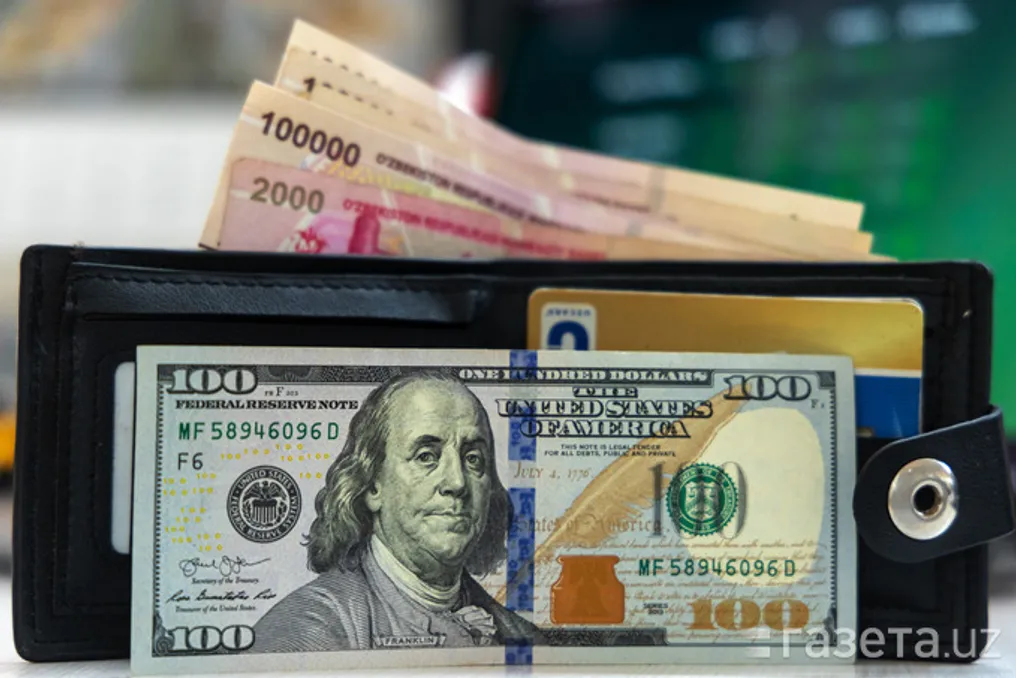
The Central Bank of Uzbekistan presented a financial stability review for 2025, according to which the level of dollarization in both loans and deposits in the country's banking system continued to show a downward trend.
Dynamics of Currency Operations
At the beginning of 2026, the share of loans issued in foreign currency accounted for 39% of the total loan portfolio of banks. During the reporting year, this share decreased by almost four percentage points. Similarly, the share of deposits attracted in foreign currency fell from 25% to 21% of the total deposit portfolio.
The Central Bank emphasizes that the reduction in the share of loan dollarization helps reduce risks associated with exchange rate changes. When the local currency weakens, payments on foreign currency loans are expressed in a larger number of soms, which could potentially worsen the financial position of borrowers and increase the number of non-performing loans.
Growth in Foreign Currency Liabilities
Despite the decrease in the percentage share of foreign currency operations in overall portfolios, their actual volume in dollar terms increased. By the end of 2025, the balance of loans in foreign currency grew by 11% in dollar terms, and foreign currency deposits grew by 21%. The pace of this growth also accelerated: the annual increase in foreign currency loans increased by eight percentage points compared to 2024, and the increase in deposits by 19 percentage points.
Thus, the reduction in the level of dollarization only reflects a smaller share of foreign currency in rapidly growing loan and deposit portfolios, but does not mean a decrease in the actual volumes of foreign currency requirements and liabilities. The Central Bank warns that the growth of foreign currency loans expands credit risk, which may manifest when the exchange rate changes. The growth of foreign currency deposits, in turn, may increase liquidity risks, as depositors may transfer their funds to foreign assets if the opportunity for free international investment arises.
Currency Gap and Risks
By the end of the year, the difference between the foreign currency requirements and liabilities of the banking system increased to 4 trillion soms. According to the Central Bank's estimates, the expansion of this gap signals a possible increase in bank losses if currency risks materialize. Nevertheless, the overall currency position of banks remained within established norms. On January 1, 2026, the ratio of net open foreign currency position to regulatory capital was 2.7%, which, in the opinion of the Central Bank, indicates the banking system's sufficient ability to cover potential losses from currency risks.
Previously, the Chairman of the Central Bank, Timur Ishmetov, noted that the de-dollarization of the economy—the reduction in the share of foreign currency deposits and loans—is one of the positive results of increasing confidence in the national currency. Since 2018, the share of deposit dollarization has fallen from 41.2% to 20%, and for loans—from 54.3% to 37.4%.