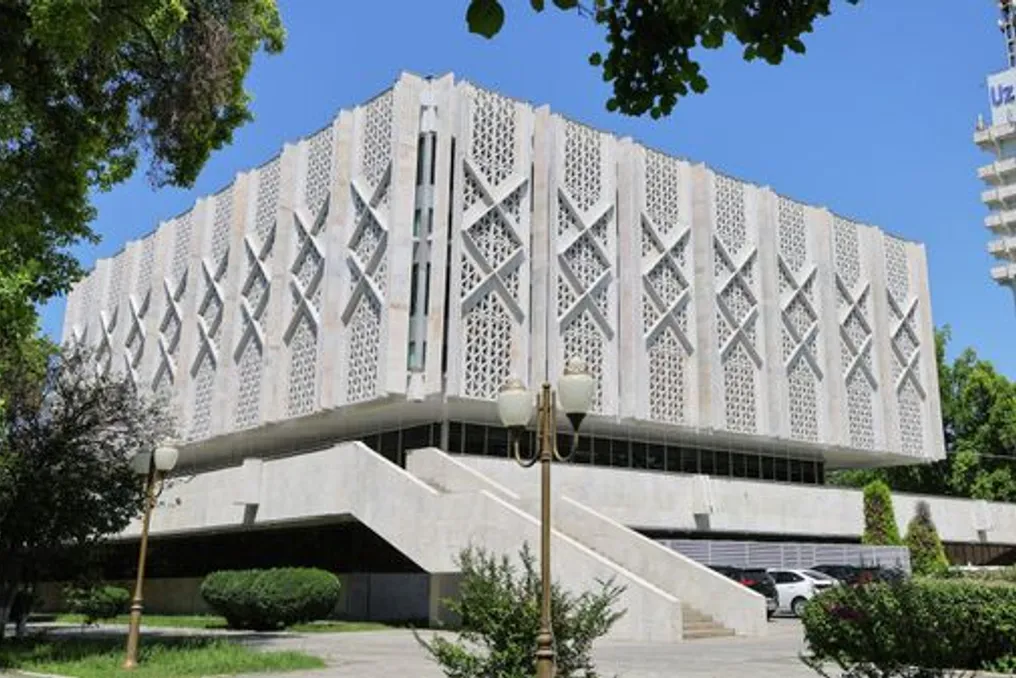
At the 48th session of the UNESCO World Heritage Committee, held in Busan, Republic of Korea, the national nomination 'Architecture of Tashkent Modernism. Contemporaneity and Traditions in Central Asia' was submitted to the UNESCO World Heritage List.
Recognition of Architectural Heritage
This decision recognized internationally ten outstanding architectural structures of Tashkent dating back to the second half of the 20th century. Delegations at the session included the Fund for Culture and Arts of Uzbekistan, as well as the National Commission for UNESCO.
Result of State Policy
This success is the result of state policy aimed at preserving, studying, and widely promoting the national cultural heritage, initiated by President Shavkat Mirziyoyev.
List of Included Objects
The following buildings were included in the list: the 'Marvarid' residential building, the State Historical Museum of Uzbekistan, the 'People's Friendship' Palace, the State Museum of Arts of Uzbekistan, the Tashkent State Circus, the Central Exhibition Hall of the Academy of Arts of Uzbekistan, the Palace of Uzbek Cinema Art, the 'Eski Zhuva' (Chorsu) market, the 'Cosmonauts' metro station, and the 'Quyosh' geo-complex.
Significance of Modernism and Traditions
These architectural monuments are important because they embody the harmony between the ideas of modernism and the national architectural traditions of Central Asia. Their inclusion in the UNESCO list enhances the international prestige of Uzbekistan's architectural heritage, placing a new responsibility on its preservation and transmission to future generations.
Obligations for Preservation
According to Gayane Umerova, Chairwoman of the Fund for Culture and Arts of Uzbekistan and Chairwoman of the National Commission for UNESCO, this resolution obligates not only to return the country's contemporary architectural heritage into the context of global modernism but also to ensure its preservation at the highest professional level.