The energy company Eskom has warned that growing debt is putting pressure on its financial position and has begun taking action against municipalities that do not pay their bills, including the possibility of cutting off electricity supply.
The energy company Eskom has warned that growing debt is putting pressure on its financial position and has begun taking action against municipalities that do not pay their bills, including the possibility of cutting off electricity supply.
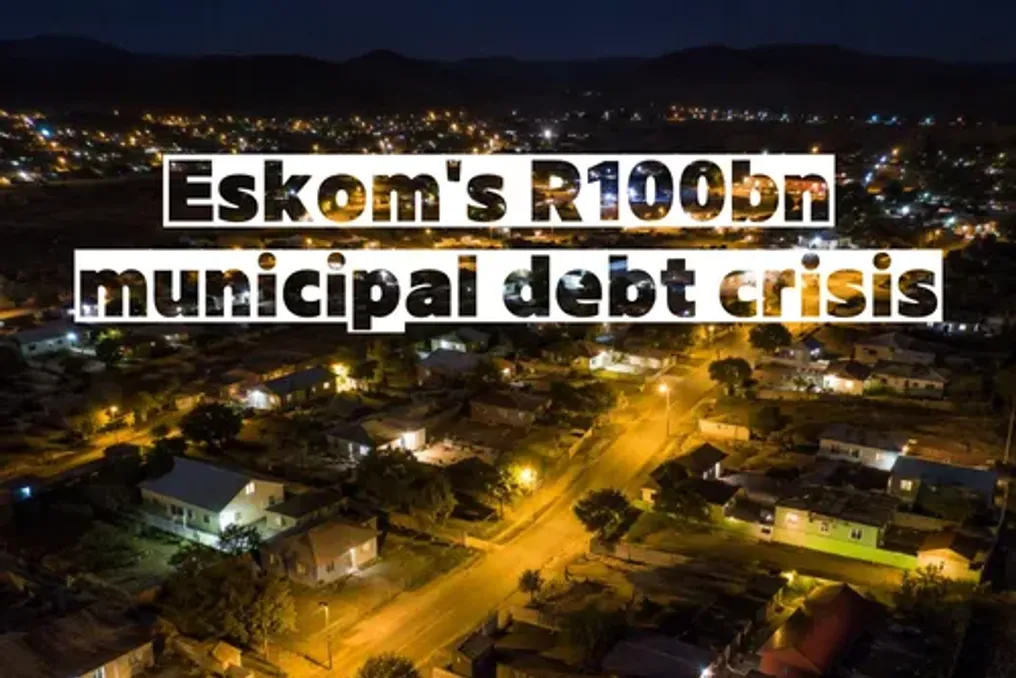
Despite government intervention, municipalities across South Africa continue to accumulate billions in debt owed to Eskom, with the outstanding balance now exceeding 100 billion rand. The company stated that the rise in debt is creating serious financial difficulties.
Last month, Eskom threatened to reduce or interrupt power supply to Johannesburg and City Power after their overdue debt reached more than 5 billion rand. Minister of Energy and Electricity, Kgosiyenso Ramokgopa, had previously voiced concern over the increase in municipal debt to Eskom, noting that it is growing by approximately 3 billion rand monthly.
Ramokgopa stated: 'We know that the debt of municipalities to Eskom is growing by an average of 3 billion rand per month.' He added that by the end of the current year, compared to the beginning, Eskom would have an additional debt of 36 billion rand, and that Eskom cannot absorb an infinite amount of debt.
Minister Ramokgopa previously revealed that consumers nationwide collectively owe municipalities more than 400 billion rand. He warned that the growing inability of households, businesses, and institutions to pay for services is leading to the financial paralysis of municipalities, which directly contributes to reduced revenue for Eskom and ongoing measures to restrict power supply.
Ramokgopa noted: 'Municipalities collectively owe Eskom just over 100 billion rand. But another very important figure is that municipalities collectively owe customers more than 400 billion rand. That is the scale and proportion of the problem.' He emphasized that this financial imbalance is at the root of the country's power supply problems because 'the fundamental issue is that municipalities are not viable economic spaces. Therefore, we need to stimulate the economy.'
Chief Auditor Tsakanani Maluleke has repeatedly warned that many municipalities face deeper financial and governance challenges, including weak financial controls, insufficient accountability, and mismanagement of public funds.
According to the latest audit results, only 39 out of 257 South African municipalities received a clean audit opinion, while many others continued to struggle with financial reporting and compliance. The audit office indicated that these shortcomings affect the municipalities' ability to maintain infrastructure and provide essential services such as electricity, water, and sanitation.
The report also noted that municipalities spent an average of 129 days collecting receivables and wrote off 62.12 billion rand in uncollectible debt. Water losses amounted to 14.73 billion rand, and power losses reached 21.63 billion rand. Maluleke linked poor financial reporting to weak internal control and insufficient institutional capacity, stating that the discrepancy between the financial reports submitted for audit and the information contained therein 'is not a technical matter, but rather reflects the lack of daily and monthly control necessary for reliable financial reporting.'
The debt crisis is already being felt in the power sector. Eskom reported that unpaid municipal debt is putting pressure on its finances and hindering investment in the power supply system. The company collaborates with municipalities through Distribution Agency Agreements to improve billing, revenue collection, and maintenance of electrical infrastructure, but has warned that in extreme cases, it may reduce or interrupt power supply to municipalities that fail to repay their debt.
According to a new study by the Bureau of Economic Research (BER), the difficulties faced by South African municipalities are due to weak governance and inefficient financial management, rather than a lack of funds. The report asserts that significant reforms at the municipal level are necessary to achieve faster economic growth.
BER found that municipalities continue to receive about 75% of their operating income from their own tax bases, but they are increasingly unable to collect funds owed by residents and businesses. By December 2025, municipalities were owed R234.7 billion in unpaid consumer debt. Furthermore, municipalities had debts to Eskom amounting to R70.1 billion and to water utilities amounting to R25.9 billion, creating serious pressure on cash flow and hindering infrastructure investment.
This report was published two weeks after Finance Minister Enoch Godongwana suspended national government transfers to 69 municipalities due to governance and financial administration failures, signaling a tougher stance from the National Treasury. BER welcomed Godongwana's decision to freeze transfers to underperforming municipalities, noting that it demonstrates the National Treasury's willingness to use its constitutional powers to improve governance, despite political tensions ahead of next year's local government elections.
The report also supported reforms within Operation Vukhelindela 2.0 and the current review of the White Paper on Local Government, but warned of risks associated with attempting to implement too many changes simultaneously, deeming that 'a shorter, clearly prioritized list of high-impact changes is likely better than a long list.'
Key recommendations from BER include strengthening intervention powers under Section 139 of the Constitution, as current interventions have become a 'revolving door rather than a recovery mechanism.' It also suggests granting appointed administrators greater authority, including the ability to assume the functions of municipal managers and financial directors, to revive non-functioning municipalities. BER called for isolating municipal electricity and water services within financially sustainable models, professionalizing the appointment of senior municipal officials, reviewing the local government funding model, and completely overhauling the municipality classification system.
The report noted that nearly 70% of municipalities in the Free State, including Mangaung, faced transfer delays, followed by 57% of municipalities in the North West, while only three municipalities in the Western Cape were affected. BER concluded that South African municipalities are 'too important to fail,' as this is where economic growth occurs and where citizens interact most closely with the state, but warned that without clear reform priorities and stronger governance, implementation could be undermined by its own ambition.
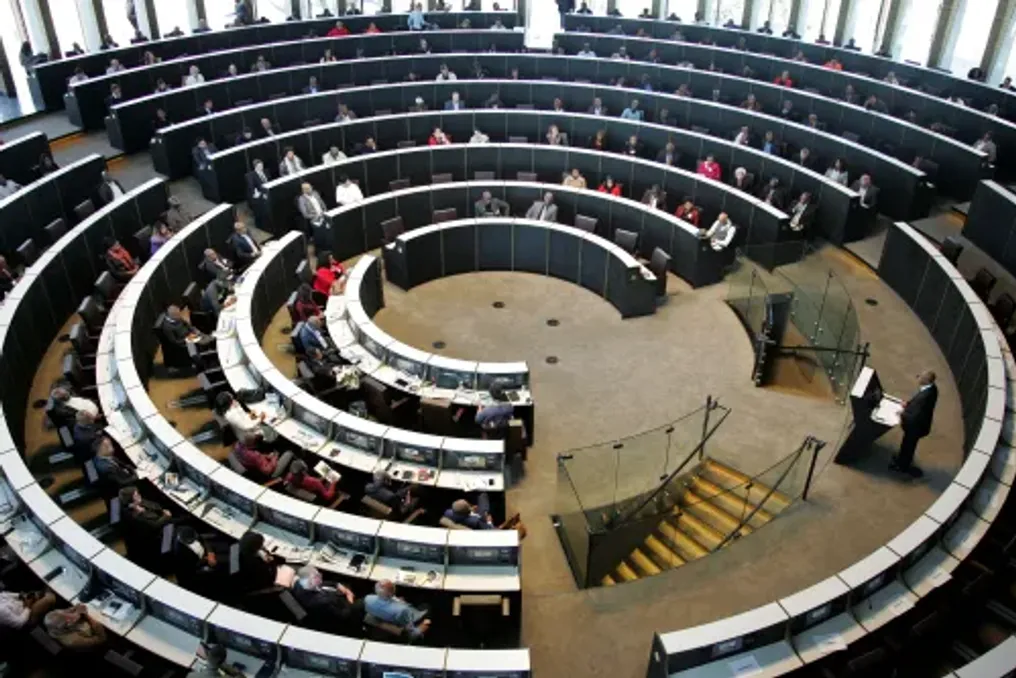
Gauteng municipalities are facing a serious financial crisis, forcing residents to bear the costs. The National Treasury has temporarily suspended funding for a significant portion of the Johannesburg City Council's funds, compelling the municipality to revise its financial strategy amid growing service delivery challenges.
The National Treasury's decision to withhold part of the equitable share of funds from several Gauteng municipalities, including Johannesburg, Emfuleni, Lesedi, Sedibeng District Municipality, Maropeng Town, and Rand West Town, was a predictable outcome of years of financial inefficiency, weak governance, and persistent disregard for the findings of the Auditor-General (AG).
The Auditor-General's consolidated annual report for 2024/25 on local government audits, combined with the National Treasury's Municipal Financial Management Act Compliance Report for 2024/25, presents a deeply alarming picture of local government in Gauteng. Although some municipalities have improved their audit results, the overall trend indicates a worsening financial condition.
The towns of Ekurhuleni, Tshwane, and the Emfuleni Municipality received a qualified audit opinion. Only one out of eleven Gauteng municipalities was rated as being in good financial health. Six municipalities were classified as financially concerning, and four as financially distressed.
Most alarming are the findings regarding unfunded budgets. Nine Gauteng municipalities adopted budgets they could not realistically fund, amounting to R164.8 billion in unplanned expenditure. Furthermore, six of these municipalities incurred unauthorized expenditures totaling R8.4 billion due to lack of funding.
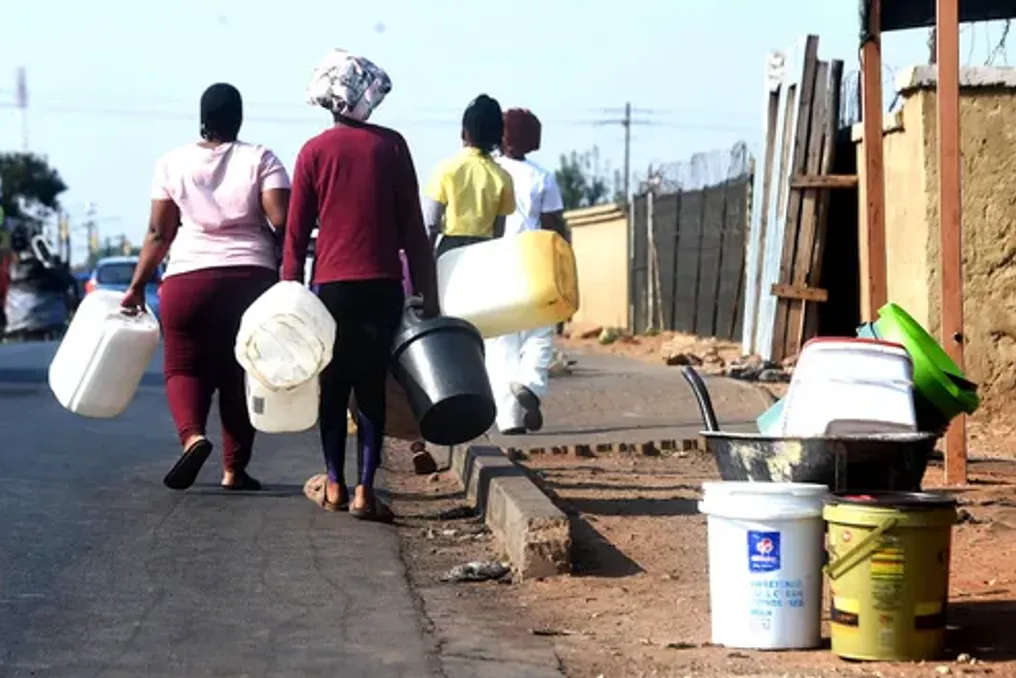
An unfunded budget is not merely an accounting issue; it means the municipality has committed to spending money whose collection is unlikely. Inevitable consequences include unpaid suppliers, infrastructure deterioration, service delays, and rising debt, ultimately leading to reduced quality of services for residents through unreliable water and electricity supply, damaged roads, and diminished municipal capacity.
The financial difficulties do not stop there. By year-end, Gauteng municipalities and organizations were required to pay Eskom R13.79 billion, and another R5 billion to water boards. It is worrying that 16 audited entities reported a cumulative deficit of R6.92 billion, with seven Gauteng municipalities having deficits. Even more concerning is that these municipalities failed to adjust their budgets during the adjustment process despite guidance and intervention from the National Treasury.
Moreover, the National Treasury's Municipal Financial Management Act Compliance Report identifies unauthorized, irregular, fruitless, and wasteful expenditure as one of the clearest signs of weakness in financial management, internal control, and law enforcement in local government. Despite many municipalities improving their ability to detect and record such expenditures, they continue to fail at the most crucial aspect: investigating cases, recovering public funds, ensuring accountability, and addressing the root causes of financial misconduct.
This gap between detection and consequence management remains a structural weakness undermining financial discipline and accountability. Beyond financial losses, the near-total absence of accountability is most alarming. The Auditor-General has once again found widespread failures in investigating and dealing with unauthorized, irregular, fruitless, and wasteful expenditure. Material findings regarding consequence management persist, confirming what the Auditor-General rightly calls a 'culture of impunity.'
Indeed, when financial irregularities are not investigated and officials are not held responsible, poor governance becomes institutionalized rather than corrected. The figures illustrate this failure. Gauteng municipalities closed the financial year with irregular expenditure of R32.96 billion, unauthorized expenditure of R12.63 billion, and fruitless and wasteful expenditure of R3.17 billion. Under the Lesufi administration, R45.92 billion in irregular expenditure accumulated. While R19.57 billion in irregular expenditure was written off, only R479 million has been recovered or is in the process of recovery.
Similarly, R9.82 billion in unauthorized expenditure was written off, alongside over R6 billion in fruitless and wasteful expenditure. Unfortunately, the amount recovered to date remains minimal. Writing off billions without substantive investigations or recoveries does not restore public trust. This raises fundamental questions about whether municipalities view financial misconduct as a management failure or merely as another administrative exercise.
Johannesburg serves as a prime example of how these governance failures lead to declining service quality. The Auditor-General identified systemic issues such as poor revenue collection, infrastructure decay, weak preventative controls, and unreliable performance reporting. Despite repeated intervention, the city incurred R2.38 billion in unauthorized expenditure, continuing to struggle to meet key service delivery targets.
Against this backdrop, claims that Johannesburg is not facing a financial crisis are unfounded and cannot be sustained. The application of Section 216 of the Constitution is not taken lightly. The National Treasury's decision to suspend part of the equitable share reflects a serious breakdown in financial management and compliance with the Municipal Financial Management Act.
The Democratic Alliance (DA) in Gauteng has consistently warned that repeated audit findings, deteriorating financial control, and a lack of consequence management would ultimately lead to this outcome. The latest Auditor-General's report confirms these warnings. Nevertheless, recommendations continue to gather dust, and their implementation remains painfully slow.
Now the evidence is undeniable. The question is no longer whether Gauteng municipalities have a financial problem; the question is who will be held accountable for it. Every rand lost due to financial misconduct is a rand taken away from road repairs, maintenance of water and electricity infrastructure, waste collection, and the provision of basic services that taxpayers deserve. Structures alone do not ensure accountability; political will is required.
Until consequence management becomes the norm rather than the exception, municipalities will continue to move from one financial crisis to the next, and it will be the residents who continue to pay for it through increased tariffs, deteriorating infrastructure, and disruptions in public services.