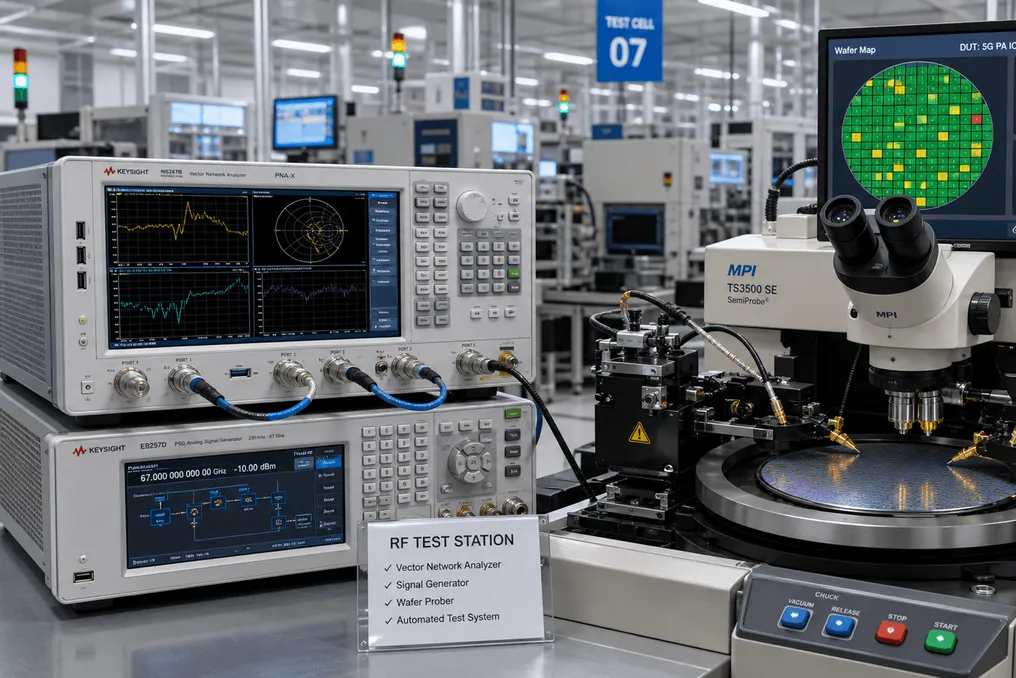
Chengdu CAS 4.0 Technology has supplied over a thousand radio frequency (RF) testing systems since 2018, becoming the first Chinese company whose RF testers possess full intellectual property for integration into chip-scale production lines. This achievement concludes an eight-year period of market development, where domestic brands held less than a 10% share.
Development History and Goals
Founder and CEO Huang Xuguang identified a development opportunity while working on microwave components. He noted that almost all microwave test equipment was imported, characterized by high costs, long delivery times, and slow adaptation to local industry needs. The first three years were dedicated entirely to research and development without active market entry.
Strategy and Collaboration
The team systematically studied the specifications of leading international products in high-density multichannel RF equipment design and calibration algorithms. The initial phase focused solely on addressing gaps caused by the lack of domestic alternatives. The second phase evolved into jointly defining requirements with Chinese industrial clients, enabling the creation of unique products tailored to local manufacturing needs rather than simply copying foreign solutions.
Integration and Product Portfolio
The co-definition model with local chip manufacturers ensures customized tools and local support unavailable from foreign competitors. Three months of on-site integration led to certification from Apple and Tesla, and the equipment is now used on iPhone and Tesla production lines.
The product range includes four categories of instruments: signal generators, signal analyzers, vector network analyzers, and vector transmitters, which utilize a modular USB and PXIe architecture. CAS 4.0 offers the most comprehensive set of products and the widest frequency coverage among domestic brands with a PXI architecture. The self-developed board-based RF chip ATE testing system can perform mass testing of filters, switches, and power amplifier modules in a single setup, significantly increasing testing efficiency and reducing costs compared to traditional methods.
Technical Specifications and Future Plans
Key technical parameters meet world-class standards: the WiFi-7 chip's EVM coefficient reaches below -48 dB, and the PXIe vector network analyzer demonstrates a dynamic range of 132 dB with a scanning speed that significantly surpasses traditional benchtop instruments. Sixty percent of the company's staff is engaged in R&D, and annual investments exceed 20 million yuan. Plans include expanding up to 40 GHz by the end of 2026 for LEO satellites, and in the medium term, up to 80 GHz for 6G. The next three to five years are defined as a golden period for replacing RF testing equipment with domestic alternatives, with AI integration throughout the lifecycle further reducing costs.