An investigation has revealed a devastating crisis at the University of South Africa (Unisa), characterized by staff deaths and alarmingly high rates of burnout, indicating a serious failure in support and well-being for the academic staff.
An investigation has revealed a devastating crisis at the University of South Africa (Unisa), characterized by staff deaths and alarmingly high rates of burnout, indicating a serious failure in support and well-being for the academic staff.
Three staff deaths were recorded in June, and over the last two months, according to several anonymous university sources, at least nine employees have been hospitalized due to health issues. Unisa staff, which is Africa's largest distance learning institution, claim they are on the verge of exhaustion due to a sharp increase in workload, a culture of intolerance, and insufficient intervention from supervisory bodies.
This crisis intensified after the university decided to eliminate positions for thousands of markers and e-tutors. The National Union of Education, Health and Allied Workers (Nehawu) presented the university Council with a 37-page memorandum warning of risks to staff health and safety related to chronic stress, fatigue, and poor work-life balance.
The central issue of the dispute was the cessation of using thousands of external markers and e-tutors. Previously, the university relied on 26,150 e-tutors and 5,095 markers working as independent contractors. However, since the start of the 2026 academic year, most of them have been replaced by approximately 850 additional lecturers. Nehawu argues that this transition destabilized the learning process by placing responsibilities on academics that were previously handled by markers, tutors, and teaching assistants.
In response to the criticism, Vice-Chancellor Professor Puleng Lenkabula previously stated that some lecturers were having their assignments marked by family members, but no evidence of this was provided, and the university insists that it was part of a broader management decision.
The consequences of the crisis have become evident in human losses. Dr. Mary Mamsatsi Madileng, a senior lecturer in the English Department, died on June 11 after collapsing at home due to an aneurysm. Her brother reported that she was always deeply dedicated to her work despite the pressure.
The death of lecturer Unathi Poyo, who had worked on contract since 2016, also raised questions about the university's reliance on long-term short-term contracts, as Poyo was not entitled to the pension and medical benefits available to permanent staff. Furthermore, John Mboveni, an IT department employee, also passed away in June.
Students are facing growing delays in receiving grades and feedback. A Nehawu analysis showed that as of May 7, more than half a million unmarked assignments remained out of two million received in the first semester. One professor calculated that academics are now marking between 12,500 and 20,000 assignments per semester, forcing some to use more multiple-choice tests, which an expert believes will negatively affect diploma quality.
The Council Chairperson, Dr. Dan Mosia, redirected inquiries to management. Professor Boitumelo Ben Senokoan, Executive Director of Institutional Development, confirmed that the decision not to renew contracts was approved by the Council. He stated that the appointed additional lecturers hold master's or doctoral degrees, and all processes complied with university policy and legislation. Senokoan rejected accusations of indifference or complicity in staff illnesses and deaths.
Experts note that staff are afraid to speak openly about the problems for fear of jeopardizing their positions. Studies indicate that the problem of academic burnout in South Africa is growing, pointing to a systemic issue that extends beyond a single university.
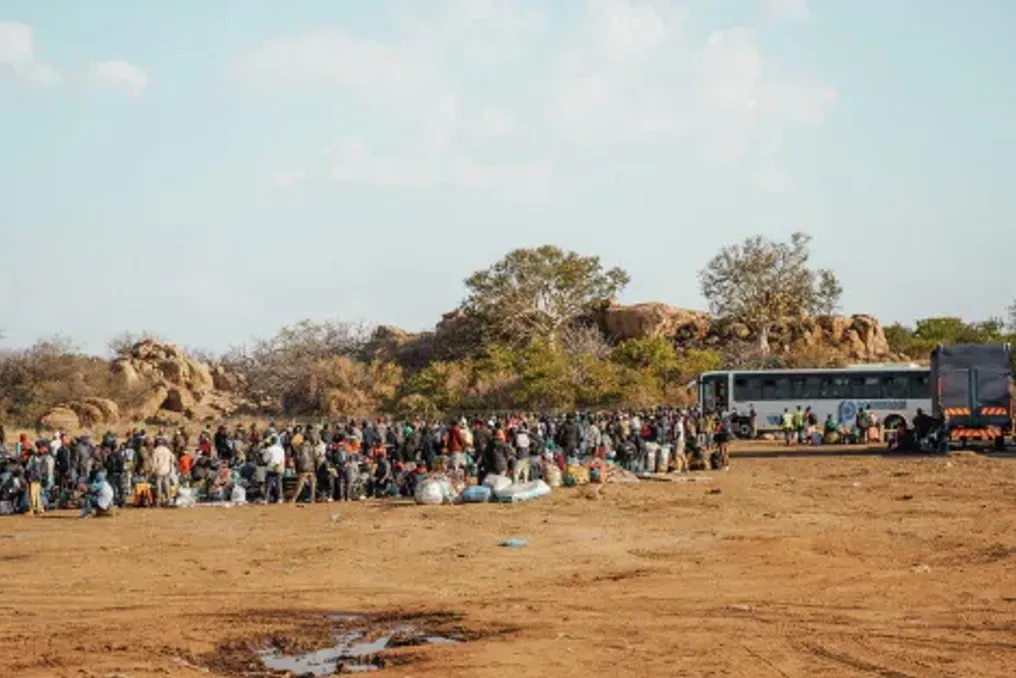
Nobule, who was a chef, was forced to leave South Africa after losing all her savings in what is alleged to be an arson attack amid ongoing anti-migrant violence. She is now among the affected patients receiving aid from Doctors Without Borders (MSF) across the border in Beitbridge, Zimbabwe.
The humanitarian organization MSF expressed serious concern that even documented migrants are being forced to flee South Africa due to threats and ongoing anti-migrant violence. Nobule recounted losing her home, passport, permit, all her clothing, furniture, and children's birth certificates, leaving her with only a small handbag.
She shared her condition with the organization, saying: 'I thought having a passport and a permit would save me, but I was wrong. I wanted to kill myself. I lost hope and don't know what I will do.'
MSF reports that tens of thousands of people are crossing the border between South Africa and Zimbabwe, heading to their home countries. Many of them, while fleeing, have lost access to chronic medications and, it is reported, have stopped treatment for serious illnesses.
Among them is Freedom Matemavi, a 46-year-old resident of Zimbabwe who had lived in South Africa since 2009. Despite having a valid passport and work permit, he was forced to leave the country after his health deteriorated due to the presumed inability to obtain antiretroviral (ARV) drugs. He noted that he missed three months of medication due to xenophobic attacks in South Africa, and his condition worsened as medical staff stopped treating him.
After arriving on the Zimbabwean side, he was hospitalized for four days. He reported being severely underweight, having a swollen leg, and feeling weak. He managed to obtain a month's supply of ARV drugs and a referral to a local clinic in Gweru for further treatment.
MSF is deeply concerned about disruptions in healthcare, especially among people suffering from HIV, tuberculosis, diabetes, hypertension, and mental disorders, as stopping treatment can have serious, and sometimes life-threatening, consequences. For many crossing the border, the return journey meant abandoning homes, possessions, jobs, and access to medicine, and they now have to rebuild their lives while continuing treatment for chronic diseases.
Furthermore, Amnesty International South Africa has called on the government to fulfill its constitutional obligations amidst the ongoing violence and displacement, emphasizing that 'The Constitution of South Africa requires respect, support, and protection for every person in South Africa, regardless of nationality, language, documentation, or place of residence. Human dignity has no nationality.'
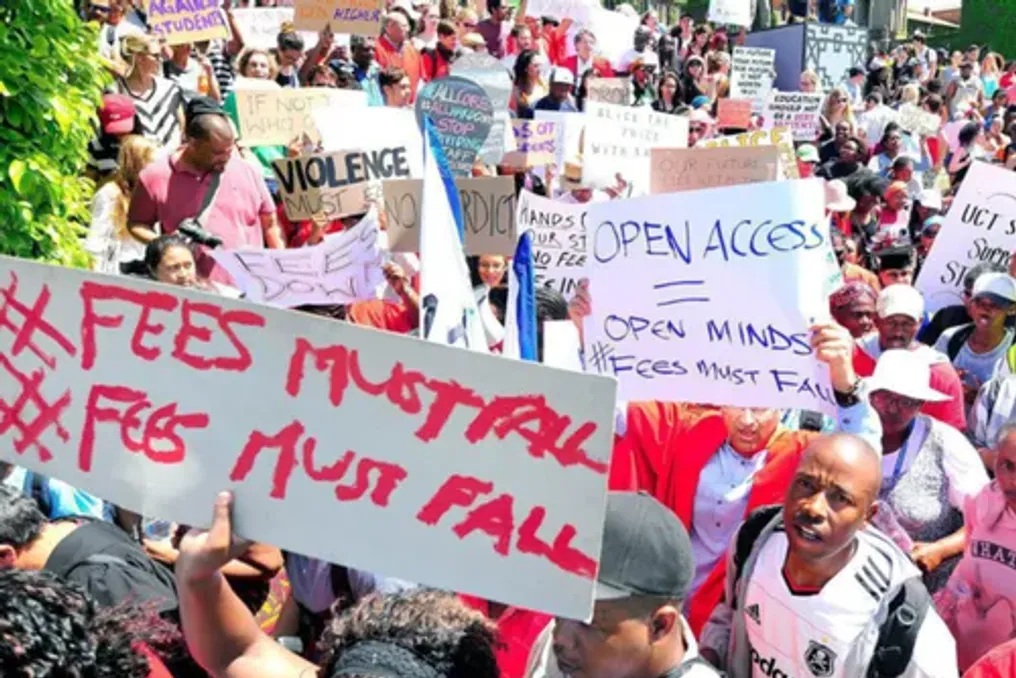
Ten years after the #FeesMustFall protests brought university funding to the center of national debate in South Africa, thousands of students continue to struggle with affording higher education.
Despite a decade of discussion and good intentions, many students, especially those from low and middle-income families, remain outside the higher education funding system. The rising cost of living, complex economic conditions, and intense competition for state resources make sustainable and predictable support inaccessible to too many people.
In fact, the need is growing faster than the available support, leading students to bear emotional and financial consequences. While some receive full funding and others can support themselves, a large group falls in between. These students, often termed the 'missing middle class,' frequently come from households whose income is too high to qualify for many traditional forms of aid but too low to realistically cover tuition, accommodation, transport, study materials, and other necessary expenses.
As a result, students are forced to work long hours in part-time jobs, take fewer modules than they could academically, skip meals, or drop out entirely when financial strain becomes unbearable.
ISFAP is at the forefront of efforts to bridge this gap by combining funding with structured comprehensive support. Through partnerships with donors, corporations, and institutions, ISFAP focuses on students from impoverished backgrounds and the 'missing middle class,' particularly in priority fields such as engineering, medical sciences, ICT, and other critical skills.
The program provides not only support for tuition and living expenses but also elements like mentorship, psychosocial assistance, and academic support. These factors play a key role in helping students not just enroll in university, but complete their studies and transition into employment.
Early results demonstrate that this approach can improve retention and graduation rates among funded students, even in a challenging economic environment where families face increasing pressure and labor markets are unstable. Sustainable funding models now involve not increasing expenditure, but leveraging partnerships, improving student performance, and maximizing the return on every unit of currency spent.
During Mandela Month, the question is not whether the country spoke loudly enough about the right to education. Instead, the real question is whether South Africa is organizing its resources, partnerships, and innovations in a way that truly opens doors for those who need it most, a decade after #FeesMustFall.
ISFAP believes that no single organization can solve the student funding crisis. However, by sharing what works and highlighting existing gaps, the organization hopes to contribute to a more honest national dialogue on how to support the next generation of graduates. Werner Abrahams, CEO of the Ikusasa Student Financial Aid Programme (ISFAP), emphasizes that the focus post-#FeesMustFall must be on practical, scalable funding solutions, and calls on potential partners to join in shaping the future of student support.