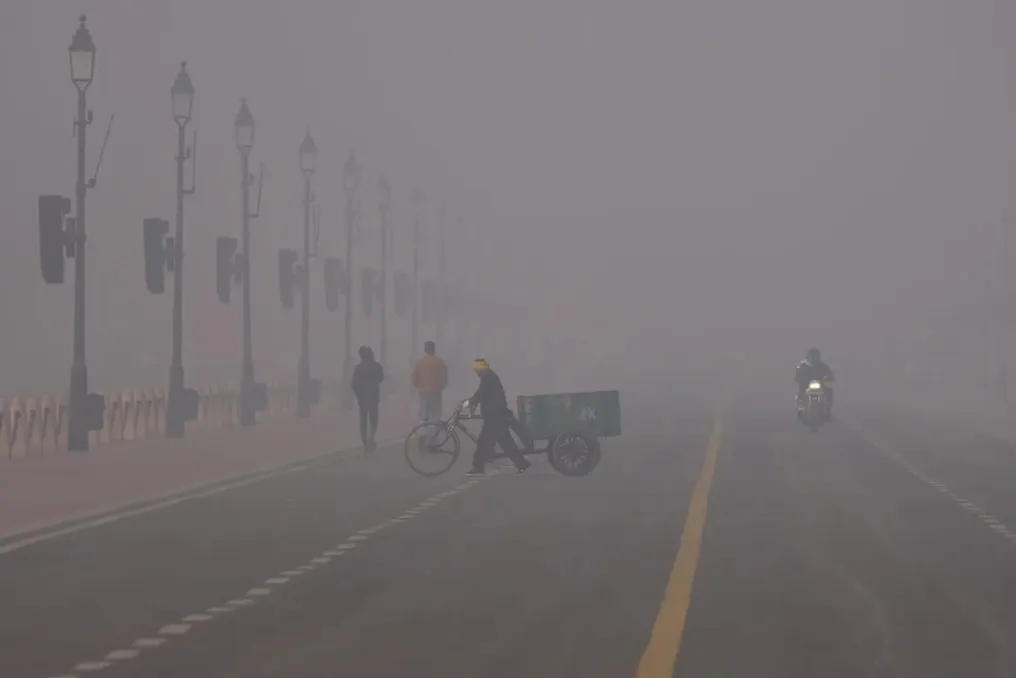
There is no consensus in India regarding the approval of commercial production of next-generation firecrackers, as two government agencies have taken opposing positions in the Supreme Court.
Positions of Expert Organizations
The Indian National Environmental Engineering Research Institute (CSIR-NEERI) approved the new compositions, noting that they contribute to reducing pollution levels by 40–60%. However, the Central Pollution Control Board (CPCB) objected, asserting that these firecrackers still contain barium nitrate—a chemical banned by the Supreme Court—and therefore cannot be permitted for use.
Requirements and Development Results
The Centre instructed CSIR-NEERI, in collaboration with firework manufacturers, to develop eco-friendly/low-emission pyrotechnic products with a reduction in pollution exceeding 50%. Subsequently, the Tamil Nadu Fireworks and Powder Manufacturers Association (TANFAMA) developed new compositions with reduced levels of barium salts/nitrates combined with other oxidizers to decrease particulate matter emissions by more than 50%.
According to the CSIR-NEERI report, the achieved reduction in PM10 and PM2.5 emissions was between 45% and 60%. The report recommended considering the commercial production of these low-emission fireworks for items such as flower pots, sparklers, chakkaris, pencils, and glittering stars, as well as their hybrids. Furthermore, the release of composite firecrackers known as 'ladis', which were previously banned by court order, was approved. The report indicated that composite firecrackers showed an approximate 30% reduction in particulate matter (PM) emissions and a 32% reduction in solid waste generation.
CPCB Objections
In response to the CSIR-NEERI report, CPCB expressed disagreement regarding the use of barium nitrate in firecrackers, as this component was prohibited by the highest court. The authority stated: 'This court, by its order dated October 23, 2018, directly prohibited the use of barium salts in firecrackers, and consequently, any formula including barium compounds, even in reduced quantities, contradicts this order.' Additionally, CPCB added that 'the reported reduction in PM10 and PM2.5 levels was not comparatively assessed against (i) improved low-emission firecrackers and (ii) 'green' firecrackers developed entirely without barium, making the claim incomplete and unconvincing.'
Ministry's Decision
The Ministry of Environment, Forest and Climate Change, finding itself between the conflicting opinions of the two expert bodies, filed a petition with the Supreme Court to draw the court's attention to the matter, leaving the decision to the discretion of the Supreme Court. The Ministry also informed the court that the composition of the new generation of firecrackers had been submitted to the Petroleum and Explosives Safety Organisation (PESO), the regulatory body for explosives, and PESO issued a certificate of no objection to the new firecracker composition.