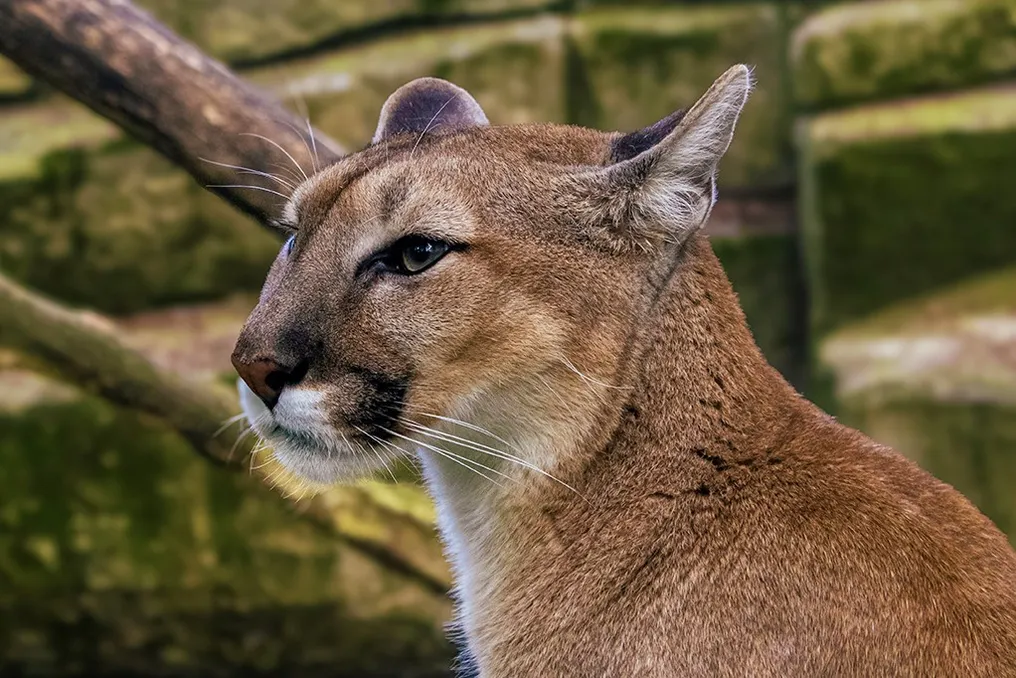
A study demonstrated that the presence of dogs affects the behavior of pumas in preservation zones located in the interior of São Paulo, leading the felines to modify their movement patterns and avoid certain areas.
Research Context
Dogs and humans share one of the oldest relationships in the history of domestication, being descendants of wolves, a process that began 15,000 to 50,000 years ago. Currently, the global dog population exceeds one billion individuals, distributed in almost all places inhabited by humans. Although many live in urban environments, there are free rural dogs that have caretakers and food but travel through farms, roads, and native vegetation, sometimes interacting with wildlife in Conservation Units.
Surprising Results
This interaction motivated a study conducted by researchers from Unesp, whose article was published in the journal Biological Conservation. The investigation focused on how canine presence impacts the behavior of the puma, the main terrestrial predator remaining in much of the state of São Paulo. The results were unexpected: instead of fearing dogs, the pumas alter their behavior to flee from the locations where the dogs passed.
Using camera traps in two conservation units in the interior of São Paulo, scientists observed that after a dog passed, the puma takes, on average, 74 hours to return to the same point, resuming routine use of the area only about five or six days later. This pattern suggests a clear strategy of avoiding contact with dogs, even without direct confrontations.
Environmental and Scientific Impacts
The presence of dogs in human environments generates environmental impacts; some studies link them to the extinction of at least 11 vertebrate species and pose a threat to another 188, although most of these studies focus on birds and small animals. Rita Bianchi, a biologist at Unesp, began analyzing large felines due to the increase in dog sightings in protected areas monitored by the research group, which raised concerns about the consequences for native fauna.
The puma was selected because it is adaptable to various habitats and has a generalist diet. Data from the camera traps show that dogs and pumas can use the same locations, but at different times. The puma does not completely abandon the environment, but rather reorganizes its spatial use over time to decrease the chances of encountering dogs.
Rodolpho Gonçalves da Silva, the study's first author, expressed surprise, as he expected the puma to command respect. He highlighted that the study revealed a subtle impact: the pumas take a long time to return to areas after the dogs pass.
Landscape of Fear
The team analyzed records from 67 camera traps in the Santa Bárbara Ecological Station and the Águas de Santa Bárbara State Forest, in the interior of São Paulo, over almost a year (2014 to 2015). 300 events involving domestic dogs and 194 puma sightings were recorded. In 23 points, both species shared the same locations, allowing for a comparison of their habits. Dogs are predominantly diurnal and active during times of higher human circulation, while pumas maintain a crepuscular and nocturnal pattern, making encounters rare.
Rodolpho emphasized that this result marks a frequently ignored impact: the animal suffers consequences even without being injured. By ceasing to use a high-quality area, the animal expends more energy searching for food or uses a lower-quality environment, which reduces its quality of life. He introduced the concept of the 'landscape of fear,' where the mere possibility of risk alters routes, times, and feeding areas, even without direct conflict.
Avoidance Factors and Causes
Although the exact reasons are unknown, researchers suspect that the association of dogs with humans is a factor. Pumas tend to avoid areas with strong human influence (farms, roads, crops), possibly interpreting dogs as a sign of human presence. Rodolpho also considers confusion on the part of the pumas, given that dogs have not developed fear of them. Statistically, it was proven that the puma avoided returning after the dogs passed, unlike the pattern observed with dogs after the puma passed.
Bianchi adds that while an isolated dog does not represent a major risk, animals often form packs, increasing danger for the feline. The observed dogs do not reside in the conservation units but come from neighboring rural properties, roaming unsupervised. In addition to competition for food and attacks, these dogs can transmit diseases and act as vectors for native fauna, and vice versa.
Conservation Implications
The observed impacts are part of larger changes caused by human occupation, including agriculture, roads, and vegetation fragmentation. Rita Bianchi warns that in the interior of São Paulo, the remnants of Cerrado and Atlantic Forest are increasingly isolated. Although hunting has decreased, the growing presence of people, dogs, highways, and loss of vegetation represents a new pressure on pumas.
The authors clarify that dogs are not the 'villains'; the problem lies in human management. Therefore, they advocate for articulated public policies, such as spaying/neutering, electronic identification, vaccination, and environmental education, instead of focusing solely on removing animals from protected areas. Rodolpho concludes that education is fundamental, and work should be done with rural producers to raise awareness about the risks of releasing animals.