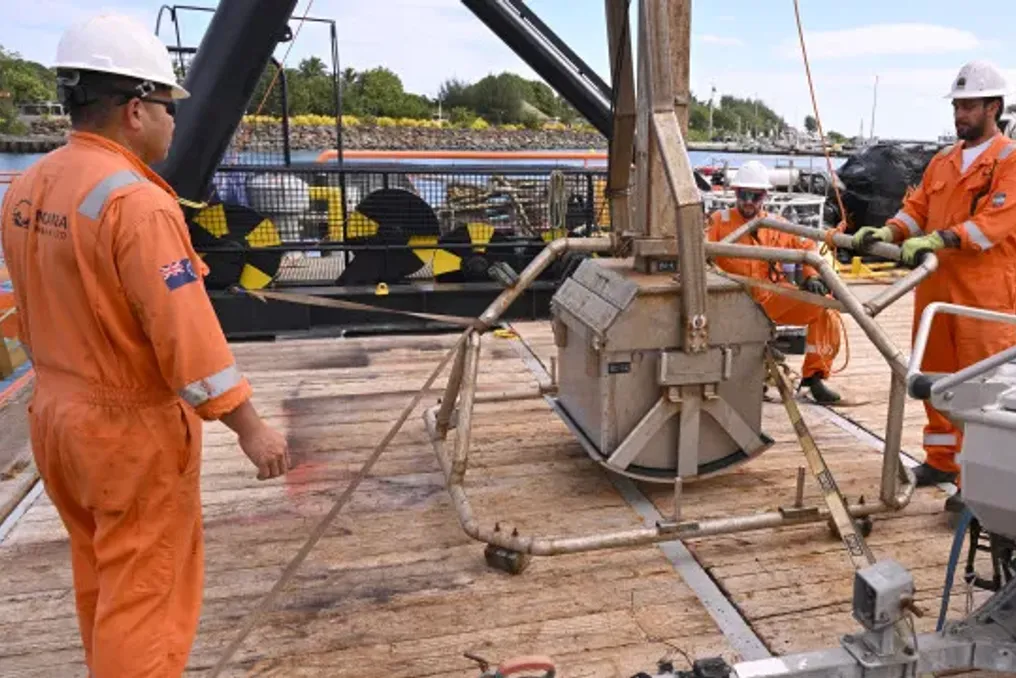
During the 'Deep Sea Dialogues,' researchers Diva Amon and Anna Metaxas, participating via video link from aboard the research vessel R/V Falkor from the Schmidt Ocean Institute, discussed the knowledge gaps in the deep sea necessary to assess the consequences of mineral extraction.
Context of discussions on marine mining
These debates took place during the 31st session of the International Seabed Authority (ISA) in Kingston. The event was organized by the Blue Ocean Fund, the International Union for Conservation of Nature, and the Donna Bertarelli Foundation. Scientists, financial analysts, and lawyers participated in the discussions to address the current state of knowledge and areas requiring study in the context of deep-sea mining.
Expedition findings and environmental risks
Diva Amon, a researcher from the Benioff Oceanographic Laboratory at the University of California, shared her experience, noting that every dive carries the expectation of discovering unknown species. She is one of the scientists aboard the R/V Falkor, which has been conducting research on the biodiversity, habitats, and geological features of the deep waters of Trinidad and Tobago since June 29. During the expedition, Deep Wonders of Trinidad and Tobago and the High Seas, which lasted almost a month, the SuBastian vehicle reached the bottom of the Caribbean Sea dozens of times, and almost every trip resulted in discoveries, some made at depths exceeding 4000 meters.
Sharing some of the discovered species, Diva Amon emphasized that the expedition results prove that the seabed remains an unexplored territory with a vast area for further study. In her view, this situation makes it impossible to fully assess the environmental risks. The researcher asked: 'If we know so little, how can we assess the impact of deep-sea mining on species we do not yet know?'
Regulation and scientific data
The regulation of deep-sea mining is the subject of discussion in the second part of the 31st ISA session, which continues until Friday in Kingston, Jamaica. Following the first round of negotiations held in March during the first part of the session, the ISA continues to work towards achieving the so-called 'Mining Code.' This code will define the conditions, timelines, and possibility of commercial exploitation of minerals on the international seabed.
Diva Amon stated that countries are beginning to realize the economic value of the ocean, but they must be reminded that decisions regarding sustainable use must be based on scientific data. She highlighted the need to increase investment in studying the seabed. As an example, she cited small island developing states in the Caribbean, where about 80% of the marine territory is deep sea, but they lack the vessels to conduct such research. Therefore, according to her, these countries 'cannot make informed decisions about deep-sea governance because they lack knowledge.'
Climate change and pollution
In response to questions about the impact of climate change on the deep sea, both researchers confirmed that seawater temperature is rising even in the deepest zones. Anna Metaxas noted that while it may not be a sharp increase, a rise of 1 or 2 degrees Celsius could have very significant consequences for these species. She added that much of the existing data is based on models, and there is a need to strengthen the collection of reference data on water temperature and currents.
In turn, Diva Amon insisted that changes caused by climate change in the oceans affect 'all parts of the planet' and cannot be underestimated. She also warned that pollution is already being observed in remote areas of the deep sea. 'Most dives take place in unexplored areas, and in almost all of them we find evidence of pollution,' she reported.