The Central Drugs Standard Control Organization (CDSCO) has revoked the registration of seven Ethics Committees overseeing clinical trials across India. This decision followed inspections that uncovered serious violations of regulatory norms.
The Central Drugs Standard Control Organization (CDSCO) has revoked the registration of seven Ethics Committees overseeing clinical trials across India. This decision followed inspections that uncovered serious violations of regulatory norms.
The regulator indicated that these committees did not comply with the New Drugs and Clinical Trials Rules (NDCT Rules), 2019, Good Clinical Practice (GCP) guidelines, and other established conditions, which jeopardized their ability to perform their duties.
These measures affected Ethics Committees in Delhi, Pune, Navi Mumbai, Ahmedabad, and Kolkata, whose function is to monitor and evaluate clinical research to ensure the protection of participants' rights, safety, and well-being.
CDSCO conducted inspections as part of an assessment of compliance with the NDCT Rules, 2019, and GCP guidelines, as well as quality management systems. During these checks, significant deficiencies and major regulatory non-conformities were found in the committees' operations.
According to the regulator's information, the revocation of registrations occurred only after the completion of a full regulatory process. This process included evaluating inspection reports, reviewing responses to requests for Corrective and Preventive Actions (CAPA), issuing directives requiring explanations, and conducting personal hearings where applicable.
Among the seven committees whose registrations were revoked are: Rational Independent Ethics Committee from New Delhi; Hurip Independent Bioethics Committee and Dr T K Pal Memorial Bio Ethics Committee from Kolkata; Ethiwell Ethics Committee and Ethos Ethics Committee from Navi Mumbai; Institutional Ethics Committee from Aatman Hospital in Ahmedabad; and Royal Pune Independent Ethics Committee from Pune.
A decision was made on Friday to dismiss forty-seven employees of the National Testing Agency (NTA) after Indian Prime Minister Modi strongly demanded strict measures in response to examination paper leaks that occurred on July 23rd.
Furthermore, amendments were approved to the Public Examinations (Prevention of Unfair Means) Act, adopted in 2024, to strengthen its provisions. Authorities reported via social media that both legal and criminal proceedings are being initiated against the responsible individuals.
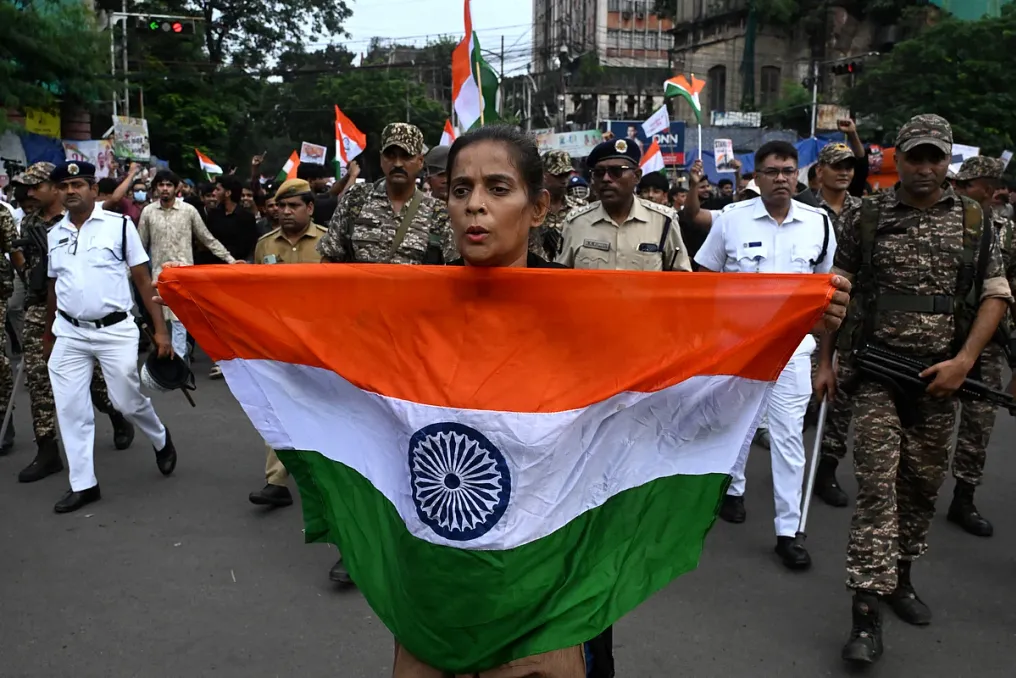
Students across India have been protesting for over a month due to the leaks of NEET exam materials. The level of protest activity significantly increased after renowned scientist-activist Sonam Wangchuk began an indefinite hunger strike, demanding action from the government.
In recent days, authorities have repeatedly blocked internet networks and/or shut down data transmission services as a means of crowd control during protests in New Delhi. Modi stated in a social media post on Thursday that his office would examine ways to expedite judicial processes against those involved in the exam leaks.
Wangchuk, who ended his 26-day hunger strike in support of the movement late Thursday evening, reported that the government assured him that no action would be taken against peaceful demonstrators. He also noted on social media that he was given guarantees that parliament would conduct full debates on this issue and on improving accountability in the education and examination system.
The protests intensified on Monday when police used tear gas and batons against tens of thousands of demonstrators at the largest street demonstration in the capital in the last five years. Abhijit Dipke, founder of CJP, welcomed Wangchuk's decision to end the hunger strike but stated that the movement would continue its campaign until the Education Minister resigns. Dipke, 30, wrote on social media: 'By risking your life, you awakened the conscience of an entire nation.'
These protests have become one of the most significant political challenges for Modi since his election to a third term in 2024.