The Brazilian Gravel Championship, held in Rio Acima, Minas Gerais, on the first Sunday of July (the 5th), marked a new phase for national cycling, consolidating Gravel in the Brazilian sports calendar. The competition was organized by the Brazilian Cycling Confederation (CBC) in collaboration with Avelar Sports.
Consolidation of the Gravel Discipline
Gravel, which spontaneously emerged in the United States by merging the speed of road bikes with the freedom of dirt roads, has moved beyond being just a trend to establishing itself as a major bet in the sports sector. The inaugural event crowned the first national champions: Henrique Avancini in the Elite men's category and Flávia Oliveira in the Elite women's category.
Characteristics and Growth of Gravel
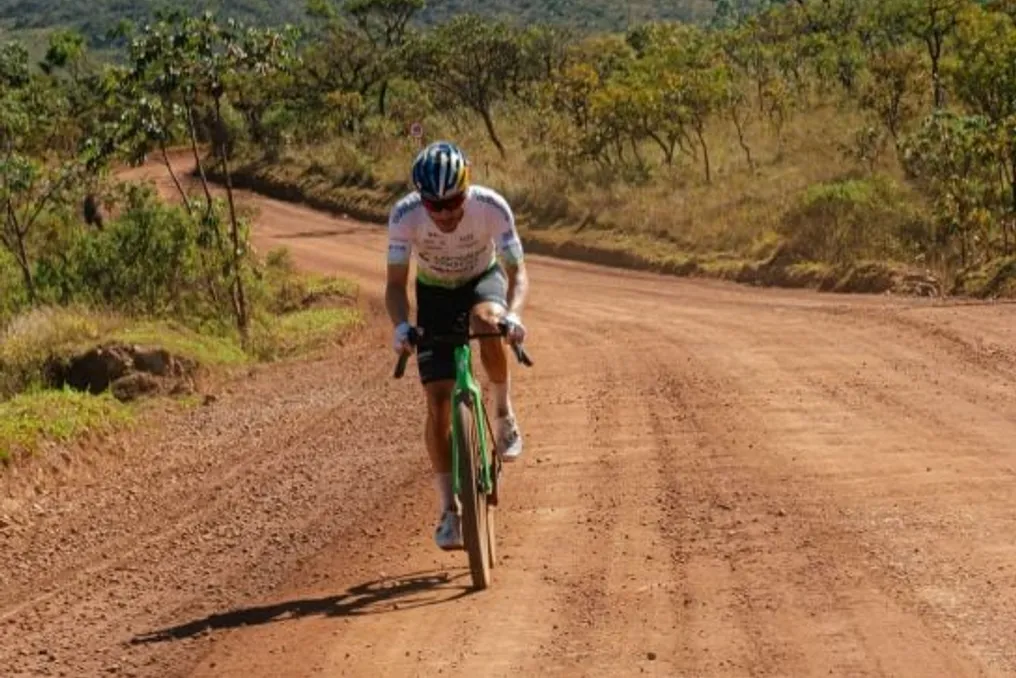
Although it may seem like a fusion between mountain biking and road cycling, Gravel has its specific characteristics. Its bikes are visually similar to road bikes but feature wider tires, more comfortable geometry, and suitability for various types of terrain. Races typically include sections of asphalt, dirt, gravel, and rural paths, demanding endurance, technique, and adaptability.
This versatility drives its growth, as it attracts cyclists from different backgrounds, including mountain bikers, road cyclists, and beginners. This advancement has gained global sporting recognition, with the Union Cycliste Internationale (UCI) establishing the World Gravel Championship in 2022 and the UCI Gravel World Series circuit.
Details of the Race in Rio Acima
The choice of Rio Acima, a city in Minas Gerais known for its rural roads and mountains, was strategic, as it offers the ideal terrain for the discipline. The Elite course totaled about 95 kilometers, covering extensive sections of dirt, gravel, secondary roads, and paved roads, totaling an accumulated descent of almost 3,000 meters, making the race physically challenging.
Individual Highlights of the Competition
In the men's field, Henrique Avancini reaffirmed his dominance, finishing the course in 3 hours, 36 minutes, and 40 seconds, securing the unprecedented Brazilian Gravel title. Sherman Trezza came in second place, followed by André Gohr on the podium. Avancini's achievement comes during a transition period in his career, after building a notable trajectory in Brazilian mountain biking, including world titles and leadership in the UCI rankings.
Regarding the women's category, Flávia Oliveira became the first Brazilian Gravel champion, completing the race in 4 hours, 34 minutes, and 18 seconds. She surpassed Isabella Lacerda and Ana Laura Moraes, who obtained silver and bronze, respectively. Oliveira's victory also symbolizes the convergence of disciplines, given that her main competitors came from mountain biking.
Institutional View and Future
José Luiz Vasconcelos, Secretary-General of the CBC, highlighted that the creation of this championship transcends the simple addition of a race to the calendar. He considers the event a crucial step in following the international expansion of Gravel and strengthening the development of the discipline in the country. According to him, this is a historic moment that integrates Brazil into the global movement with a structured national championship.
The future points to constant growth, evidenced by the increase in specific Gravel bike models in the Brazilian market and the emergence of dedicated events in different states. The discipline also benefits from the growing interest in cycle tourism and outdoor experiences, solidifying the first Brazilian Gravel Championship as the turning point for the sport in Brazil.