Deputy Prime Minister of Uzbekistan Jamshid Khodjayev held a meeting with Zhao Yacin, President of the Beijing Chamber of Commerce and Industry, as well as representatives of leading Chinese companies.
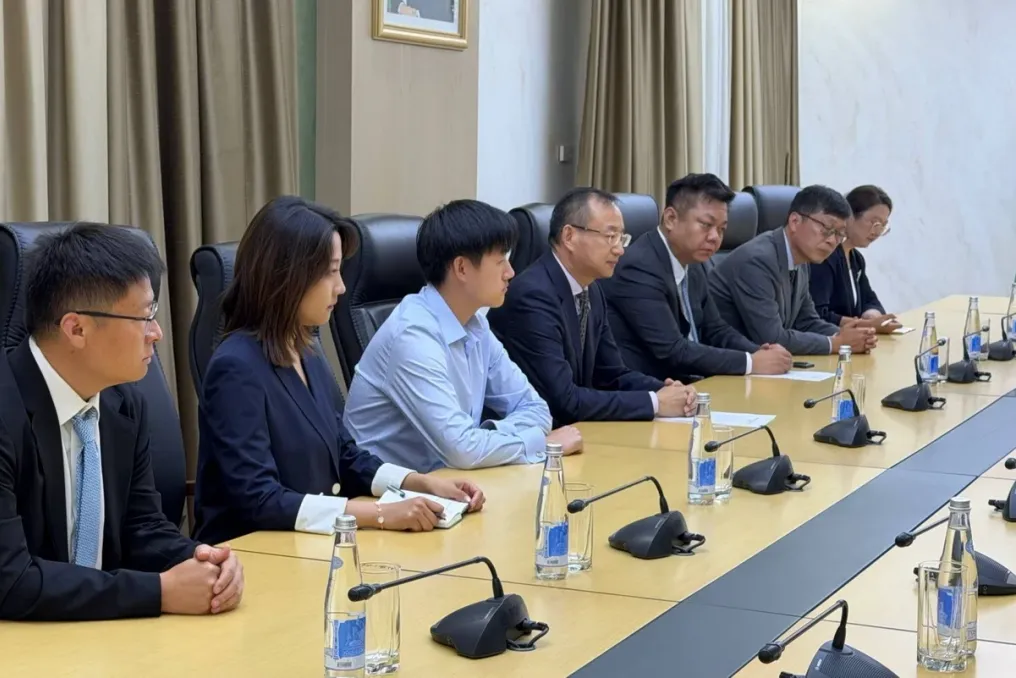
Deputy Prime Minister of Uzbekistan Jamshid Khodjayev held a meeting with Zhao Yacin, President of the Beijing Chamber of Commerce and Industry, as well as representatives of leading Chinese companies.
During the negotiations, the parties discussed the prospects for implementing investment projects and developing long-term industrial partnerships. The main focus was on initiatives in sectors such as agriculture, industry, energy, digital technologies, and healthcare.
One of the significant projects is an initiative by Shaanxi Orange Industrial, aimed at developing 27,400 hectares of pastures and rain-irrigated lands in the Jizzakh region. These lands are intended for the cultivation and processing of oilseed crops. Planned investments in this project exceed 140 million US dollars.
As a result of the meeting, an agreement was reached to accelerate work on all considered projects and ensure close coordination with relevant state structures. The parties intend to move from signed agreements to the practical implementation of these initiatives as soon as possible. Jamshid Khodjayev emphasized that Uzbekistan is ready to accept new investment proposals and is creating conditions for long-term technological partnerships and production localization.
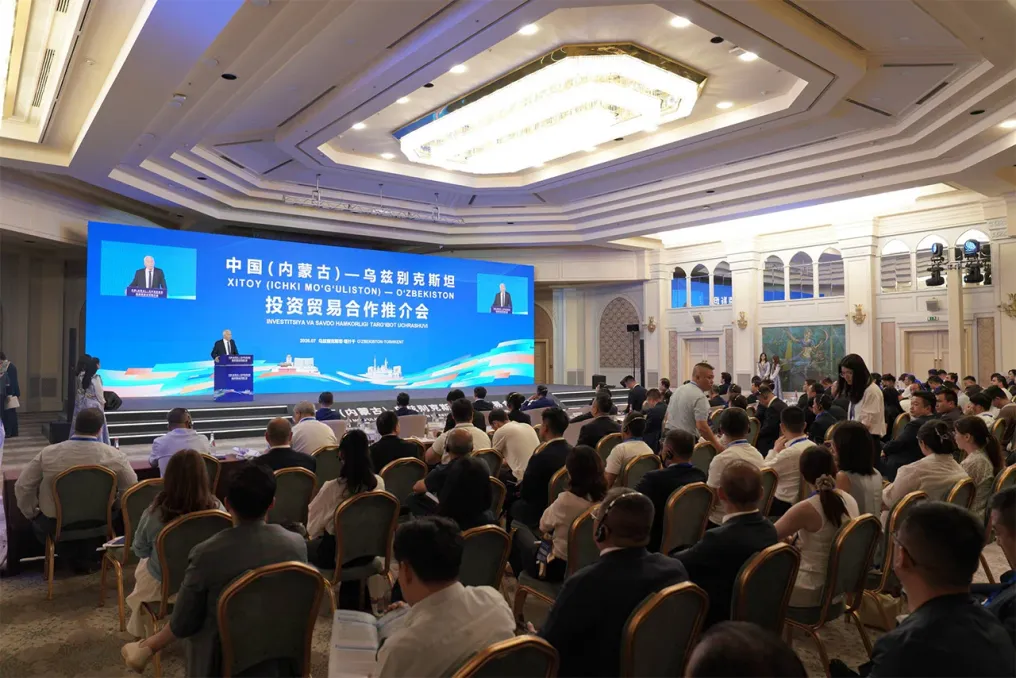
A Uzbek-Chinese business forum was held in Tashkent, attended by the Ministry of Investments, Industry, and Trade of Uzbekistan and a delegation from the Inner Mongolia Autonomous Region of China.
During the event, the parties discussed prospects for expanding trade, economic, and investment cooperation, as well as opportunities for implementing new joint projects. The forum gathered representatives of state and industry structures, as well as 22 Chinese companies operating in fields such as metallurgy, energy, logistics, biotechnology, automotive manufacturing, food industry, and others.
Participants noted a significant growth in trade turnover between Uzbekistan and China, which has tripled over the past five years and is expected to approach $18 billion USD by the end of 2025. Over the same period, the volume of direct Chinese investment increased fivefold, reaching $17 billion USD. Currently, more than 6,000 enterprises with Chinese capital operate in Uzbekistan.
Forum participants examined potential areas for joint initiatives, including mining, green energy, agriculture, healthcare, high technology, industrial cooperation, and the production of export-oriented goods. The forum concluded with the creation of a platform for establishing new business contacts, developing investment plans, and promoting joint projects between companies from both countries.
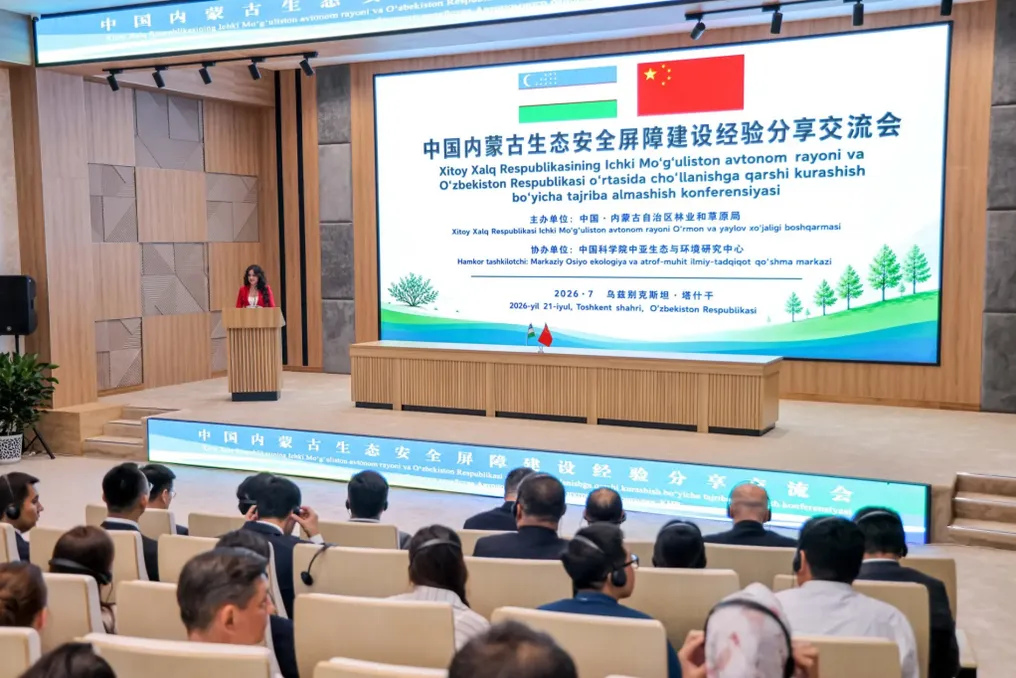
Uzbekistan and China are strengthening their environmental cooperation by reaching an agreement on the joint application of advanced methods for land restoration, seedling cultivation, and combating desertification.
The dialogue took place at the Central Asian Center for Ecology and Environmental Research. During the event, China's experience in creating protective ecological barriers, implemented in Inner Mongolia—a region considered one of the most challenging for fighting desertification—was presented.
Representatives from governments, scientists, and international experts participated in the discussion. The Uzbek delegation was represented by Advisor to the President on Ecology Aziz Abdukhakimov and Head of the Forest Agency Erkin Mukhitdinov. The Chinese side was represented by specialists from forestry and steppe management authorities.
The main focus was on practical aspects, such as methods for expanding forest plantations, reclaiming damaged lands, and integrating modern technologies into natural resource management. Digital developments and scientific achievements that contribute to a more effective fight against desertification held a special place in the discussion.
A key moment was the presentation of Chinese initiatives developed in Inner Mongolia. Participants were shown the results of a large-scale afforestation and territory protection program, and a documentary film titled 'Green Silk Road: A New Birth in the Desert' was screened, illustrating China's long-term experience.
The practical session included mutual knowledge exchange between specialists from both countries. The Chinese side shared technologies for growing planting material and managing forest stands, while the Uzbek side presented its plans for developing the education system and training specialists in ecology.
As a result of the meeting, an agreement was signed between the Chinese company M-Grass Ecology And Environment Group and Green University. This document enshrines joint projects aimed at cultivating seedlings, restoring pastures, and implementing current ecological solutions. Previously, Chinese researchers also presented a method for converting plastic into aviation fuel components.
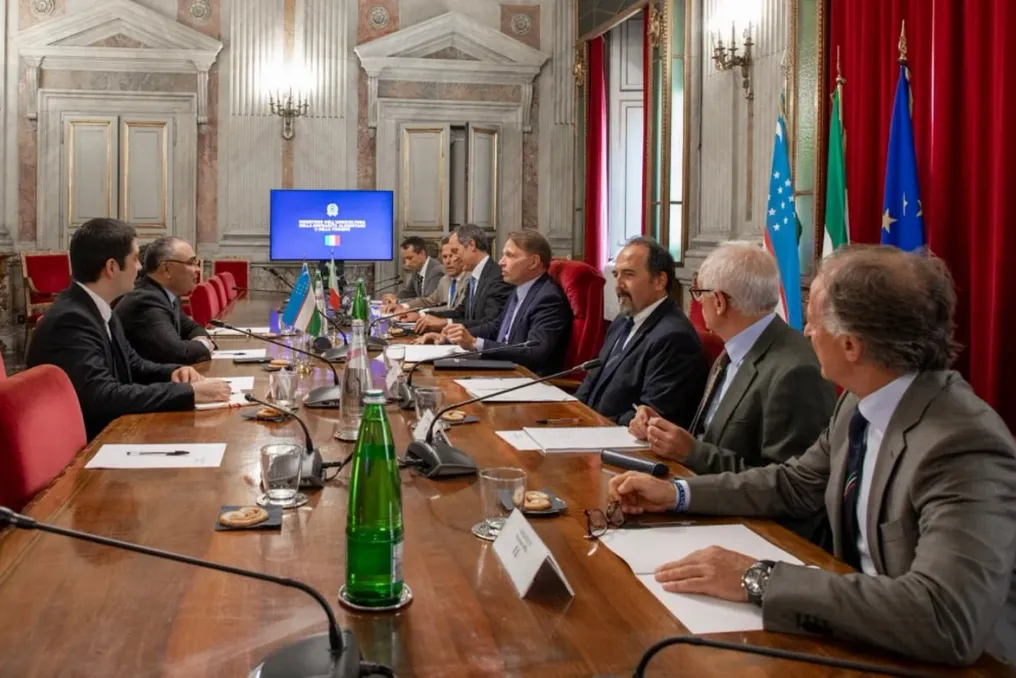
Uzbekistan and Italy have reached an agreement to expand cooperation in the field of agriculture, accelerate the implementation of joint investment projects, strengthen scientific cooperation, and introduce modern technologies.
The agreements were concluded during the meeting between Uzbekistan's Minister of Agriculture, Ibrohim Abdurakhmonov, and Italy's Minister of Agriculture, Food Sovereignty and Forestry, Francesco Lolobrigida. The meeting took place during the 30th session of the Committee on Agriculture (COAG) at the headquarters of the Food and Agriculture Organization (FAO) in Rome.
The ministers discussed areas for expanding bilateral interaction, including the introduction of advanced technologies, strengthening scientific cooperation, and accelerating the launch of joint investment initiatives. Abdurakhmonov noted that Uzbekistan continues reforms aimed at modernizing the agricultural sector, increasing production efficiency, and digitizing the industry. He emphasized that utilizing advanced Italian experience and modern technologies is one of the priorities of this bilateral cooperation.
The parties also agreed to study the possibility of introducing the AntiFraud digital system into Uzbekistan, which is used in Italy in the insurance and payment sectors. This technology is intended to increase the transparency of financial operations, reduce corruption risks, and improve managerial efficiency. Furthermore, attention was paid to scientific cooperation: the parties agreed to deepen interaction between the Italian Council for Agricultural Research and Economics (CREA) and the Academy of Agriculture of Uzbekistan, which includes joint research projects and the exchange of scientific and academic personnel.
The ministers also considered accelerating joint projects involving the Italian company Bonifiche Ferraresi, as well as the possible adaptation in Uzbekistan of the Italian mechanisms of Contratti di Filiera and Contratti di Distretto. These mechanisms are used to develop production chains and agro-industrial clusters. Lolobrigida noted that the trilateral cooperation model involving Uzbekistan, Italy, and Azerbaijan has already demonstrated practical results and holds great prospects for further development.
At the conclusion of the meeting, both sides reaffirmed their commitment to strengthening strategic partnership in agriculture, expanding the transfer of innovative technologies, increasing scientific exchanges, and accelerating the implementation of joint investment projects.