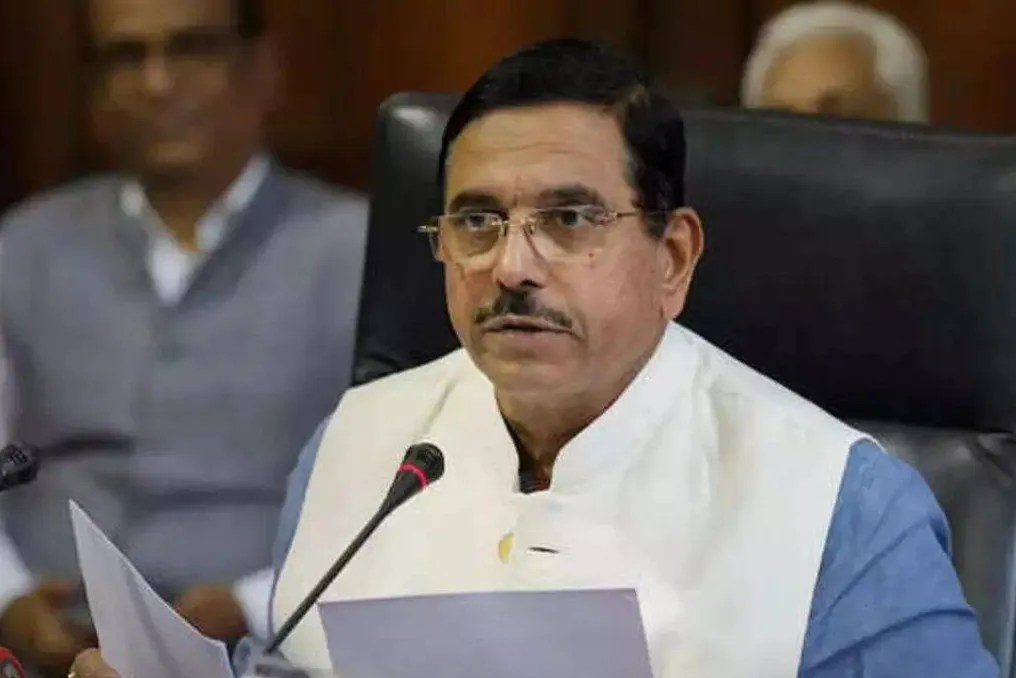
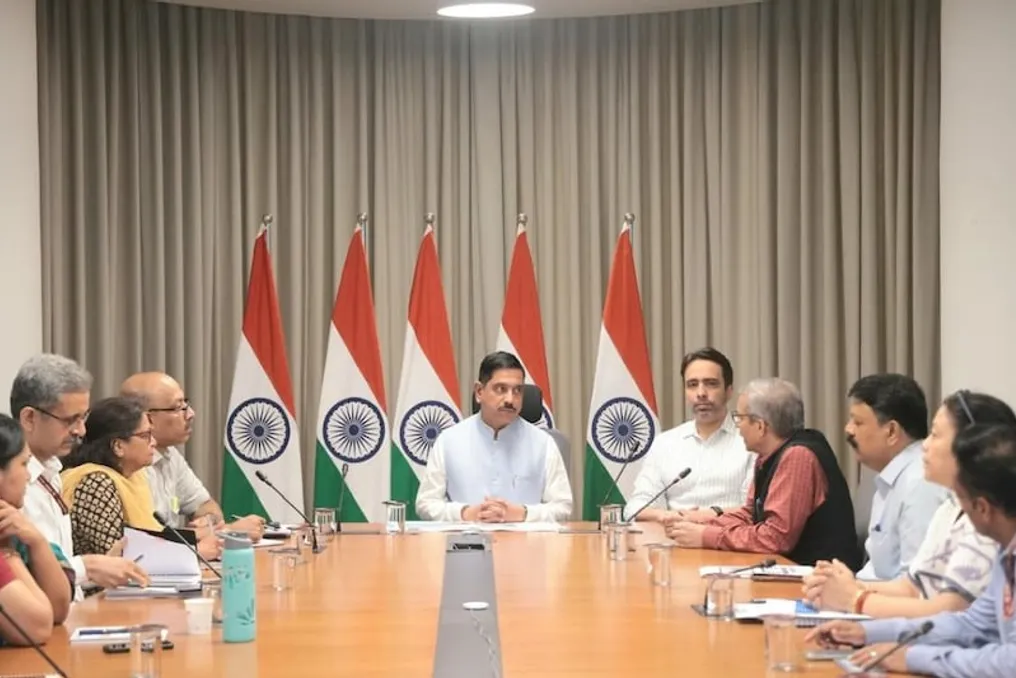
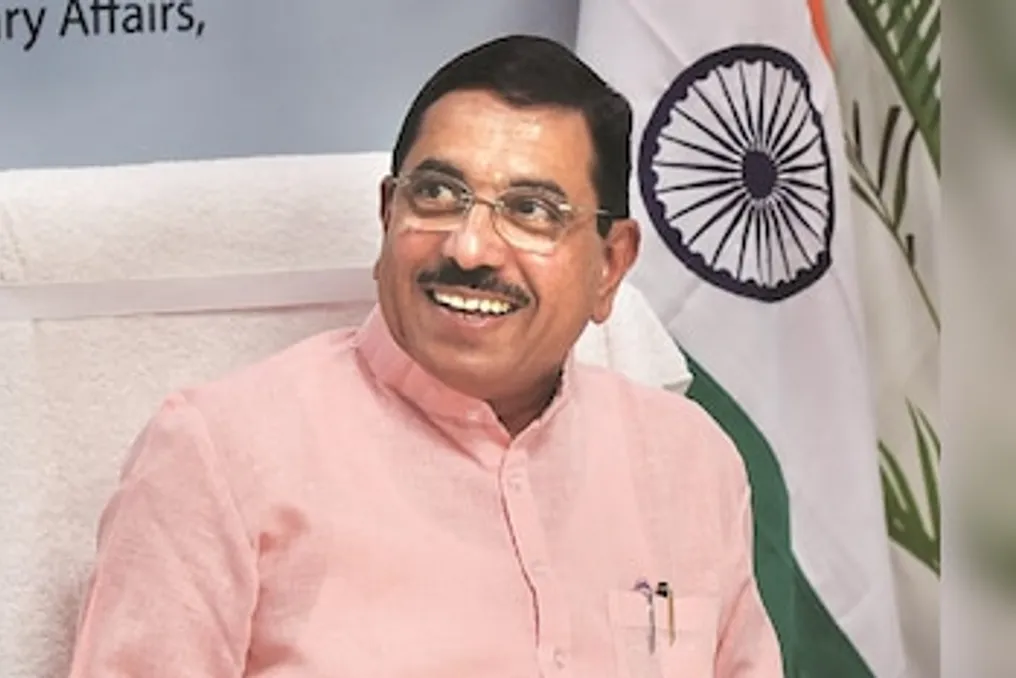
President Droupadi Murmu on Saturday accepted the resignation of Union Education Minister of Dharamendra Pradhan and assigned additional responsibilities in the Ministry of Education to Union Minister Pralhad Joshi.
Reasons for Pradhan's Resignation
According to the news agency ANI, the President accepted Pradhan's resignation upon the recommendation of Prime Minister Narendra Modi. It was clarified that Joshi will oversee the education ministry in addition to his current duties. He is currently responsible for the Ministries of Consumer Affairs, Food and Public Distribution, as well as New and Renewable Energy (MNRE).
The announcement followed several hours after Pradhan submitted his resignation, stating that he was taking responsibility for the leak of the NEET-UG 2026 exam and wished to prevent this issue from affecting students and national unity.
Conclusion of CJP Protests
Shortly after Pradhan's resignation, the Cockroach Janta Party (CJP) announced the immediate cessation of its 36-day protest at Jantar Mantar and other protest sites across the country, claiming that the government had agreed to their demands.
This decision was reached following negotiations between representatives of CJP and Union Ministers J. P. Nadda and Jitendra Singh. CJP representative Saurav Das stated at a joint press conference: 'CJP states that we are conscientiously withdrawing the agitation, understanding that the agreed terms will be fulfilled within the stipulated time.'
CJP National Spokesperson Ashutosh Ranka asked everyone to peacefully leave the protest sites and return home, as the government had accepted all their demands after 36 days of protests. Ranka also mentioned that the parties would meet again in four weeks to review the agreement and discuss the party's five-point charter on educational and examination reforms.
Government Agreement on Demands
The government agreed to withdraw petitions registered against the protesters in Delhi and states governed by the Bharatiya Janata Party (BJP), guarantee no retaliatory action against the agitators, and provide compensation to the families of students who died by suicide after the NEET exam, in accordance with applicable rules.
Das noted that the organization also submitted a draft of its reform proposals to the government and awaits written confirmation by Tuesday. Nadda stated that the CJP delegation presented a written draft raising issues related to cases registered during the agitation, compensation, and examination reforms.
The Union Minister emphasized that after detailed discussions, the first demand was that no action should be taken and no petitions filed. He added that any already registered petitions, whether by the Delhi police or in BJP-ruled states, would be withdrawn. Furthermore, the government would provide an 'honorarium' to the families of students who died after the NEET exam and provide copies of the petitions registered during the agitation.
Discussion on Exam Reforms
Ranka explained that the CJP's five-point charter focuses on reforms in the examination system and will serve as the basis for the next round of discussions with the government. He stressed that the organization's demands aim to improve the examination process and are not 'radical.'
Das reported that discussions with the government covered three key demands: Pradhan's resignation, withdrawal of cases against protesters and organizers, and assurance that no new cases would be registered against them. He also mentioned that the organization sought compensation of 1 crore rupees for the families of those who died after the NEET exam cancellation.
Nationwide Protest Support
CJP has been holding a sit-in strike at Jantar Mantar since June 20, demanding accountability for the NEET-UG 2026 exam leak, alleged irregularities in the CBSE online marking process, and broader reforms in conducting state examinations. The protest has received support from students and opposition parties across the country.
The momentum of the protest intensified after activist Sonam Wangchuk, who had been fasting at Jantar Mantar since June 28, was moved by the police to Safdarjung Hospital on July 18. The agitation escalated further during the 'Sansad Chalo' march on July 20, when police used batons and tear gas to disperse protesters. Later that same day, Nadda held the first official meeting with CJP leadership, paving the way for negotiations that culminated in the agreement reached on Saturday.