The quality of a bathroom transcends its primary functions, as this private space is intrinsically linked to daily rituals and moments of rest. While items such as sanitary ware, metals, circulation, and technical specifications form the practical foundation, the atmosphere of the environment is determined by the interaction of spatial decisions: how furniture relates to the floor, how materials react to light, how storage is incorporated, and how shape and proportion affect perception.
Creating Visual Lightness in the Space
The way furniture is positioned in relation to the floor significantly influences the overall perception of the bathroom. The use of wall-mounted cabinets allows the floor surface to remain visible underneath, which generates a sense of continuity and makes the area appear more spacious. This technique is especially useful in smaller areas, where continuous surfaces can maximize the feeling of openness.
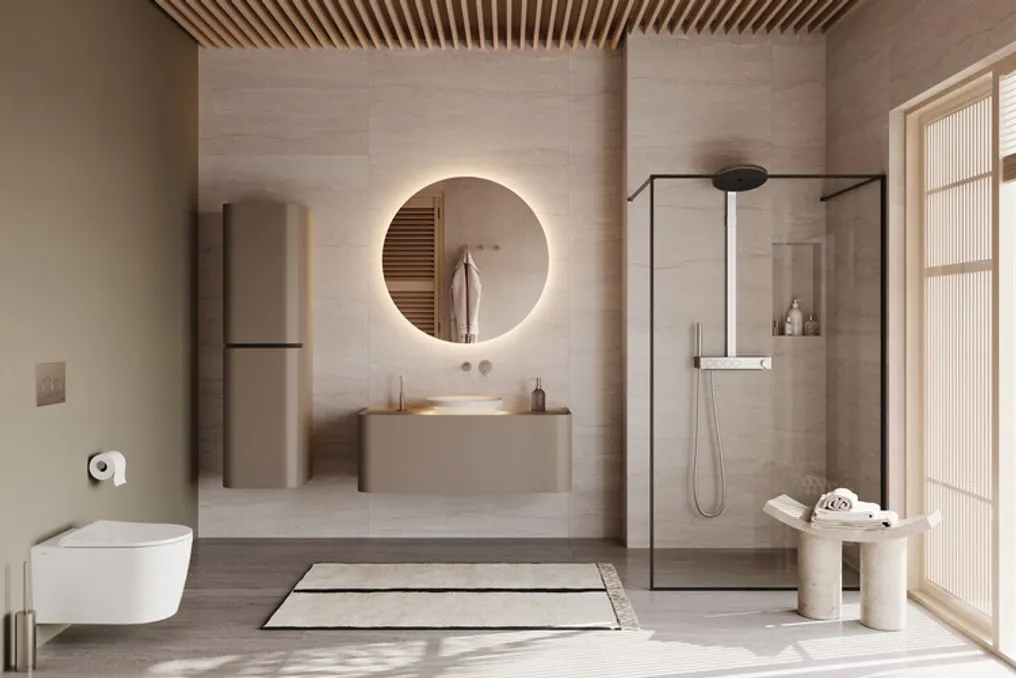
Wall-mounted furniture collections, such as Glora and Sareta from VitrA, illustrate how wall-fixed cabinets can integrate into interior design. When combined with seamless, handleless cabinetry, they keep materials, proportions, and architectural details visually connected. Thus, the cabinets convey a more subtle presence in the bathroom, offering practical storage without appearing as isolated pieces leaning against the wall.
Adding Warmth and Texture
The selection of colors and materials plays a harmonious role in composing the bathroom's atmosphere, affecting the perception of space through texture, light reflection, and the feeling of warmth. Although white remains a common option, tones inspired by wood, clay, and stone provide coziness while maintaining a sober aesthetic.
Matte finishes, in particular, absorb light and enhance subtle variations in texture, resulting in surfaces that feel softer and more inviting to the touch. The Glora and Sareta collections from VitrA exemplify this trend with a palette that transitions between soft neutrals and earthy tones. The Glora line features options such as Matte White, Matte Taupe, and Matte Stone Grey, highlighting surface and tonal nuances, while the Sareta line expands this offering with Matte Graphite, Matte Green, Matte Terracotta, Maple Oak, and White in Matte and High Gloss finishes. These choices demonstrate how small differences in color and texture can alter the atmosphere of a space without breaking its simplicity, suiting various styles of modern bathrooms.
Softening Geometric Lines
Although clean lines and simple geometric shapes are essential in minimalist design, as seen in the Glora collection, they can be balanced by delicate curves. The inclusion of rounded corners, sculpted profiles, and circular washbasins introduces subtle variations that soften the rigidity often associated with minimalism, without compromising its clarity.
Collections like Sareta, available in both rounded and square formats, easily adapt to different contexts, including smaller and more compact spaces.
Strategic Integration of Lighting
Lighting integrated into bathroom furniture has the power to shape the atmosphere of the place and influence the perception of colors, surfaces, and materials. Beyond providing light, it can accentuate textures, establish focal points, and create layers of depth in the environment.
A vanity top with warm lighting, such as that displayed in the VitrA Glora collection, introduces soft ambient light directly onto the countertop, uniting daily functionality with a more pleasant visual experience.
Minimizing Visual Noise
The inherent clarity of minimalist interiors depends largely on how much can be integrated and hidden in the design. The use of handleless fronts, aligned surfaces, and concealed compartments reduces superfluous lines and details, allowing light, proportions, and materials to define the space rather than metallic accessories.
Well-organized storage is also crucial for keeping surfaces uncluttered and supporting daily routines. Wide drawers with built-in organizers, present in the Glora and Sareta collections, ensure that everyday items are accessible, preserving the visual order of the space.
In summary, designing a bathroom beyond its basic functions means finding a balance between practicality and experience. By paying careful attention to space, materiality, light, and detail, fluid functionalities contribute to an interior that feels cohesive and thoughtful. The contemporary bathroom is no longer defined solely by its sanitary ware and metals, becoming a space where design decisions directly impact how it is lived, perceived, and used at home.