Although the national currency of Uzbekistan, the sum, has maintained its position since the beginning of the current year, the Central Bank noted an increase in exchange rate fluctuations.
Although the national currency of Uzbekistan, the sum, has maintained its position since the beginning of the current year, the Central Bank noted an increase in exchange rate fluctuations.
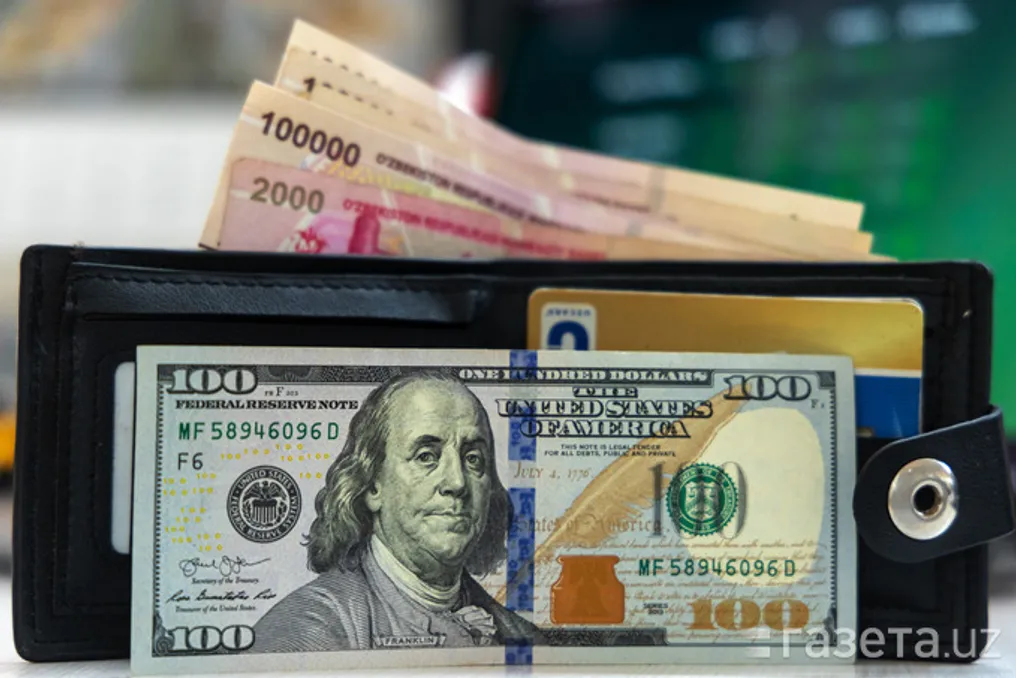
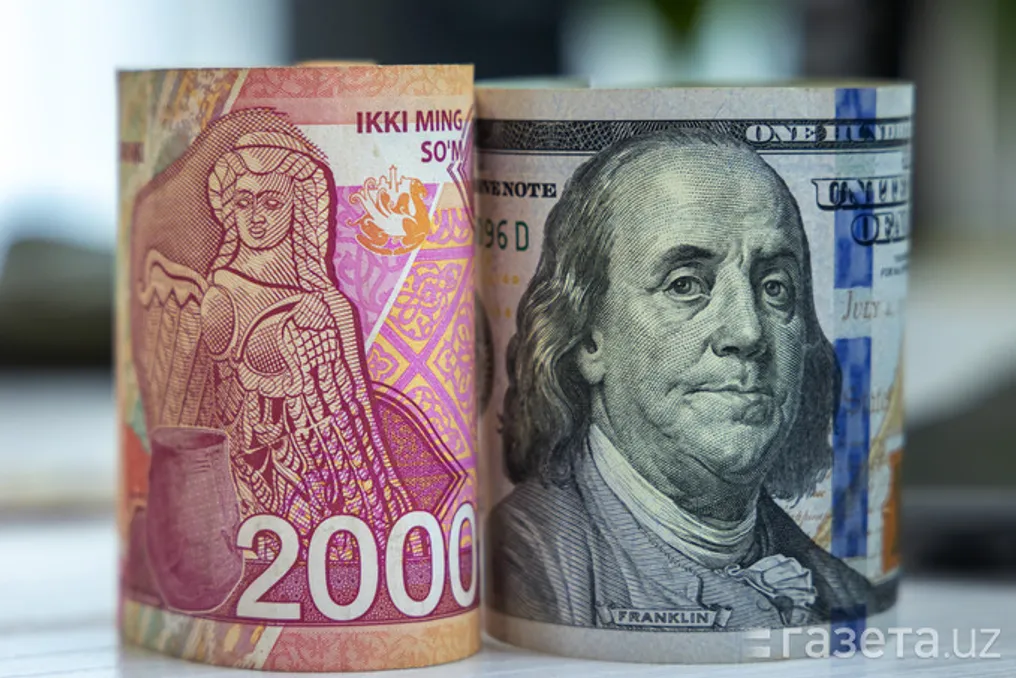
In the first half of 2026, the sum exchange rate fluctuated between 11,935 and 12,320 sums per dollar, reaching 12,009 sums by June. According to an analysis of the domestic foreign exchange market conducted by the Central Bank, the rate has virtually not changed compared to the start of the year.
The regulator explains the relative stability of the rate with several factors: the growth in the volume of foreign currency supply from legal entities, increased export revenues, and the growth in the volume of international money transfers.
Nevertheless, there is an increase in exchange rate fluctuations during trading days. The average daily bilateral volatility for the January-June period has increased to 30.2 sums, whereas in the same period last year, this figure was 22.7 sums. At the beginning of 2026, the rate was around 12 thousand sums per dollar, and although the dollar's value rose in the spring, by the end of the first half of the year, the rate returned to a level close to the starting point.
In the June report, prepared after consultations with Uzbekistan under Article IV of the agreement, the International Monetary Fund revised the exchange rate classification. It changed the status from 'crawl-like arrangement' (where the rate changes gradually within set limits) to 'floating'.
According to the Central Bank, this exchange rate regime is applied in 33 countries, including South Korea, New Zealand, Malaysia, Turkey, Thailand, Armenia, and Kazakhstan. The regulator emphasized that the development of market infrastructure and the strengthening of the role of banks contribute to the sum's ability to reflect external changes.
The IMF linked this reclassification to the increased flexibility of the exchange rate, which was introduced in April 2025. The Fund advised maintaining this flexibility, as it helps the economy better cope with external shocks, protects international reserves, facilitates hedging against currency risks, and supports the effective operation of the inflation targeting regime.
IMF experts also strongly urged the implementation of the recommendations of the fund's Department of Monetary and Capital Markets regarding the improvement of foreign exchange market functioning. Specifically, they proposed introducing a clear strategy for currency interventions based on risk assessment to reduce discretionary interventions by the regulator.
Furthermore, the fund pointed to the need to increase liquidity in the foreign exchange market. According to IMF estimates, this will allow for more effective liquidity management and reduced sterilization costs. The importance of these measures will grow as capital mobility increases under capital account liberalization plans.
The Central Bank views assigning the sum the status of a floating rate as one of the results of reforms aimed at achieving macroeconomic stability, reducing inflation, and increasing the economy's resilience to external crises.
By the end of the current year and throughout 2027, the Central Bank intends to take additional steps to develop the domestic foreign exchange market. The development of a strategy for conducting operations in the domestic market, based on risk assessment, is planned.
Also planned is the development of the market maker institution and further strengthening the role of commercial banks in determining the exchange rate. The Central Bank plans to improve trading infrastructure, including clearing, settlement, and market monitoring systems. In addition, strengthening the legal and institutional framework for hedging currency risks, including through the use of derivative financial instruments, is planned.
The Central Bank of Uzbekistan presented a financial stability review for 2025, according to which the level of dollarization in both loans and deposits in the country's banking system continued to show a downward trend.
At the beginning of 2026, the share of loans issued in foreign currency accounted for 39% of the total loan portfolio of banks. During the reporting year, this share decreased by almost four percentage points. Similarly, the share of deposits attracted in foreign currency fell from 25% to 21% of the total deposit portfolio.
The Central Bank emphasizes that the reduction in the share of loan dollarization helps reduce risks associated with exchange rate changes. When the local currency weakens, payments on foreign currency loans are expressed in a larger number of soms, which could potentially worsen the financial position of borrowers and increase the number of non-performing loans.
Despite the decrease in the percentage share of foreign currency operations in overall portfolios, their actual volume in dollar terms increased. By the end of 2025, the balance of loans in foreign currency grew by 11% in dollar terms, and foreign currency deposits grew by 21%. The pace of this growth also accelerated: the annual increase in foreign currency loans increased by eight percentage points compared to 2024, and the increase in deposits by 19 percentage points.
Thus, the reduction in the level of dollarization only reflects a smaller share of foreign currency in rapidly growing loan and deposit portfolios, but does not mean a decrease in the actual volumes of foreign currency requirements and liabilities. The Central Bank warns that the growth of foreign currency loans expands credit risk, which may manifest when the exchange rate changes. The growth of foreign currency deposits, in turn, may increase liquidity risks, as depositors may transfer their funds to foreign assets if the opportunity for free international investment arises.
By the end of the year, the difference between the foreign currency requirements and liabilities of the banking system increased to 4 trillion soms. According to the Central Bank's estimates, the expansion of this gap signals a possible increase in bank losses if currency risks materialize. Nevertheless, the overall currency position of banks remained within established norms. On January 1, 2026, the ratio of net open foreign currency position to regulatory capital was 2.7%, which, in the opinion of the Central Bank, indicates the banking system's sufficient ability to cover potential losses from currency risks.
Previously, the Chairman of the Central Bank, Timur Ishmetov, noted that the de-dollarization of the economy—the reduction in the share of foreign currency deposits and loans—is one of the positive results of increasing confidence in the national currency. Since 2018, the share of deposit dollarization has fallen from 41.2% to 20%, and for loans—from 54.3% to 37.4%.
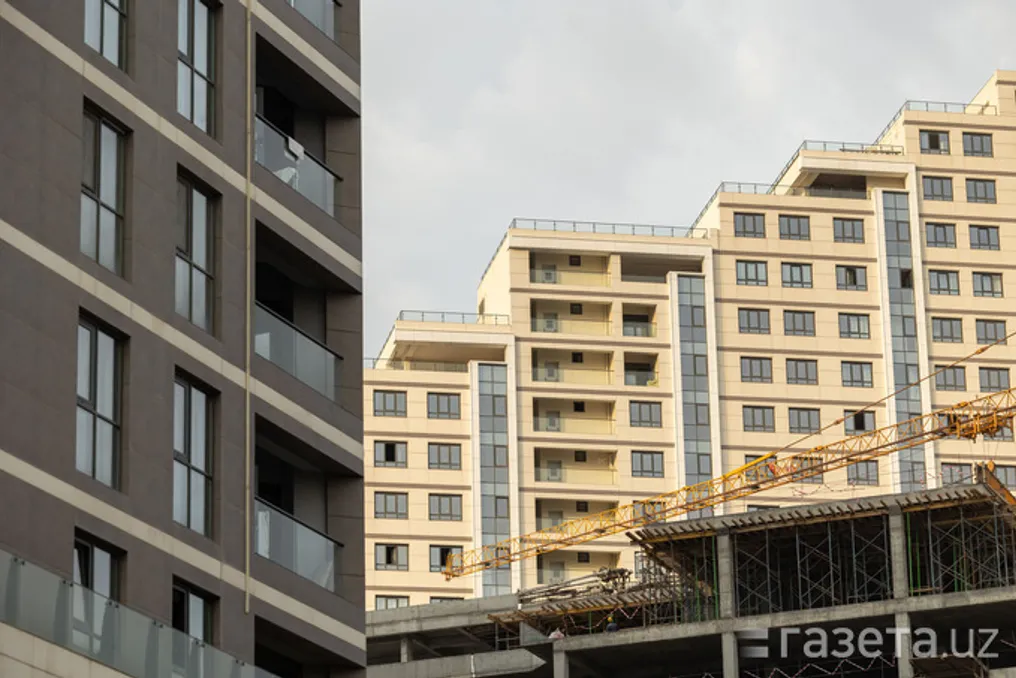
According to the Central Bank, in the first half of 2026, the volume of mortgage loans issued by banks in Uzbekistan reached 13.1 trillion soms. This figure exceeds the amount for the same period last year by 3.7 trillion soms, which is a growth of almost 39%. The number of people who received mortgage loans increased from 31,589 to 42,575 people, an increase of 10,986 borrowers, or 34.8%. At the same time, the average loan size slightly increased, rising from approximately 299 million to 308 million soms.
A significant part of the lending was directed towards purchasing housing on the primary market—9.8 trillion soms, accounting for 75% of the total volume. 31,995 people obtained mortgages in the primary market. Last year, the share of the primary market also accounted for 75% of lending, with 6.93 trillion soms in loans issued to 23,596 borrowers.
On the secondary market, 3.3 trillion soms in loans were provided to 10,580 citizens. Compared to the first half of 2025, when this figure was 2.51 trillion soms for 7,993 people, the share of the secondary market remained at 25%.
The largest volume of mortgage loans was allocated in Tashkent—4.01 trillion soms, demonstrating a growth of approximately 36% compared to the previous year (2.96 trillion soms). The second place was held by the Andijan region with an amount of 1.11 trillion soms versus 747.2 billion soms the previous year. Following in terms of lending volume are Kashkadarya region (963 billion soms), Fergana region (888 billion soms), and Surkhandarya region (834 billion soms).
The smallest lending volumes were recorded in Syrdarya region (356 billion soms), Jizzakh region (414 billion soms), Bukhara region (505 billion soms), and Karakalpakstan (508 billion soms).
The largest lender among banks is recognized as Xalq Banki (People's Bank), which issued mortgages worth 2.2 trillion soms. It is followed by 'Agrobank' (1.96 trillion soms), 'Milliy Bank' (1.68 trillion soms), 'Ipoteka-bank' (1.58 trillion soms), and 'Uzpromstroybank' (1.29 trillion soms).
Among mortgage recipients, men accounted for 54%, and women for 46%, which is a change from last year when the ratio was 61% and 39% respectively. The main mass of borrowers consists of citizens aged 31 to 50 years, who accounted for 65% of all loans, or 27,516 people. Another 25% of recipients, namely 10,903 people, were in the age group of 18 to 30 years, and 10% were over 50 years old.
The average interest rate for mortgages financed from the republican budget was 16.8%, down from 17.5%. Rates for funds from the Uzbekistan Mortgage Refinancing Company reached 21.6%, while the banks' own funds showed a decrease from 23.5% to 20.1%.
Previously, in the first quarter, there was a noted increase in real estate transactions by 48.4% before the introduction of escrow accounts. The volume of mortgages during this period increased by 29%, and construction by 15.5%. Apartment prices in new buildings rose by 8.1% in dollar terms, and in the secondary market by 9.4% in soms (although the growth rate in soms was lower). It is worth noting that land in Tashkent became cheaper. Previously, in the Central Bank's 2025 review, it was indicated that apartment prices in Tashkent were growing in dollars but remained almost unchanged in soms.