This material reviews three books that help develop and unleash children's imagination.
This material reviews three books that help develop and unleash children's imagination.
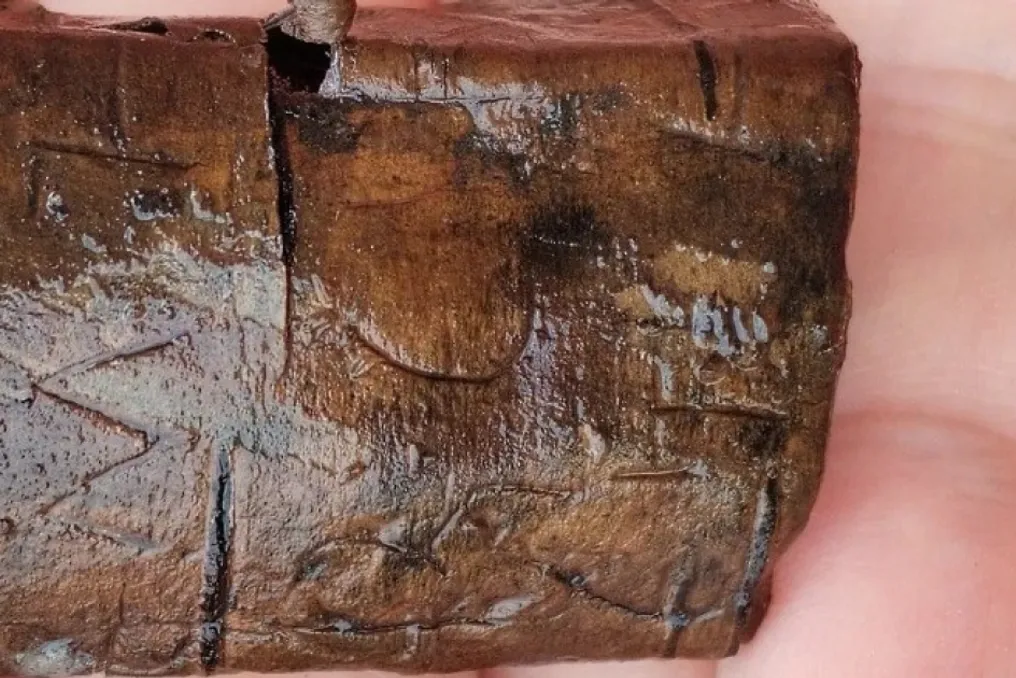
Moscow archaeologists presented the preliminary results of the field season in Veliky Novgorod dedicated to Birch Bark Day. During the current excavations, nine birch bark manuscripts were found, two of which are complete documents. Thus, the total number of birch bark manuscripts found in this city has exceeded 1246 copies, according to a press release from MSU.
Veliky Novgorod is recognized as a rich site for studying the ancient and medieval history of Rus'. Due to high humidity in the cultural layers, organic materials are well preserved here, including remains of wooden pavements, homesteads, as well as artifacts made of wood, bone, and leather. Birch bark manuscripts hold a special place among these finds, attracting attention every year from both the scientific community and the general public.
For a long time, researchers hypothesized the use of birch bark as a writing material in Rus', based on indirect data from other sources. The Novgorod archaeological expedition was established back in 1932, but the first manuscript was discovered only twenty years later—on July 26, 1951. Since then, July 26 is traditionally celebrated as Birch Bark Day in Novgorod. Over the past seventy-five years, more than 1200 birch bark manuscripts have been found in the city, and this collection continues to grow annually. Furthermore, over one hundred similar artifacts have been found in twelve other settlements, to which Vologda and Ryazan (Pereyaslavl-Ryazan) have recently joined.
In honor of Birch Bark Day, researchers from the MSU Novgorod Archaeological Expedition, collaborating with staff of the Novgorod Museum-Reserve, reported on the initial results of the work conducted in the ancient Russian city in 2026. The work continued at the Troitsky excavation site, located in the Ludin end of medieval Novgorod. Archaeologists studied numerous remains of various structures, including residential log buildings, utility and production facilities, as well as latrines.
During these works, nine birch bark manuscripts were discovered, numbered from 1238 to 1246. Most of them were fragments of various documents, but they are informative and concern debt obligations, tax collection, family matters, and problems with acquiring villages. Only two of the found manuscripts turned out to be complete. One of them (No. 1242) features a demand from Nemir to Pavel to send a messenger to some Goza. In the second document, Lobka's wife asks Pereneg to pass the stove to her brother and invites Pereneg himself, mentioning the presence of about five kopecks. Elena Rybina from MSU explained that interpreting the second letter is a complex task currently being worked on by Academician Alexey Gippius from the Higher School of Economics.
In addition to building remains and birch bark manuscripts, researchers presented information on other finds from the current season, totaling over two and a half thousand items. Among them were three princely seals and about 300 lead seals, which were likely used to seal furs of wild animals. The collection was also supplemented with cavalry and horse gear, including a battle axe, arrowheads, fragments of chainmail, stirrups, and spurs. Archaeologists also extracted 12th-century ornaments, mainly bronze, including a rare pendant from a rasona.
In the 1950s, there was a birch bark manuscript in Veliky Novgorod written in ink that could not be read and was lost for decades. Recently, it was rediscovered in St. Petersburg and successfully deciphered, which is described in detail in the blog 'The Manuscript That Was Found Twice'. Of particular note is the biomolecular analysis of samples taken from four sacrifice pits in Sansinduy. The analysis revealed preserved animal proteins, which are presumed to have been sacrificed about 3000–3200 years ago. Although precise species identification is difficult, the scientists' data indicates that the majority of the detected proteins correspond to the remains of cows or bulls. This information was published in the journal Journal of Archaeological Science: Reports.
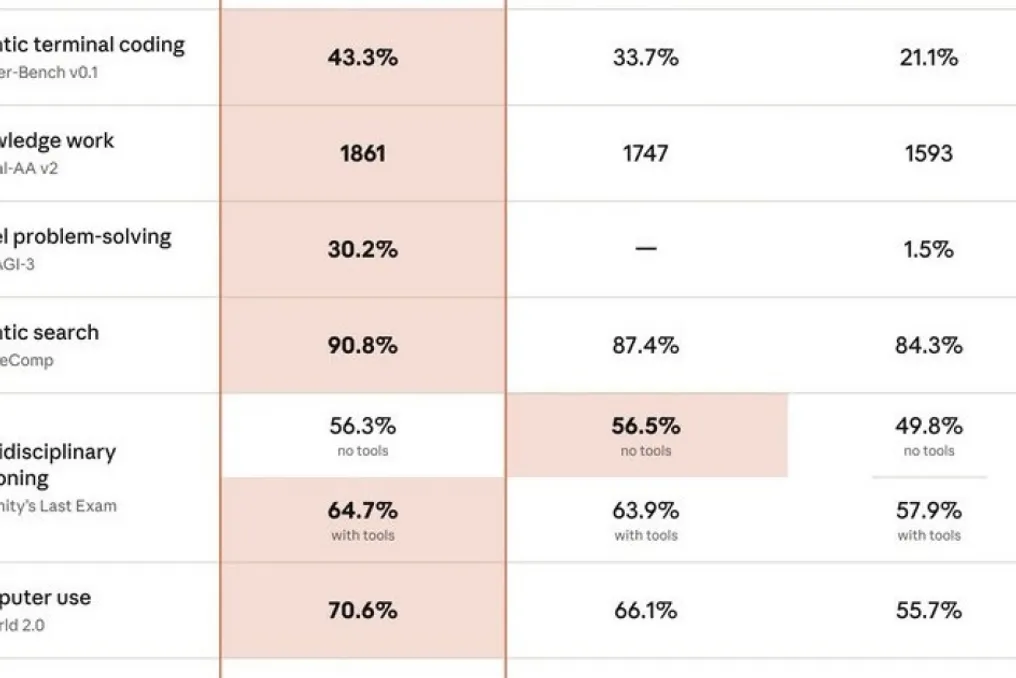
Anthropic has announced the release of its new large language model, Claude Opus 5. This model demonstrates significant improvements in capabilities and surpasses the Claude Fable 5 model across several measurable metrics.
Although Opus 5 possesses powerful analytical abilities and can detect vulnerabilities in source code, it lags behind Anthropic's Mythos 5 in creating functional exploits. However, because of this, Anthropic was able to make Opus 5 accessible to a wider range of users.
According to a press release published on the official Anthropic website, the model is already available to subscribers of Claude Pro and Max services, as well as via API. Opus 5 demonstrated superiority over all other tested models in performing complex multi-step tasks; its result was more than twice that of the previous version, Opus 4.8.
In the OSWorld 2.0 benchmark, which assesses interaction with a computer interface, Opus 5 surpassed the best result achieved by the Fable 5 model. The developers also noted the high degree of autonomy of the model. In the FrontierBench task, where it was provided with an image of a mechanical part and asked to recreate it in FreeCAD but was not allowed to view the image itself, Opus 5 independently developed a computer vision system and extracted the geometric characteristics of the part from raw pixel data.
Furthermore, Opus 5 showed high results in the fields of biology and organic chemistry. For example, in the Organic Chemistry V2 test, it scored 61.6 percent, surpassing Mythos 5, which scored 58.9 percent.
A cross-sectional study conducted by Mario Sierravo from Curtin University together with colleagues from Australia, the UK, Canada, and Thailand is also noteworthy. The researchers concluded that students who spend more than ten hours a week playing video games are more likely to have increased body mass, and they are also characterized by poorer dietary and sleep quality.
The study involved 317 students from Australian universities, with an average age of 20 years, and 60.6 percent of participants were women. All respondents completed questionnaires regarding physiological and demographic data, health status, time spent gaming, level of physical activity, stress, sleep quality, and diet. Statistical analysis of the data was performed using multiple linear regression, taking into account factors such as gender, ethnicity, smoking, alcohol consumption, medication use, employment, and other variables. The results of this work were published in the journal Nutrition.
The annual UNESCO assembly, held in the South Korean city of Busan, granted World Heritage status to a complex of six plantations located on the islands of the African nation. These plantations represent a colonial system primarily focused on growing coffee and cocoa, and include agricultural lands, industrial facilities, residential areas, and social facilities.
The UN organization emphasized that these sites demonstrate the functioning of a large-scale colonial agro-industrial system. This system was based on migration and forced labor from the late 19th century to the mid-20th century. Its goal was to maintain raw material production after the abolition of slavery.