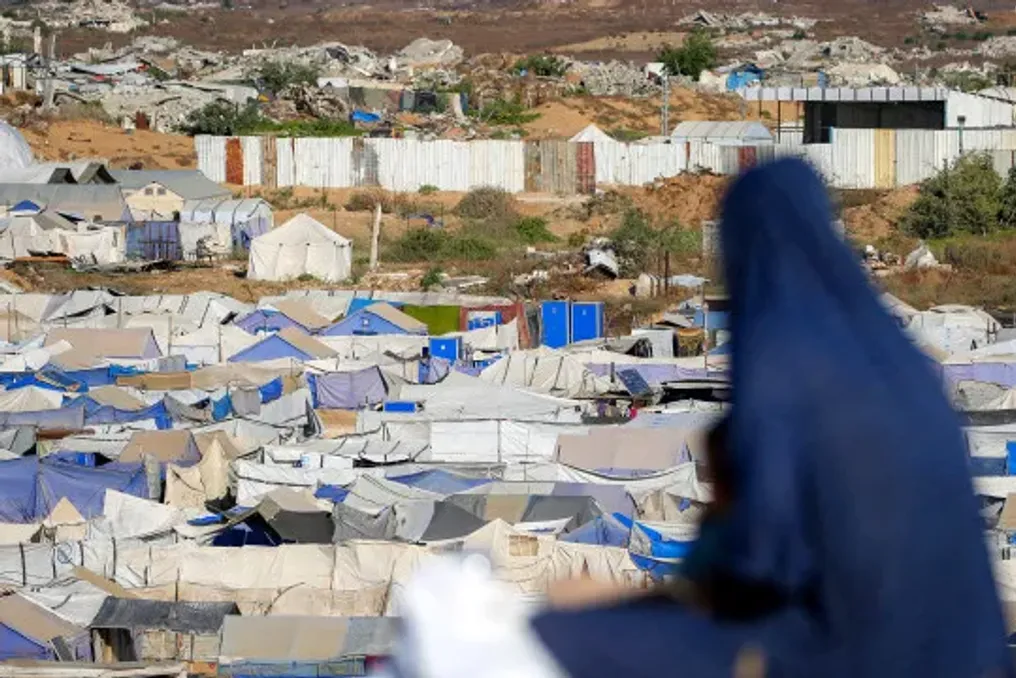
Shortly before the United Nations celebrated the 75th anniversary of the Convention Relating to the Status of Refugees on July 28, the validity of this document is seriously threatened. The main risk factors include the collapse of humanitarian financial support, a decrease in resettlement efforts, and a growing trend of governments refusing to accept people seeking protection.
Alert from the International Rescue Committee
The International Rescue Committee (IRC), founded in 1933 at the suggestion of physicist Albert Einstein, has warned about this situation. According to the IRC, more than 50 million individuals have been forced to leave their homes and depend on the protections established by the Convention. This number is aggravated by a drop of over 27 billion euros in verified humanitarian funding last year and a reduction of more than half of global resettlement commitments.
Global Scale of the Crisis
This deterioration affects both original signatory countries and other nations, as many governments are limiting integration programs as the flow of fleeing people increases. A recent report by the UN High Commissioner for Refugees (UNHCR), released at the end of June, indicates that about 118 million people are refugees or forcibly displaced globally. Although UNHCR noted a reduction in the number of refugees in 2025—an unprecedented event in a decade—the organization considers current levels to remain 'dramatically high.'
History of Refugee Protection
The defense of the need to protect those fleeing persecution and conflict was articulated for the first time by a scientist. Fridtjof Nansen, a Norwegian polar explorer and diplomat, was appointed in 1921 as the first High Commissioner for Refugees within the League of Nations, the predecessor to the UN. After World War I (1914-1918) and the Russian Revolution of 1917, millions were displaced in Europe, many stateless, as governments like the Soviet Union revoked the citizenship of their opponents abroad.
Nansen realized that charity was not enough for refugees, who, without a valid passport, could not work, travel legally, or establish residence. Therefore, he advocated for the creation of legal norms that would oblige countries to guarantee minimum civil rights. He developed the first internationally recognized identity and travel document for refugees, which earned him the Nobel Peace Prize in 1922.
Legal Evolution of the Convention
After his death in 1930, the humanitarian office he led continued its work, culminating in the 1933 Convention relating to the Status of Refugees under the auspices of the League of Nations. This document introduced, for the first time, the guarantee of non-refoulement for refugees at risk in Europe. This milestone served as the basis for the UN to promulgate the current 1951 Convention relating to the Status of Refugees after World War II.
David Miliband, President of the IRC, emphasizes that the Convention represents a promise made during one of the darkest periods in history: 'No one fleeing persecution should be returned to danger. This promise remains as vital today as it was in 1951.' Over the past 75 years, the Convention has helped millions rebuild their lives, reunite with family, and contribute to host communities.
Perspectives and Country Adherence
Miliband concludes that this anniversary should be a moment to celebrate the successes of the Convention, defend what works, and correct flaws, stressing that 'the question is not whether solutions exist, but whether governments have the political courage to implement them.' Currently, 149 nations are signatories to at least one of the two fundamental legal instruments: the 1951 Convention or its 1967 Protocol, which expanded the scope beyond Europe. Portugal has a distinct historical trajectory regarding the 1951 Convention, marked by two distinct political phases: initial approval under the Estado Novo regime and full implementation and modernization after April 25th.
The government of António de Oliveira Salazar approved adherence to the treaty in October 1960, with ratification deposited with the UN in December. However, following the original 1951 text, Portugal applied the geographical restriction, committing only to refugees in European territory. Only after the fall of the dictatorship and the colonial empire in 1976 did the country fully integrate into the international humanitarian system. Today, the State actively supports the institutional autonomy of UNHCR, promoting reception and combating discrimination, and actively participates in European Union relocation schemes, receiving asylum seekers from critical Mediterranean areas and unaccompanied minors.
});