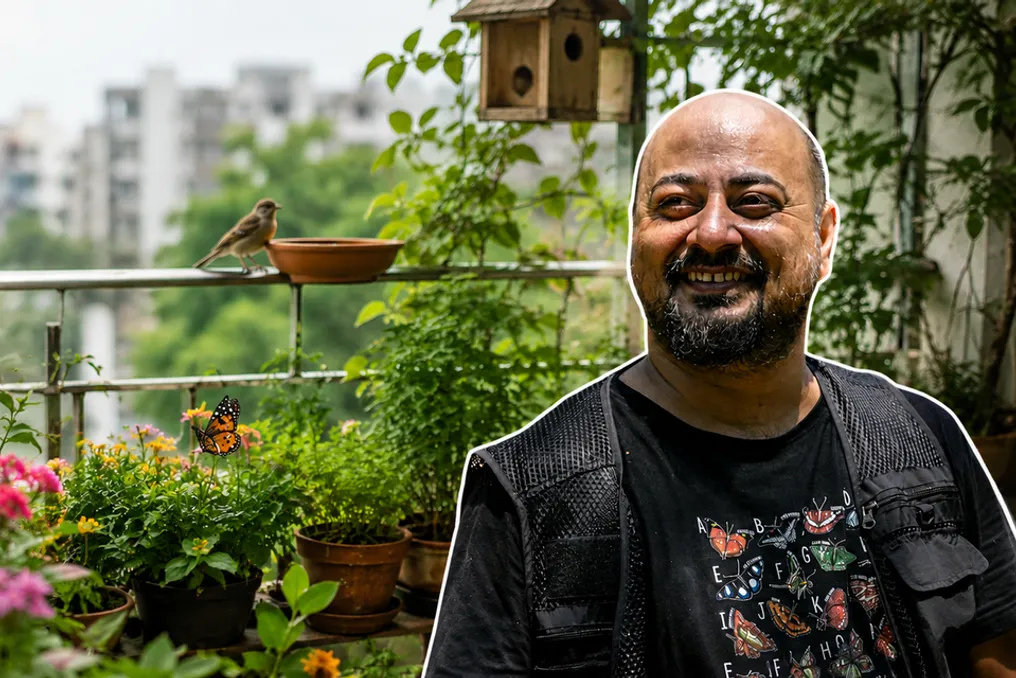
Sohail Madan, an ecologist who has spent over 15 years restoring nature in forests, neighborhoods, and schools, asserts that preserving nature is possible not only in reserves but also on every balcony, terrace, or backyard.
Sohail Madan, an ecologist who has spent over 15 years restoring nature in forests, neighborhoods, and schools, asserts that preserving nature is possible not only in reserves but also on every balcony, terrace, or backyard.
Madan recalls his childhood when it was customary to stop at gas stations during car trips to clean the windshield of insects, emphasizing how much has been lost. He notes that modern children probably will never experience such a phenomenon. For 43-year-old Sohail, this memory serves as a reminder of a time when butterflies, moths, bees, and birds were an ordinary part of life.
The expert, founder and director of the WildTales Foundation, has worked on restoring damaged landscapes and creating butterfly corridors across Delhi. His words come amid scientists' warnings about the silent disappearance of wildlife. According to the State of India's Birds 2023 report, nearly half of the assessed bird species show a long-term decline in numbers, and about 178 species are recognized as needing protection. Globally, there has been a sharp decline in insect populations, mainly caused by habitat loss and excessive use of chemicals.
Born in Africa, where his parents worked as doctors, Sohail spent his early years among wildlife. Even after his family moved to Delhi, weekend walks and visits to nearby forests maintained this interest. However, like many young Indians, he chose a career path in engineering, studying at San Jose State University in California and working in Silicon Valley. Despite the apparent perfection of this career, he felt that life consisting of coding on a computer did not suit him, and he wished to work outdoors.
The decisive moment came during a visit to a self-sufficient farm in Santa Cruz. Instead of being impressed by technology, he was drawn to simple gardening. He remembers enjoying working around a chicken coop and being close to nature. Observing children exploring the farm, he realized he wanted a life connected to nature, not to building equipment. He soon left the field of engineering. In 2010, Sohail joined the Bombay Natural History Society (BNHS), India's oldest natural history organization, where he worked for 13 years, becoming assistant director. In April 2023, he founded the WildTales Foundation to continue this work.
The site of Asola Bhatti, a Delhi wildlife sanctuary, transformed his understanding of conservation. Working there, he realized that restoring nature is not just about planting trees but also about restoring interconnections in nature. When these connections are broken, the entire system weakens. It was found that most nurseries offered ornamental imported species, while local plants that support insects and birds were rare. Therefore, Sohail and his colleagues created a nursery dedicated entirely to native plants, which annually produces about 10 lakh saplings for restoration projects in Delhi.
A recurring lesson was that every plant supports life. Butterflies often lay eggs only on specific native plants, and if these plants disappear, the butterflies go with them. Sohail gives the example of the Common Mormon butterfly, whose caterpillars feed on turmeric leaves; if turmeric disappears, the butterfly will not switch to an ornamental plant. Thus, replacing native plants means destroying millennia-old connections.
Sohail criticizes manicured lawns and ornamental gardens, which, although they look beautiful, rarely support life. Lawns require constant watering, mowing, and fertilization but serve only as 'green carpets.' He believes that gardens should resemble nature more closely: planting native trees, shrubs, and grasses, allowing fallen leaves to serve as compost, and abandoning the pursuit of perfect symmetry. Such gardens become alive through the return of butterflies, bees, and birds.
Turning to the issue of cities, Sohail initiated the Delhi Butterfly Corridor Project. Since Delhi's forests are surrounded by roads and buildings, hindering pollinator movement, the team decided not to create one huge park. Instead, they encouraged schools, parks, hospitals, and private homes to plant small patches of native plants that together form 'stepping stones' for butterflies to move across the city. One success of the project was achieved at a government high school in RK Puram, where students turned the campus into an outdoor learning space, leading the teacher to receive the Best Teacher award in 2022.
Madan emphasizes that helping wildlife does not require a large garden; a balcony or a few pots suffice. Firstly, chemical pesticides should be avoided, as eliminating all insects deprives birds and butterflies of food. Secondly, native plants such as turmeric, lemon, milkweed (Calotropis), and local flowering vines must be grown, as they provide food for insects. Thirdly, plants should be planted not only for butterflies but also for birds, such as native fruit-bearing plants like mulberry and guava. Fourthly, water should be left outside year-round, as it is needed by birds not only for drinking but also for bathing. Finally, the fifth tip is to allow nature to be a little messy, as fallen leaves and wild grasses serve as shelter for insects.
Despite the belief that wildlife should only exist in forests, Sohail argues against this, pointing out that Delhi is home to over 400 bird species, and Mumbai has about 70 leopards. He concludes that wildlife is already around us, and the question is whether we make room for it. Every action, whether adding a native plant to a balcony or placing a bowl of water, helps create a safe stopover for animals surviving in growing cities.
South Africa can no longer view extreme weather events as temporary setbacks in agriculture. The issue has become central to ensuring food security, maintaining livelihoods, and economic development, which should dictate the design of agricultural programs, farmer support, and investments in rural communities.
For farming communities, weather matters far beyond daily forecasts; it determines crop survival, access to livestock, market entry for produce, and family income. Recent heavy rainfall, flooding, and cold conditions in the Eastern Cape starkly demonstrated this reality: roads were damaged, fields became waterlogged, and many farmers struggled to reach their livestock, crops, and markets.
While rains eased the situation in some areas that had suffered prolonged drought, their intensity showed that excessive precipitation can be as destructive as its lack. The consequences extend beyond individual farms. A preliminary assessment of May 2026 storms by Hortgro estimated potential damage and production losses of 6.3 billion rand in the apple and stone fruit industry in the Eastern and Western Cape, jeopardizing over 6,700 direct agricultural jobs. Orchards, arable land, dams, water infrastructure, packing houses, cold storage facilities, roads, and power grids were affected.
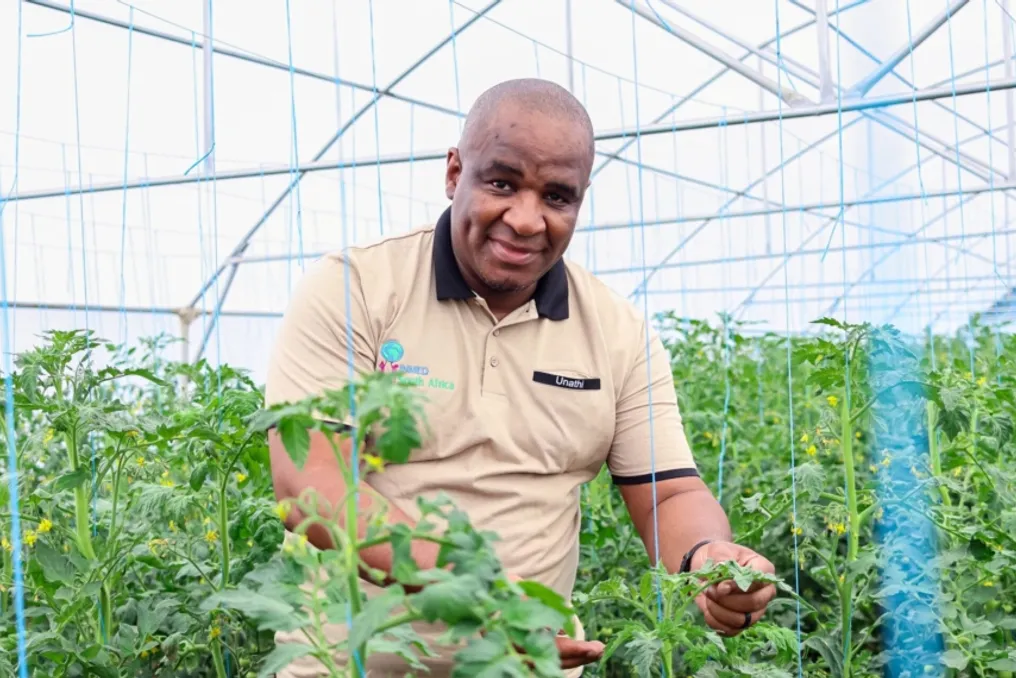
These events highlight an uncomfortable truth: farmers are increasingly expected not only to produce food but to do so while constantly adapting to unpredictable and often extreme environmental conditions. Inmed South Africa's team faced similar challenges while testing saffron in the Eastern Cape. Saffron is a high-value crop capable of helping smallholder farmers diversify their income and participate in new markets, but successful cultivation depends on carefully controlled growing conditions.
Excessive rainfall and prolonged saturation can negatively affect soil health, slow down fieldwork, and stress young plants. Recent conditions made it difficult for project teams to access test sites, delayed monitoring visits, and disrupted planned field activities. While this might be dismissed as a failure, agricultural innovations rarely follow a predictable or smooth path. Trials must be conducted under the conditions that farmers actually experience, not just in ideal circumstances. Understanding how saffron behaves with excess rain is as important as measuring its progress in favorable weather.
Every challenging season brings knowledge, providing more information about soil preparation, drainage, crop management, site selection, and the support that may be needed for farmers to successfully grow new crops. Thus, the value of an agricultural trial is determined not only by whether the crop meets the plan but also by what it teaches us about risks, adaptation, and the realities of implementing new livelihood opportunities in climate-vulnerable communities.
The response of Eastern Cape farmers once again demonstrated the determination and ingenuity inherent in South Africa's agricultural communities. Farmers moved livestock to safer locations, protected infrastructure where possible, navigated damaged roads, and supported each other during floods, isolation, and frosts. However, reliance solely on farmer resilience is insufficient; systemic issues that make them vulnerable must be addressed. Resilient farmers also require reliable infrastructure, practical training, accurate information, appropriate technology, and access to financial and technical support.
Climate sustainability must be integrated at every stage of agricultural development. This includes selecting crops and varieties suitable for local conditions, improving soil and water management, strengthening drainage systems, and promoting water-efficient production methods. It is also crucial to help farmers diversify their crops and income sources so that a single extreme event does not wipe out their entire livelihood. Infrastructure plays an equal role: a productive farm cannot contribute to food security or local economic development if damaged roads prevent produce from reaching markets.
Extreme weather events will continue to test South Africa's food systems. The question is whether we will continuously react after a disaster strikes or invest in helping farmers prepare, adapt, and recover more effectively. Support programs for small and emerging farmers must incorporate climate risk planning from the outset. Farmers need practical guidance on changing weather patterns, crop selection, soil management, water efficiency, and disaster preparedness, as well as access to climate-literate agricultural methods that reduce dependence on unpredictable growing conditions.
Inmed's work in adaptive agriculture includes approaches such as aquaponics, water-efficient food production, testing high-value crops, skills development, and community-level enterprise support. These models are not singular solutions to a complex problem but rather part of broader efforts to provide farmers with more tools, knowledge, and livelihood options. The saffron trial in the Eastern Cape contributes to this learning. Recent weather tested the program but also deepened the understanding of what is required to support future producers. By combining the experience of farming communities with research, climate-literate practices, robust infrastructure, and long-term partnerships, agricultural systems can be built that are capable not only of surviving tough seasons but also of continuing to produce food, income, and opportunity.
Plans to extend the popular St. James Promenade are nearing realization thanks to a generous donation from an anonymous family in Cape Town, which has agreed to fund the first phase of the project.
This family approached Mayor Geordie Hill-Louis in 2025 with a proposal to cover the costs for the first phase of the expansion, which is planned to run from Muizenberg to the Klawley corner.
Although funding for the first phase is secured, city officials note that it is too early to determine exactly which section will be built first or when construction will begin.
Eddie Andrews, a member of the City's Spatial Planning and Environment Committee, stated that the final section to be funded has not yet been determined. He clarified that the family donor will decide on the funding phase after the environmental impact assessment and public consultations are completed.
Andrews emphasized that this is only the beginning of the process, making it impossible to name tentative construction start dates because the EIA and public participation processes still need to take place. He added that the start of these processes will be announced once they are ready.
The city has hired a team of professional coastal engineers to develop a high-level conceptual design and preliminary cost estimates for the phased promenade expansion. Due to the route's proximity to railway lines, the city has begun negotiations with the South African Passenger Rail Agency (PRASA).
According to the City, initial contacts with PRASA have been positive, contingent upon the approval of the detailed design and compliance with railway safety requirements.
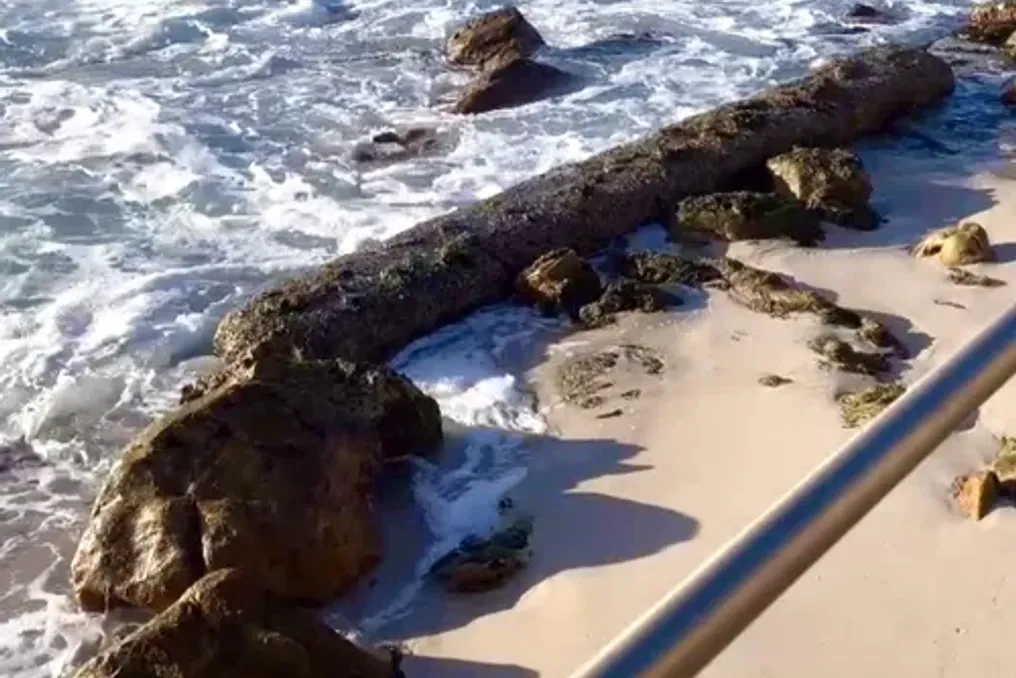
The proposed expansion is divided into four parts: Section 1a (from Danger Beach to Dalbrook Pool), Section 1b (from Dalbrook Pool to Kalk Bay Tidal Basin), Section 2a (from Kalk Bay Tidal Basin to Kalk Bay Point Tidal Basin), and Section 3 (from Woolly Pool to Klawley Beach).
Andrews also noted that the City cannot disclose the donation amount. He reiterated that the anonymous family will fully fund the first phase, and the exact section will be determined through EIA and public hearings.
Before work begins, the project must undergo environmental impact assessment, public participation, stakeholder consultations—including national and provincial government departments, PRASA, SANParks, and heritage bodies—as well as further technical development and implementation planning.
Hill-Louis stated that the expansion will improve public access to one of Cape Town's most popular coastal routes. He noted that the St. James Promenade is a beloved public space for residents and visitors year-round. The extension beyond St. James will increase access to this scenic part of the coast.
He expressed gratitude to the family for their generosity, noting that it provides an opportunity to shape the long-term vision of this coastal walking route, and the City will work closely with all relevant stakeholders as the project develops.
The City's long-term goal is to extend the promenade from Surfer's Corner in Muizenberg, through St. James, to the Klawley corner. Andrews added that additional funding opportunities may be explored in the future to complete the remaining sections.
Residents will have the opportunity to voice their opinions on the proposal during the public participation process before any construction work commences.