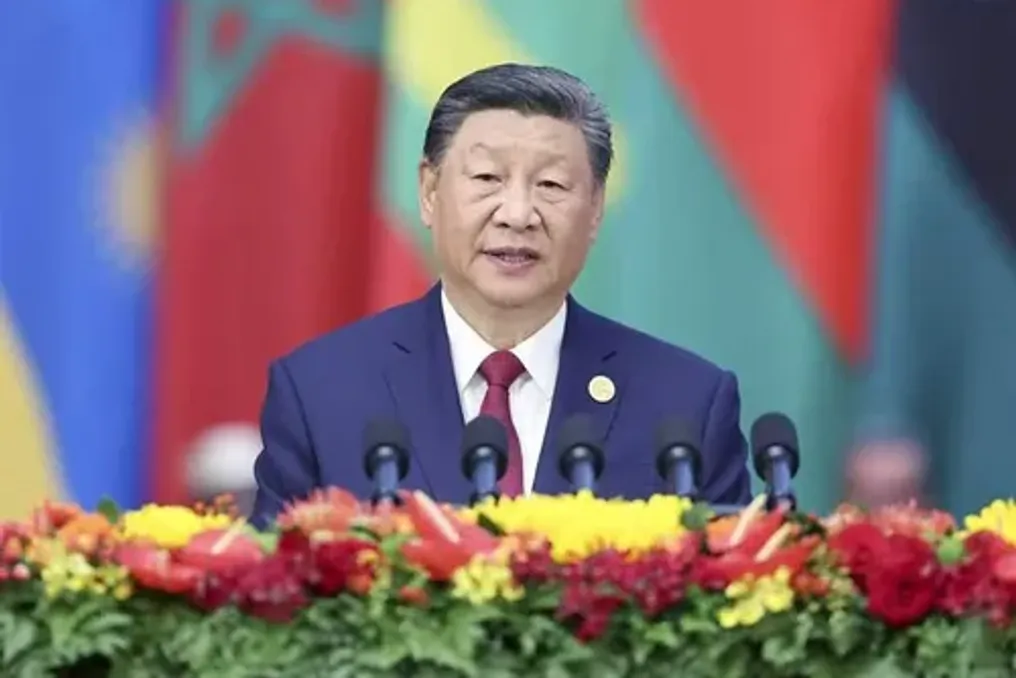
The Chinese Communist Party (CCP) celebrated its 105th anniversary on July 1, 2026, during an event held in the Great Hall of the People in Beijing. At this event, President Xi Jinping, who is the General Secretary of the CCP, delivered a keynote speech on the Party's legacy. He also outlined future goals in economic development and technological self-sufficiency, presenting the 'July 1 Medal' to outstanding CCP members.
Achievements and Influence of the CCP
The CCP, the world's largest ruling party, has achieved significant global influence. Since its founding on July 1, 1921, it has played a decisive role in shaping the sovereign unified Chinese state in 1949. The Party transformed one of the world's most populous countries, freeing it from feudalism, colonialism, and internal division, turning it into the world's second-largest economy.
China, home to over 1.4 billion people, possesses a scale comparable to the total population of the Western world. Governing such a vast and diverse territory presents exponentially greater complexity compared to managing a small region. The CCP has contributed to the rejuvenation of Chinese society, raising the living standards of hundreds of millions of people while stimulating powerful socio-economic transformation and increasing international influence, making China a major global power. The Party paved the way for China's industrialization, modernization, global influence, solidarity, and strong international friendships.
Current Status and Development of China
Modern China is positioned as one of the most stable, peaceful, and developed global powers, playing a responsible international role in promoting fair and comprehensive international governance. Economic growth has been accompanied by large-scale industrialization, urbanization, and technological progress, establishing China as a global center for production and innovation. Internal connectivity and economic productivity have significantly improved due to major infrastructure projects, including extensive high-speed rail networks, modern highways, airports, and ports.
China has achieved advancements in scientific capabilities and national self-sufficiency, becoming a world leader in fields such as artificial intelligence, renewable energy, telecommunications, quantum research, and digital commerce. The country's space exploration program has reached important milestones, including the Chang'e lunar missions, the Tianwen-1 Mars mission, and the construction of the Tiangong space station. China continues to call upon the world to build a community with a shared future.
Philosophy and Foreign Policy
Against the backdrop of the crisis of Western liberal governance models and the associated coercive interference in the internal affairs of sovereign states, the CCP has independently developed, defined, and successfully implemented the concept of peaceful development in China. The CCP continues to advocate for equality, mutual benefit, harmony, and coexistence, striving to overcome the zero-sum thinking that historically characterized Western hegemonic and exploitative dominance over the rest of the world. It is unsurprising that China consistently supports the national liberation, emancipation, and self-determination of African countries and the Global South, providing them with socio-economic, technological, educational, and diplomatic support and solidarity to ensure that global humanity is not left behind or exploited, but is raised to parity.
The scale of poverty reduction in China is considered one of the most important socio-economic transformations in recent history. The CCP led the campaign to eradicate poverty on the largest scale in human history, lifting nearly 100 million rural residents out of extreme poverty and contributing more than 70 percent to global poverty reduction. In 2021, the government announced the eradication of extreme rural poverty as part of the national poverty alleviation campaign. China has achieved an unprecedented level of governance. Public welfare, including expanded access to healthcare, improvements in education, renewable energy initiatives, environmental and climate change interventions, and public health infrastructure, has improved the living conditions of the Chinese population, which is reflected in increased life expectancy.
Economic Successes and Global Initiatives
During the COVID-19 pandemic, China expanded access to home medical care while simultaneously cooperating with the international community to provide aid and technical assistance in combating the pandemic. Since then, the country has surpassed one of the CCP's main goals—becoming a 'moderately prosperous society' by 2010, doubling GDP per capita by that time. By 2010, China's economy had grown to the second largest in the world. Its contribution to global economic growth has consistently been around 30 percent, and currently, it accounts for about 28 percent of global output, despite tariffs from the US and EU. For several decades, the country was the main driver of global GDP growth.
In his speech, President and General Secretary of the CCP Central Committee Xi Jinping emphasized the significant internal transformation, growing global influence, and international resonance of the CCP as a model of transformative, inclusive national and global governance. Xi stated that the CCP has opened a great path to realizing the rejuvenation of the Chinese nation through 105 years of struggle, fundamentally changing the future of the Chinese people. He noted that the CCP has 'profoundly changed the trend and trajectory of world development through unremitting struggle.' The success of the CCP in promoting Chinese modernization has created a new model of human progress, paving the way for developing countries toward their own modernization. Xi called for the continuous building of a community with a shared future for humanity, upholding the principles of peace, development, cooperation, and mutual benefit, and supporting common human values.
The President also called on the Chinese people and the international community to implement the Global Development Initiative (GDI), Global Security Initiative (GSI), Global Civilization Initiative (GCI), and Global Governance Initiative (GGI) to give greater positive momentum to world peace and development. The CCP has played a key role in China's increasing role in global governance and economic cooperation. Initiatives such as the Belt and Road Initiative (BRI) and the Forum on China-Africa Cooperation (FOCAC) have contributed to improving local living standards and creating jobs both domestically and in partner countries. This also aligns with China's commitments and responsibilities as a major power in areas such as infrastructure development, public health, education, climate change, food security, and technology and skills transfer, especially in the Global South. China continues to provide substantial support to United Nations peacekeeping operations and contributes to international development financing, thereby promoting global development and South-South cooperation. Its role in ensuring a stable and peaceful international order and development extends beyond the Global South.
Relations with Africa and Principles of Equality
For 70 years, the Chinese government has maintained diplomatic relations with African countries. Both sides share a history of colonial hegemonic oppression, the struggle for liberation, and the aspiration for complete economic emancipation. The CCP has provided deep support to independence liberation movements and stands in solidarity with Africans in their pursuit of economic liberation through close and friendly party relations with liberation movements, parties, and governments in Africa. China advocates for a new type of international relations where all countries are equal members of the international community and have an equal right to participate in international affairs regardless of their size, strength, or wealth. The country promotes international cooperation based on sovereignty, independence, equality, and non-interference in the internal affairs of other states, relying on the principles of peaceful development, cooperation, mutual benefit, and the promotion of common human values. The CCP has fundamentally transformed China into a major global economic and political power, paving the way for its own modernization, which is a profound contribution to national and international governance.