According to a study published in the journal Science Advances this month, the causes of death for three Inca children sacrificed about five hundred years ago differ from what archaeology had previously suggested.
According to a study published in the journal Science Advances this month, the causes of death for three Inca children sacrificed about five hundred years ago differ from what archaeology had previously suggested.
Researchers conducted medical examinations of mummies preserved in Chile and determined that physical injuries and post-mortem traces cast doubt on existing theories regarding these rituals. Analyses of the bodies, which were well-preserved due to the cold and dryness of the Andes, refute old assumptions of death by frostbite or asphyxiation.
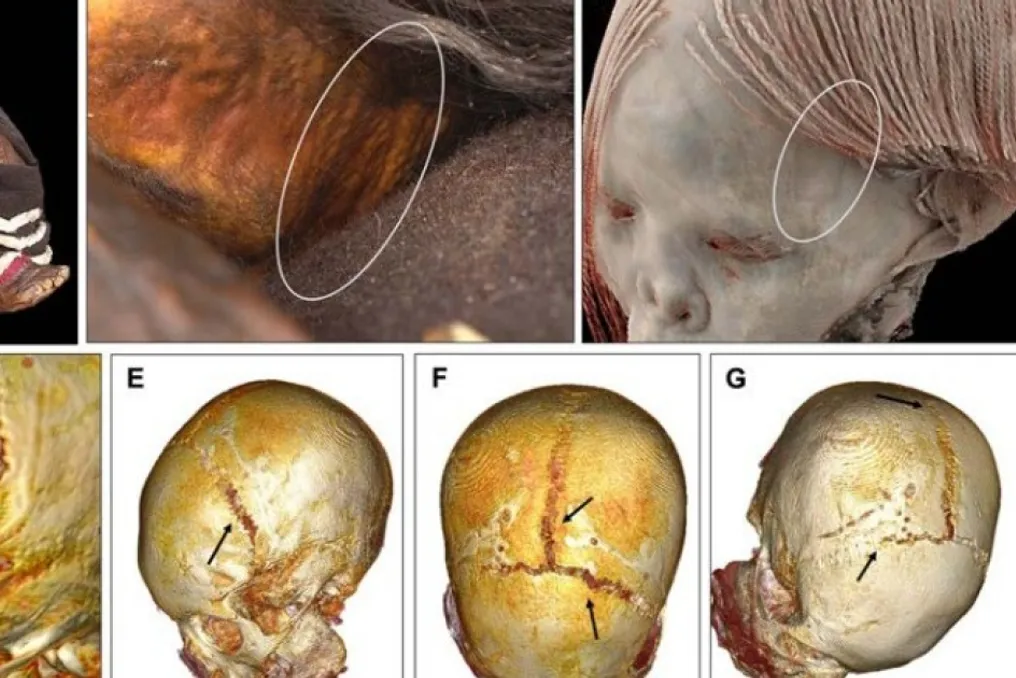
Modern technology has allowed secrets of Inca ceremonies to be revealed. In the case of an eight-year-old boy found in Cerro El Plomo, the hypothesis of death from hypothermia was ruled out. Computed tomography revealed skull fractures caused by impact from a heavy object, confirming direct violent action before burial in the mountains.
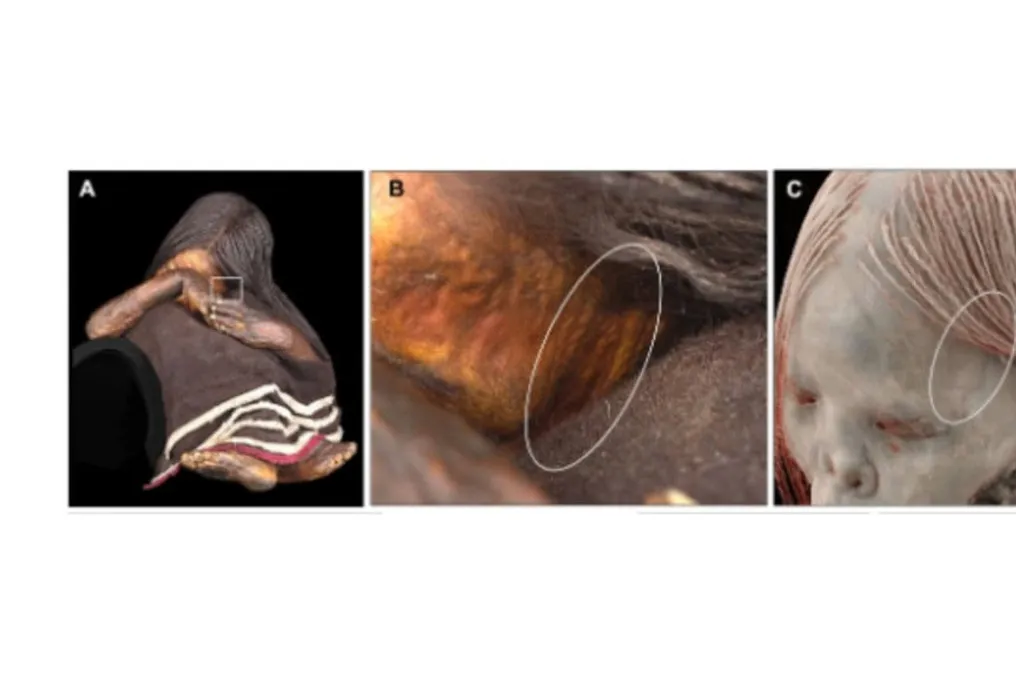
Regarding the two young girls discovered in Cerro Esmeralda, analysis showed they were not strangled, contrary to previous records. Neck bone studies did not reveal fractures or dislocations. Instead, marks on the neck were attributed to prolonged contact with clothing after death, leaving the exact cause of death undetermined.
A complex of advanced forensic methods, including dermatoscopy and histological skin analysis, was used to re-evaluate the remains. The application of these tools allowed for the study of the internal structure of the mummified bodies without damaging the preserved tissues.
Isotope chemical analysis in samples of hair, teeth, and bones helped map the diet and travel routes of the victims. The boy traveled a distance of 2.6 to 2.8 thousand kilometers from Cusco over nine months, while the girls covered up to 1.2 thousand kilometers in three months, participating in rituals with local populations along the way.
These pilgrimages were part of Capacocha—a ceremony of political and religious expansion through which the Inca Empire sacrificed human lives to sacred peaks. The investigation concluded that this practice transformed the selected individuals into sacred entities for mediation between communities, gods, and the state.
A group of researchers conducted a re-analysis of the mummies of three individuals sacrificed by the Incas during the Capacocha ritual. The analysis managed to refute previous assumptions that the cause of death for the girls from Cerro Esmeralda mountain was suffocation, although the exact cause of their demise could not be determined.
However, scientists confirmed that the boy known as 'Prince Plomo' from Cerro el Plomo mountain sustained a fatal head injury. This injury was inflicted by a blunt object, presumed to be a stone mace. All three mummies date to the 15th century AD according to new dating. The results of this study were published in the scientific journal Science Advances.
Ritual human sacrifices were practiced in various ancient cultures, including the Incas, whose empire existed in South America until the 16th century. One of the most famous such rites was Capacocha, which was performed during significant state events, such as the death of a ruler, a military victory, or a natural disaster. The ritual involved selecting children, adolescents, or young girls from different parts of the empire, transporting them to Cusco, where priests prepared for the sacrifice. Afterward, the victims were sent on a long foot journey to sacred places on the peaks of mountains and volcanoes, where they were either killed or left to die.
Veronica Silva-Pinto from the University of Valencia and her colleagues working in Austria, the UK, Germany, Spain, Chile, and South Africa presented data on the three Capacocha victims, whose mummies were found in Chile. Two mummies were discovered on Cerro Esmeralda mountain in northern Chile back in 1976; they belonged to a girl aged about 9–10 years and a girl aged approximately 18–19 years. The third mummy, the remains of a boy nicknamed Prince Plomo, was found in central Chile on Cerro el Plomo mountain in 1954, at an altitude of about 5400 meters above sea level. This boy was about 8–9 years old.
To study these victims, scientists conducted a comprehensive analysis: they examined the isotopic composition of hair, performed dermatoscopic examination of the skin, used computed tomography, and applied radiocarbon dating. Radiocarbon dating showed that all three individuals could have lived around the same time—in the 15th century. The average dates of death for the girls from Cerro Esmeralda mountain were 1440 and 1450 AD, and for the boy from Cerro el Plomo mountain—1480 AD. It was noted that previously established dates based on clothing were 100–160 radiocarbon years older, which may be related to the use of textiles in rituals that were significantly older than the victims themselves.
Multielemental hair analysis confirmed that all children and girls undertook long foot journeys before death. The little girl from Cerro Esmeralda mountain presumably traveled between 900 and 1200 kilometers over about five months. The girl covered a similar distance but slightly faster—in about two months. Prince Plomo traveled the longest distance, covering between 2600 and 2800 kilometers over nine months. It is assumed that local communities met the group during this pilgrimage and provided them with provisions.
It was previously believed that the girl and the girl from Cerro Esmeralda mountain were strangled using a noose, based on the presence of strangulation grooves on their necks. However, the new research showed that these marks likely have a different origin, and there are no signs of mechanical asphyxia on the mummies, although the true cause of death remains unknown. At the same time, scientists confirmed that the boy from Cerro el Plomo mountain received a severe blow to the frontal bone from a blunt object. Furthermore, CT scans revealed food residue on the child's clothing, which is likely a result of vomiting induced by acute traumatic brain injury. As part of the Capacocha ritual, the Incas administered hallucinogenic substances to the victims; analysis of the hair and nails of the boy and girl sacrificed on Mount Ampato (Peru) showed the use of coca and ayahuasca in the final weeks of their lives.
Separately, British researchers analyzed human remains found on the English island of Wight during excavations of a Roman villa. They concluded that the scattered bones of several people might be linked to one or more violent incidents that occurred between 250 and 400 AD. One hypothesis suggests that the villa residents may have been affected during the harsh repression by Emperor Constantius II against former supporters of the usurper Magnentius. This information is presented in an article published in the journal Britannia.