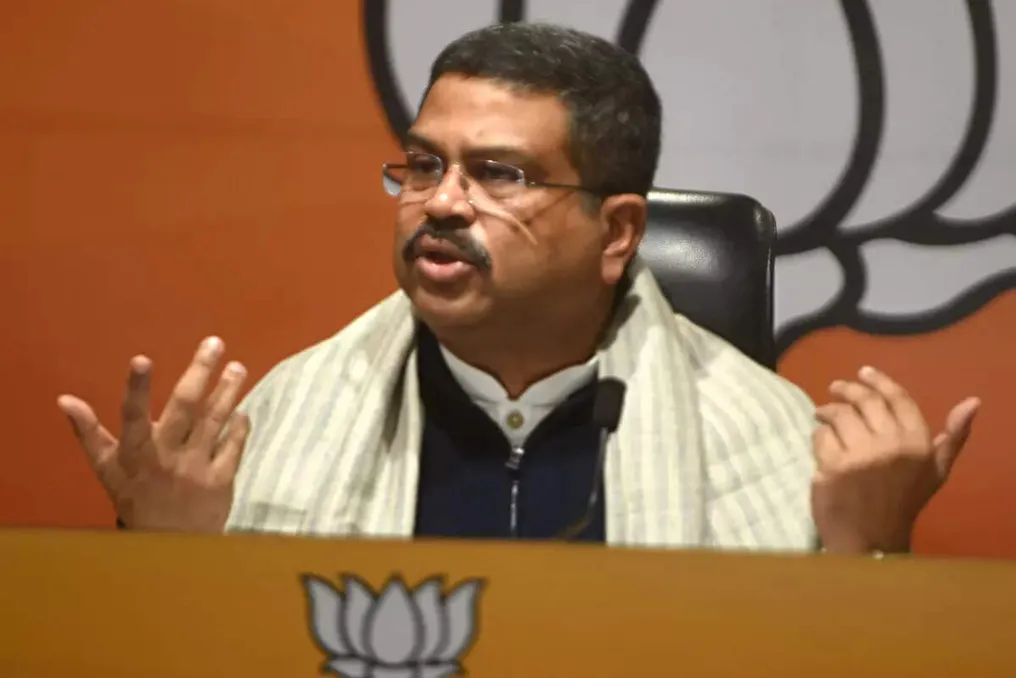
Dhandendra Pradhan, who left his post as Union Minister of Education on Saturday after five years in office, left behind an education system that became more standardized, digitized, and centrally regulated compared to before. However, this system also raised questions regarding the reliability of exams, institutional autonomy, data privacy, and the Central government's ability to implement reforms of such a large scale.
Similar stories
Popular
Key Achievements of the Period
Pradhan, who held the position of Education Minister longer than anyone else in Prime Minister Narendra Modi's cabinet, oversaw this portfolio from July 7, 2021, to July 25, 2026. Before 2024, he was also responsible for skill development and entrepreneurship. His work was aimed not so much at announcing a new education policy—since the National Education Policy was approved in 2020—as it was at creating the necessary infrastructure for its practical application.
Standardization and New Tools
A central theme of his tenure was the standardization and portability of educational materials: the introduction of common entrance exams, the possibility of transferring academic credits, permanent student identification numbers, comparable assessment standards, and attempts to create a unified higher education regulator.
The Common University Entrance Test, introduced in 2022, was intended to replace various XII-grade cutoff scores with a single platform for admission to central universities. It also significantly expanded the powers of the National Testing Agency, whose work and reliability later became one of the most serious problems during Pradhan's leadership.
Digitization and Learning Structure
The National Credit System, Academic Bank of Credits, and four-year undergraduate programs were designed so that students could accumulate and transfer credits, take interdisciplinary courses, and enter or leave programs without losing their academic history. The APAAR system, conceived as a permanent academic identification for every student, aimed to link school, university, and professional qualifications through DigiLocker and the credit bank. Although the goal was to facilitate mobility, it raised concerns about consent and child data protection.
In school education, the ministry released curriculum frameworks for the foundational stage and general education, implementing the NEP 5+3+3+4 structure. The PM SHRI project was launched to modernize over 14,500 existing government schools as models for NEP implementation, and PARAKH was established to develop common assessment standards and improve comparability between school boards.
Large-Scale Initiatives and Resistance
Other major measures included the National Research Fund Anusandhan, the 'One Nation—One Subscription' subscription for access to scientific journals, funding PM-USHA for state universities, allowing foreign universities to open campuses in India, and establishing IIT branches abroad. Pradhan also promoted textbooks in Indian languages, interdisciplinary education, integration of vocational training, and apprenticeship programs by leveraging the intersection of his portfolios in education and skill development.
The proposed replacement of UGC, AICTE, and NCTE with a single regulatory architecture was never completed. Furthermore, implementation faced resistance from some states regarding language, curriculum, and centrally sponsored programs.
Challenges of National Assessment
Ultimately, the most obvious contradiction of the Pradhan era lay in national assessment. While common exams were supposed to ensure fairness and uniformity, leaks of examination materials, cancellations, and administrative glitches cast doubt on whether centralization had outpaced institutional capacity.
Two commentators from RTP discussed two current issues: the scandal involving the Minister of Internal Affairs and the chaos observed during the national exams.
Political Situation
The topic concerning the Minister of the Interior Administration was raised. The Chega party announced its intention to initiate an investigation commission, although Andre Ventura assured that such a commission is not intended to counteract the Judicial system. The PS party believes that this party seeks to weaken the work of the police, while Iniciativa Liberal insists on hearing the minister even during his vacation.
Exam Situation
Regarding the national exams, after reviewing and making changes to various grades, 600 instances of discrepancies remain that require resolution. The second stage of the review concluded this Friday.