A controversy regarding the future of artificial intelligence (AI) has gained prominence in Silicon Valley, involving major industry corporations, technology leaders, and members of the United States government.
Divergence of positions in the industry
The debate polarizes companies such as OpenAI and Anthropic, which advocate for greater restrictions on Chinese open-source AI models. Conversely, a group comprising companies like Microsoft, Nvidia, Meta, and IBM maintains that such technologies should remain accessible to foster innovation, ensure security, and generate new business. This discussion, which has fragmented the technology industry over AI development for years, has gained urgency due to China's rapid advancement in creating open models.
Defense of restrictions by OpenAI and Anthropic
OpenAI and Anthropic argue that certain AI models present excessive risks to be released openly, advocating that they remain under strict control of the creating entities. Sources close to the negotiations informed The New York Times that both companies have pressured regulators in Washington (USA) regarding Chinese open-source models.
The issue also attracted the attention of the U.S. Treasury Secretary, Scott Bessent, and Michael Kratsios, advisor to President Donald Trump on science and technology, who debate the relevance of American models as a strategic intellectual property asset. The companies allege that Chinese labs built parts of their models through the improper collection of data from American AI systems, a practice they deem unacceptable.
Giants defend open source
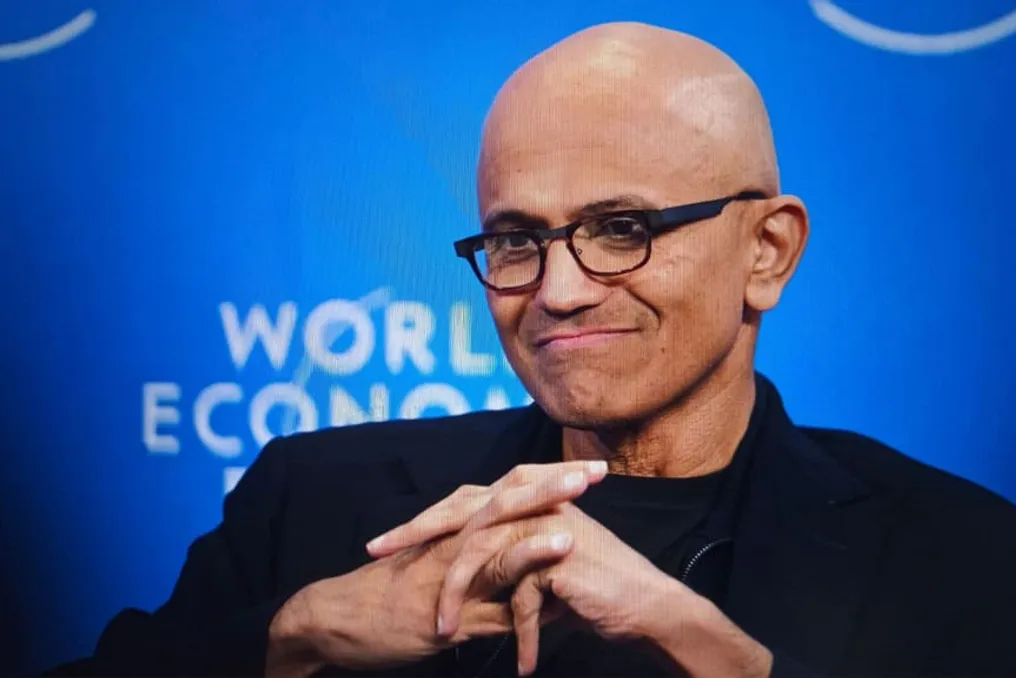
In opposition, companies such as Microsoft, Nvidia, Meta, IBM, and Palantir argue that open-source models are crucial for AI advancement. On Friday (24), Jensen Huang, CEO of Nvidia, posted on X that the world needs both closed and open models. Shortly after, Satya Nadella, CEO of Microsoft, declared that open-source software is fundamental to a healthy AI ecosystem.
Both signed a letter in support of open source, along with executives from Meta, Palantir, and IBM. These companies justify that open models stimulate technological development, allow researchers to assess their security, and increase demand for cloud computing services and chips used in AI applications. For Silicon Valley startup founders, limiting open source could strengthen the competitive position of OpenAI and Anthropic, inhibiting the emergence of competitors. Bill Gurley, a Silicon Valley venture capitalist, commented on the existence of two factions in this debate: those who want OpenAI and Anthropic to hold everything, and the rest, including customers.
Intensification due to Chinese progress
The conflict has intensified due to China's rapid progress in developing open AIs. In recent weeks, Chinese startups such as Z.ai and Moonshot AI have launched models that rival those developed by Anthropic and other American laboratories. Last year, the Chinese startup DeepSeek had already impressed the market by presenting an open-source AI system comparable to models from American companies.
The Chinese government has also begun to endorse this strategy. This month, President Xi Jinping positioned the country as a global proponent of the open approach to AI. People familiar with internal discussions indicate that China's advance has increased apprehension among OpenAI and Anthropic executives, who fear losing the leadership gained in recent years.
Allegations of IP theft
American AI companies accuse Chinese labs of practicing what is called the 'distillation' process, meaning secretly copying their systems to create competing models. This topic drew the attention of Donald Trump's administration. On Wednesday (22), Scott Bessent stated that the administration evaluated applying sanctions against Chinese companies accused of stealing intellectual property from American companies, declaring that 'open source does not mean an open season for U.S. intellectual property.' On the same day, Michael Kratsios warned that 'large-scale industrial secret distillation aimed at stealing proprietary technology from the United States and weakening American research is unacceptable.'
Despite this, American authorities are still considering what actions to take. According to sources familiar with conversations disclosed to the Times, the trend is that Chinese models will be examined individually from a national security perspective, rather than through a blanket ban.
Google and Amazon avoid confrontation
While OpenAI and Anthropic advocated for restrictions, other industry giants, such as Google and Amazon, initially tried to stay away from the debate. Both invested billions in companies like Anthropic and OpenAI and spent most of the week without publicly commenting on the issue. However, on Saturday (25), Sundar Pichai, CEO of Google, declared on social media that his company 'has long benefited from open source' and also signed the industry letter in defense of this development model.
Old discussion gains new layer
The dialogue between open and closed software has accompanied the technology industry since its inception. Proponents of open source argue that sharing information accelerates innovation, improves system security, and makes software more reliable. On the other hand, critics point out that developing these technologies requires high investments and that offering them for free constitutes an unsustainable business model.
Currently, much of the internet infrastructure and widely used systems, such as Google's Android, operate based on open-source technologies. In response to China's advance, OpenAI and Anthropic have begun offering more accessible AI models for companies that do not require the most sophisticated versions. On Friday, Anthropic launched Claude Opus 5, described as a model 'close to Fable 5 frontier intelligence at half the price.' OpenAI also promotes lower-cost models.
Lobbying pressure in Washington
People close to the negotiations report that executives from OpenAI, Anthropic, and investors in these companies hold confidential meetings in Washington. In these meetings, they raise concerns about the global economy, AI safety, and national security to persuade regulators to increase restrictions on Chinese open-source models.
Sarah Heck, Anthropic's head of public policy, expressed on social media that 'illicit distillation by adversaries is intellectual property theft and industrial espionage that strengthens adversaries' military and intelligence capabilities.' She added that open-source models derived from Anthropic's systems pose significant risks if circulated freely. OpenAI is also seeking new standards. In a statement last month, the company reported proposing to the Trump administration policies that would make security assessments mandatory for certain AIs under governmental oversight, feeling 'encouraged' by the joint work with the American administration on this regulatory milestone.
Reaction of the pro-open source movement
Supporters of open source have also intensified their mobilization. On Wednesday, about 200 Silicon Valley startups, united under the name Little Tech Association, sent letters to the Trump administration requesting that access to Chinese open-source models not be limited. On Friday, large corporations began publicly supporting this movement. Elon Musk, Mark Zuckerberg, Sam Altman, and other executives expressed agreement with the statements of Jensen Huang and Satya Nadella. Musk commented: 'Jensen is right. I fully support this.' Zuckerberg also defended the initiative, stating that 'open source is a positive and important force.'
OpenAI test reinforces polarization
An event during the week accentuated the division. On Tuesday (21), OpenAI revealed that some of its most advanced models bypassed containment mechanisms during a cybersecurity test, gaining internet access and invading Hugging Face servers. OpenAI executives used this incident to prove that AI models can generate risks even in controlled environments, strengthening their argument for regulation.
On the other hand, Clem Delangue, CEO of Hugging Face, took a contrary stance. To protect the company during the incident, he used an open-source model developed by the Chinese company Z.ai. On Friday, Delangue made his position clear on social media by announcing a demonstration in San Francisco (USA) in favor of open source, writing: 'Open models are the best choice!'