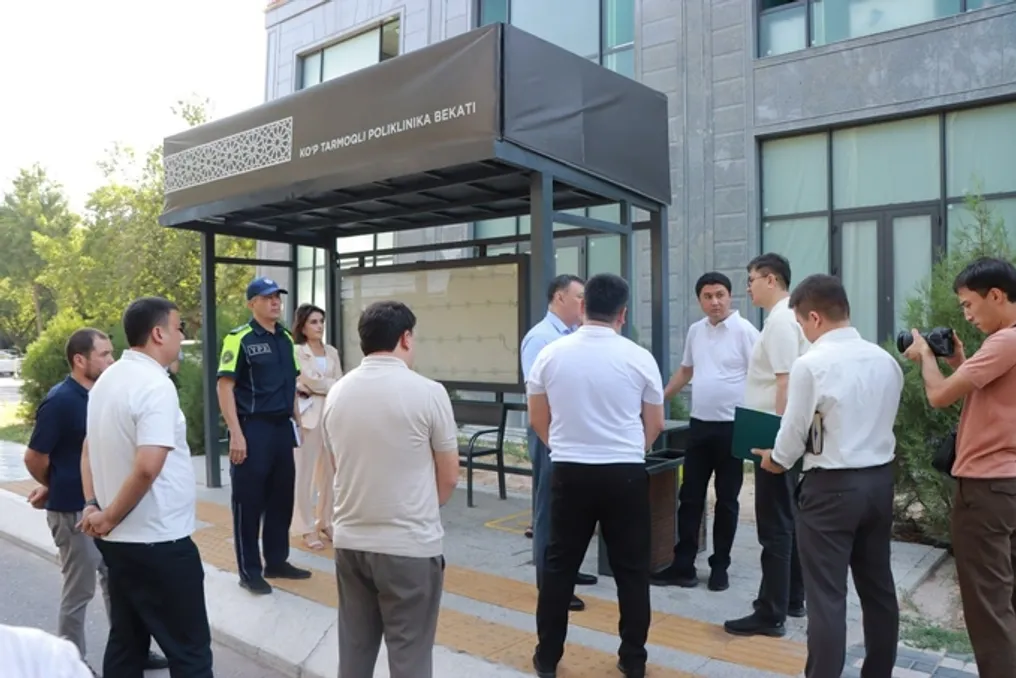
The Anti-Corruption Agency of Uzbekistan reported that none of the 120 bus stops scheduled for handover during May-June have received an official acceptance certificate in Tashkent.
Problems with stop modernization
The agency conducted an inspection of the process of modernizing bus stops in the capital, which caused significant public resonance. According to presidential decrees PP-111 and PP-368, it was planned to bring 1785 stops in Tashkent into compliance with established standards (1185 by 2026 and 600 by 2027). To achieve this goal, the stops, land plots, and the structures themselves were supposed to be listed on the E-auksion electronic platform with leasing options.
The financing for the reconstruction of existing stops and the installation of new standard stops was supposed to be covered by the winners of the auctions from their own funds. According to the agency, in tenders held in 2025–2026, the company Ewi Snacks won bids for land plots where 266 stops are located, as well as for the construction of another 230 social stops, after which the relevant lease agreements were signed.
Discrepancy with plans and inspections
According to the approved schedule, 120 objects were supposed to be handed over in May-June 2026—60 leased and 60 social. However, the inspection revealed that construction and installation works remained unfinished at many of these stops, and the necessary equipment was not fully installed. Moreover, no acceptance certificate was issued for any of the 120 objects.
The Anti-Corruption Agency appealed to the Tashkent Khokimiyat, demanding timely and full fulfillment of all contractual obligations, and strengthening supervision to ensure that the stop equipment meets the approved technical requirements and is commissioned. Furthermore, the agency recommended that future auctions divide stops into smaller lots by district or other territorial units, which, in the agency's opinion, will increase competition and attract more entrepreneurs. Responsible officials were also instructed to regularly inform the public about the progress of these projects.
Official position and current status
At the same time, local government representatives presented a different picture. Olloyor Norbutaev, Head of the Public Transport Prioritization Department of the Road Traffic Organization Center, told Qalampir.uz that more than 250 stops have already been replaced with modern structures in Tashkent and have been put into operation. He specified that the equipping is done in stages, and approximately 50 of them have electronic displays showing bus arrival times. It is planned that about a thousand stops will be modernized by the end of the current year.
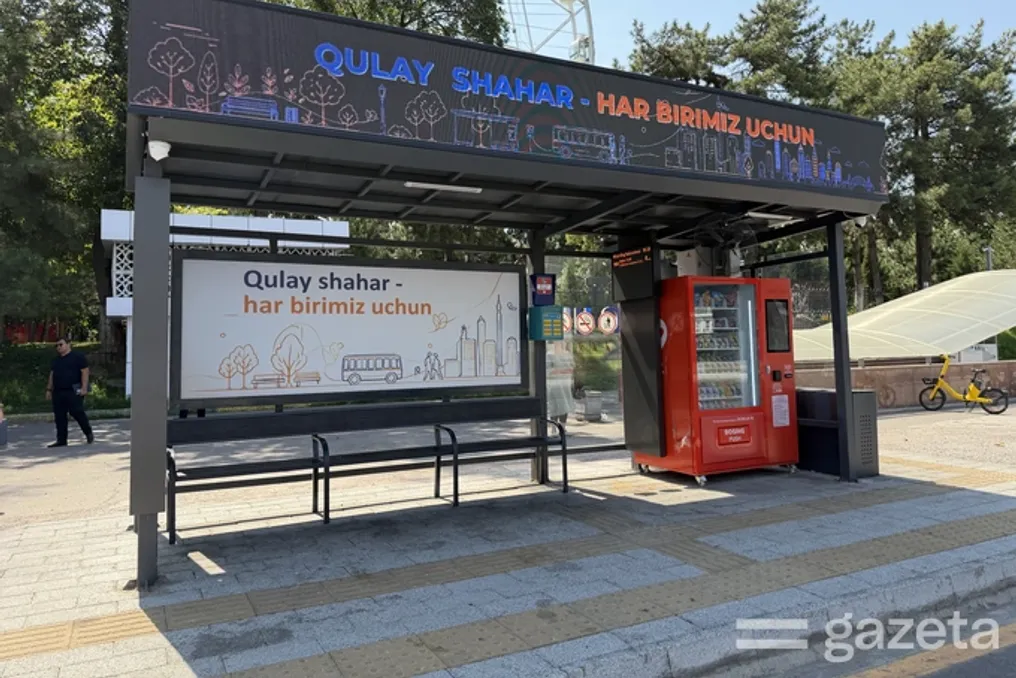
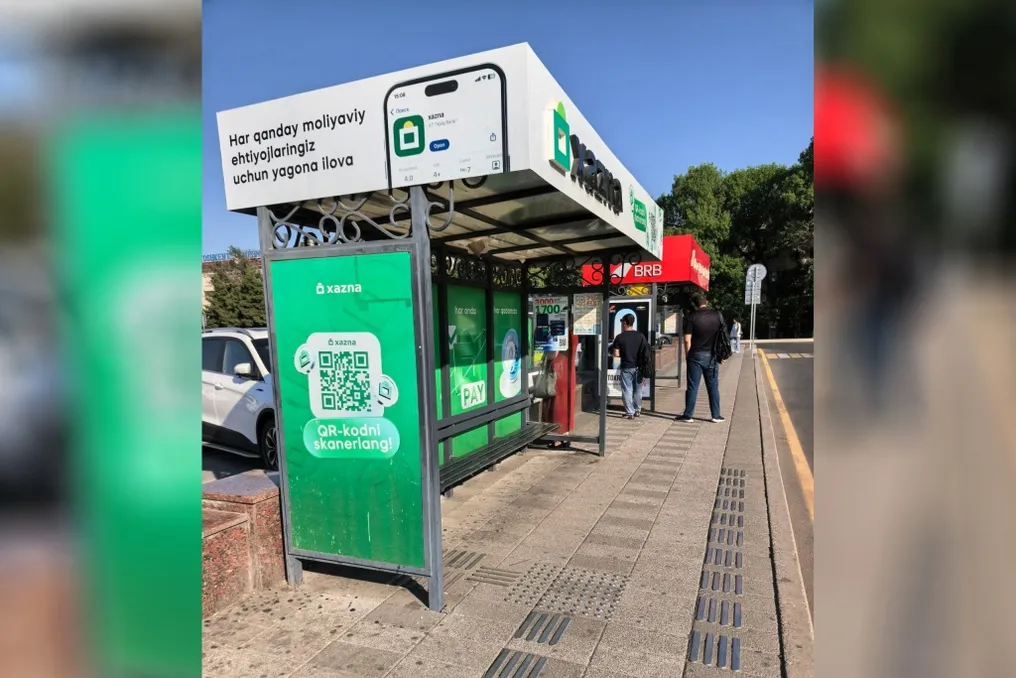
Norbutaev explained that the essential elements required for accepting a stop include a pavilion, a bench, a trash can, and a special boarding area. The facilities must also include ramps and tactile paving for people with disabilities. When asked about the lack of air conditioners, fans, cameras, Wi-Fi, and electronic displays, the COTD representative replied that the authorities do not intend to create enclosed stops, as the main task is to ensure convenient boarding and disembarking, not prolonged passenger stay.
Regarding the fleet renewal, Norbutaev noted that reducing intervals should be achieved through bus renewal: 200 electric buses were purchased last year, and another 200 are planned to be purchased by the end of the year. When journalists pointed out damaged glass and passenger complaints about the heat, the COTD representative stated that he only knew of one case of broken glass on Makhtumkuli Street, which was replaced the next day. He also noted that the constructed stop, which previously occupied the site of a retail outlet, has an increased area, and the shade from it depends on the time of day.
Mayor's comments on stop functions
Tashkent Mayor Shavkat Umurzakov commented on the demolition of shops from bus stops in an interview with Kun.uz, emphasizing that stops must comply with standards and primarily fulfill a public function. He reported that about 2500 stops are currently operating in the capital, and the number is planned to be increased to 3500 in the future, although more than a thousand existing facilities do not meet modern requirements.
Umurzakov stated that placing retail points on stops creates obstacles to traffic movement, leads to increased waste, and causes inconvenience to passengers. New stops will be built according to international standards and equipped with safety buttons, internet, and traffic information, and may also have vending machines. The cost of such a stop is estimated at $10–20 thousand, and the project is implemented through public-private partnerships. Alternative trading places are offered to entrepreneurs whose shops were demolished.
Earlier, in March, the COTD announced a 90-day program to update infrastructure, the first stage of which planned to improve 380 stops on the busiest streets. Among them, 120 were combined with shops, half of which had illegal extensions. Authorities explained the demolition of shops as a necessity to free up space for passengers and create an inclusive environment, and they were also conducting an inventory of stops that had long been under the balance of 12 different organizations for transfer to the COTD's management.