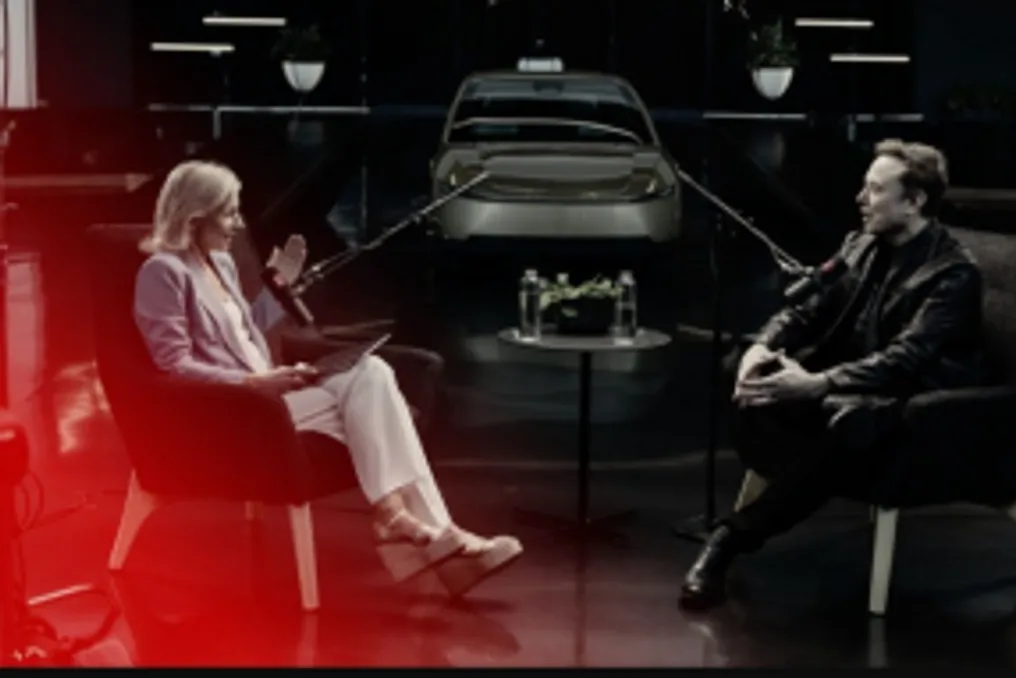
American entrepreneur Elon Musk expressed confidence in an interview with The Economist that artificial intelligence systems are capable of surpassing humanity's general intelligence within the next five years.
American entrepreneur Elon Musk expressed confidence in an interview with The Economist that artificial intelligence systems are capable of surpassing humanity's general intelligence within the next five years.
According to Musk, in about ten years, robots and artificial intelligence will take over a significant portion of both physical and intellectual labor, turning human work into a 'voluntary choice.' He believes this process will lead to 'unprecedented abundance' in the world, and money will lose its original significance.
Musk suggests that governments will be able to provide financial benefits to citizens because machine production of goods and services will become virtually unlimited. Furthermore, the risk of deflation will outweigh the risk of inflation.
Additionally, Musk warned that within the next twenty years, the possibility of civil war in Great Britain cannot be ruled out. He explained that the cause could be social disagreements stemming from views that contradict Western values.
Artificial intelligence (AI) is evolving from a mere automation tool to assume a fundamental role in business generation within insurance companies. A study conducted by CNseg in collaboration with EY indicates that the Brazilian market should invest up to R$ 2.8 billion in AI by the end of 2026.
Currently, approximately 80% of insurers already incorporate AI in various operational phases, such as customer service, claims management, and risk underwriting. However, the technology is beginning to expand into product distribution.
With AI, agents not only direct the user to specific forms but are also capable of understanding the conversation context, identifying the consumer's protection needs, answering questions, and finalizing the contract directly in the environment where the client is already interacting.
Mauro D’Ancona, CEO of 180 Seguros, emphasizes that the next stage in insurance distribution involves allowing AI to actively participate in the purchasing experience. He clarifies that this goes beyond simple process automation, aiming to create a new layer of distribution based on natural language, context, and personalization. According to him, insurance will be offered at the opportune moment because AI will recognize the need, explain the coverage in an accessible way, and can conduct the entire conversational process, whether through text, voice, image, or video.
This advance reflects a broader transformation in the application of AI in the segment. Previously, its use was restricted to internal processes, optimizing analyses and automating back-end tasks. Now, the technology is entering the front line of consumer interaction.
In the area of claims, AI already performs automated regulation, which reduces analysis time and allows for the quick payment of approved indemnities. Furthermore, AI assists in the development of new products, suggesting price ranges and coverages based on partner characteristics and their client portfolio.
It is expected that this model will become increasingly common as institutions such as banks, fintechs, and digital platforms intensify the use of generative artificial intelligence in their contact channels. According to Capgemini, 60% of consumers declare a willingness to share personal data in exchange for more customized protections, signaling that the demand for contextualized experiences will drive the adoption of intelligent agents in insurance distribution. Thus, these agents cease to be mere virtual assistants to take on a proactive role in the commercialization of financial services.
The growing conversation about the impacts of quantum computing on digital security is drawing the attention of governments, experts, and corporations. Although the topic has recently become prominent because of potential risks to cryptocurrencies, its consequences extend beyond the financial sector, potentially affecting all digital infrastructure currently used to protect transactions, communications, and data.
The cryptographic methods currently used to secure systems in banks, hospitals, industries, public bodies, and various companies risk becoming vulnerable to the processing power of quantum computers in the future. This area, called post-quantum cryptography (PQC), has been the subject of study by several global entities for years. With the definition of quantum algorithms, the stage of cryptographic replacement begins, which implies investments.
It is essential that preparation for this change begins before the technology becomes widely accessible. The transition to new security standards will be a gradual and intricate process, requiring the identification of where cryptography is applied, the prioritization of vital systems, the updating of software, and ensuring that the technological infrastructure is ready for future changes.
A relevant concept is 'Store Now, Decrypt Later'. This tactic consists of capturing information protected by encryption today to store it, with the intention of decrypting it later when cryptographically advanced computers are available. In practice, data considered secure in the present can remain exposed if it has strategic value for many years, such as government records, intellectual property, sensitive personal data, research, and financial information.
Experts argue that the discussion should not be limited only to cryptocurrencies. For example, companies that have shares traded in the United States will need to comply with the security requirements established by Americans. Quantum computing signals a broader shift in the structure of digital security, forcing companies to develop more adaptable systems to keep pace with the evolution of international data protection standards.
Anderson Santos, a researcher and expert in Post-Quantum Cryptography from Venturus, emphasizes that Brazil is one of the most targeted countries for cyberattacks in Latin America. He stresses the need for the country to keep pace with other nations and blocs that are undertaking this migration, warning that otherwise, crucial sectors of the infrastructure will be vulnerable to attacks. Furthermore, he mentions that many companies are already subject to international standards, especially those headquartered or operating in other countries.
Complementing this view, Anderson points out that sectors related to essential infrastructures, such as health, energy, and finance, demand extra attention, given that the realization of a threat in this scenario could affect millions of lives. He concludes that anticipating this situation allows one to stay ahead of the competition and prepared for a new era of cybersecurity. Additionally, quantum computing offers opportunities for innovation and development, benefiting organizations that plan ahead to protect their digital assets and meet future regulations.
After a long period of hidden development, deepfake technology has made a qualitative leap that surprised even experts. Artificial intelligence has reached such a level of realism in generating faces, voices, and movements that it can now easily deceive people without special training or even automated verification systems.
By 2026, a radical change is expected: the end of the era of pre-recorded clips and the beginning of the era of real-time synthesis. This means that fake content will be able to react and interact with a person during live communication.
Previously, a deepfake was a static video that could be analyzed later. However, new generation models ensure temporal consistency: movements look logical from frame to frame, facial features do not flicker or distort around the eyes or jaw, and the personality remains stable even when the 'performance' changes. This allows for the free combination of movement characteristics and identity, for example, applying one gesture to different faces or giving multiple expressions to one fake personality.
The practical consequence of this is that the deepfake ceases to be just a file and begins to function as a 'digital actor' capable of responding in real time to a video call or conversation. This significantly complicates manual verification, as many visual signs of manipulation, such as flickering, artifacts, or lighting inconsistencies, disappear.
Similar to the development of video, voice cloning has also overcome a barrier. Only a few seconds of audio sample are needed to create a convincing voice with natural intonation, rhythm, pauses, and even breathing, which can mislead the human ear in most everyday situations.
This progress already has direct consequences: large retailers report receiving over 1000 fraudulent calls generated by AI daily. Such a volume was unimaginable recently and demonstrates how synthetic voice fraud has turned from a theoretical risk into an industrial operation.
The rapid spread of this phenomenon is explained by three factors. Firstly, technical realism: the most modern video models are designed specifically to maintain consistency between frames, eliminating visual errors that previously served as forensic evidence. Secondly, indistinguishable voice: voice cloning has exceeded what researchers call the 'threshold of indistinguishability,' making it unreliable to rely solely on hearing. Thirdly, almost zero technical barrier: the availability of generation tools and the automation of the process using AI agents allow almost anyone to create coherent and large-scale fake content without needing advanced technical knowledge.
According to security sector estimates, the growth rate is impressive: the number of detected deepfakes is projected to grow from approximately 500 thousand in 2023 to nearly eight million in 2025, corresponding to an annual increase of about 900%.
In light of this situation, the traditional defense method—analyzing pixels for visual errors—is losing its effectiveness. Researchers point out that current defense is shifting from human judgment to infrastructure protection, including:
For businesses, the immediate risk is fraudulent attacks via voice or video, ranging from 'digital kidnapping' to a fictitious executive authorizing fund transfers. For public discourse, the threat lies in real-time disinformation: simulations of interviews, bulletins, or polls that appear authentic enough to spread and influence before any verification can take place.
The central point for 2026 remains that the line between 'real' and 'synthetic' is no longer a matter of technical quality but a matter of trust in infrastructure—here, the source signature, authentication, and digital literacy will carry more weight than a person's ability to 'feel' that something is fake.