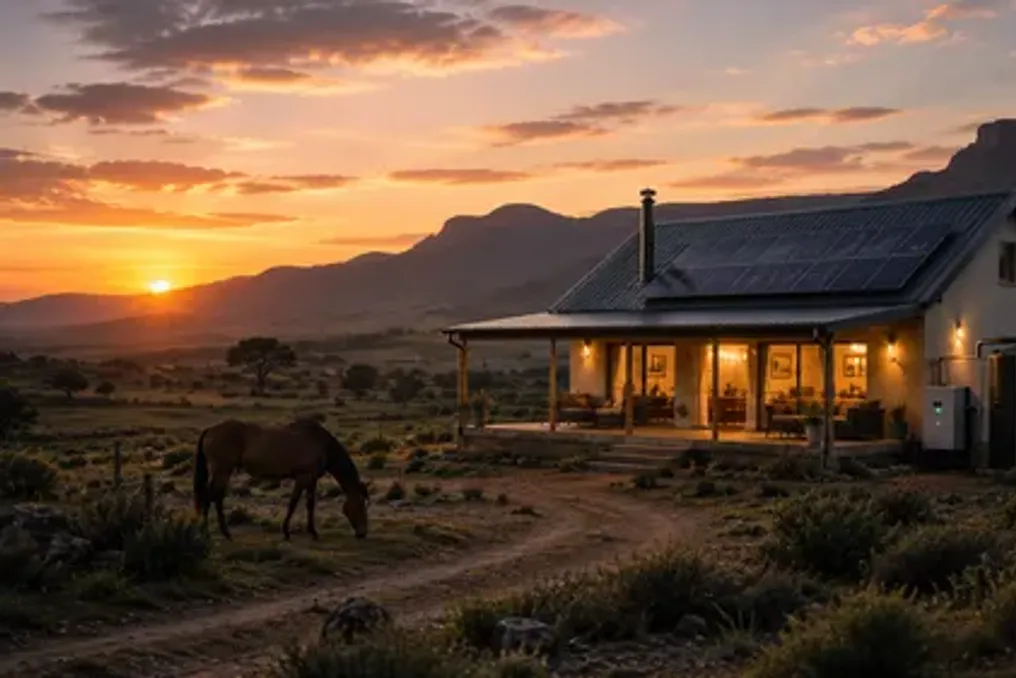
As homeowners begin to move away from complete reliance on centralized networks, municipal services cease to be the sole point of failure. Previously, solar panels, rainwater harvesting tanks, and boreholes were considered luxury additions, whereas today they have become a necessity and a form of insurance against municipal problems.
Similar stories
Popular
Years of electricity tariff increases above inflation, frequent power outages, water supply interruptions, and aging infrastructure have fundamentally changed homeowners' expectations for their residences. These concerns are not unfounded: the latest report from the Auditor General on local government paints a worrying picture of municipalities struggling with deteriorating infrastructure, weak financial management, and persistent governance issues, leaving many communities vulnerable to unreliable electricity and water services.
Risk Reduction Instead of Complete Abandonment
Against this backdrop, the rapid growth in the use of rooftop solar panels, energy storage systems, rainwater harvesting, and backup water supplies is viewed not so much as a complete rejection of municipal services, but as a way to minimize the risks associated with them. Homeowners are increasingly enhancing the resilience of their homes so that a plumbing failure, substation breakdown, or another tariff hike does not lead to an immediate disruption of daily life.
However, one of the most common misconceptions about transitioning to self-sufficiency is that it begins with expensive technology, when in reality, the key element is simply reducing demand. For cost calculations and examples in this article, a typical three-bedroom house of 150 m² in South Africa, inhabited by a family of four, was used. Actual requirements and costs will vary depending on household size, location, roof orientation, and electricity and water consumption.
Prioritizing Demand Reduction
The transition to self-sufficiency does not necessarily have to happen all at once. Before spending hundreds of thousands of rand on renewable energy sources, the most sensible investment is often reducing overall demand. This can be as simple as replacing old incandescent bulbs with LEDs, installing a smart controller for a geyser, improving attic insulation, or replacing an old refrigerator with a more energy-efficient model. These improvements are among the least costly for a homeowner. For example, replacing all light bulbs in an average home typically costs between 1,000 and 3,000 rand, while installing a smart geyser controller costs between 2,000 and 6,000 rand.
Quick Savings
Given that a geyser can account for 30% to 50% of a household's electricity consumption, these relatively modest investments often yield the fastest savings. The same logic applies to water consumption. A leaking toilet can consume over 12,000 liters of water monthly, whereas using efficient taps, low-flow showerheads, and drought-resistant landscaping reduces demand without radically changing daily habits. Although these improvements may seem minor individually, collectively they reduce the amount of electricity and water needed to run the home. This allows subsequent installations—whether a battery, solar panel, or reservoir—to be smaller, making the entire process significantly more affordable.
Building Resilience First
Once consumption has been reduced, the next goal is not complete independence, but ensuring resilience that guarantees the continuation of daily life during municipal service failures. In the case of electricity, this often starts with a modest inverter and battery capable of powering essential circuits during an outage. Lighting, refrigerators, internet connectivity, and security systems can continue to operate for hours, ensuring continuity without the need for a full-scale solar installation. A typical initial backup power system usually costs between 15,000 and 30,000 rand.
Water resilience works on a similar principle. Installing a 2,500-liter storage tank with a pump typically costs between 8,000 and 15,000 rand, while larger 5,000-liter systems can cost between 12,000 and 22,000 rand before adding filtration equipment. These reservoirs do not replace municipal supply but provide a buffer of time. Whether the water main bursts, supply is interrupted for scheduled maintenance, or the pumping station fails, stored water allows households to continue functioning during repairs.
Generating Your Own Energy
Only after the home's energy needs have been reduced does solar energy begin to make real financial sense. Modern residential systems combine rooftop photovoltaic panels, hybrid inverters, and lithium-ion battery storage to generate electricity during the day and store excess energy for use after sunset or during outages. A typical 5 kW hybrid solar system with battery storage usually costs between 120,000 and 180,000 rand, depending on equipment specifications and installation complexity. In many parts of South Africa, a system of this size can generate approximately 8,000 to 10,000 kWh of electricity per year, which is enough to meet most needs of an energy-efficient household. Larger systems, capable of powering pool pumps, several air conditioners, and other heavy electrical loads, can exceed 250,000 rand, although few households require such investments initially.
Hybrid System as an Alternative
An important point is that efficiency determines affordability. A household that has already reduced its electricity consumption can install a smaller solar system, fewer batteries, and a cheaper inverter than one trying to support unnecessary demand. Over five years, a typical residential solar system can save between 50,000 and 150,000 rand on electricity bills. Despite the popularity of the term 'off-grid,' most homeowners may not completely disconnect from Eskom. Instead, they create a hybrid system where solar energy provides most of the home's daytime needs, batteries provide power after dark, and the grid connects only when demand exceeds the household's capacity. Thus, the grid becomes a backup source, not the primary one.
Diverse Approach to Water
Creating water resilience usually involves combining several different sources, rather than relying on a single solution. Rainwater harvesting is often a logical first step. Roofs become collection areas, gutters direct rainwater into storage tanks, and first-flush diverters remove debris before clean water enters the system. A typical 150 m² roof receiving about 600 mm of annual rainfall can collect approximately 90,000 liters of water per year—enough for a significant contribution to toilet flushing, laundry, and garden watering. Additional filtration or UV treatment can make collected water potable where appropriate. Some homeowners supplement this with a borehole, especially in areas with reliable groundwater reserves. While boreholes can significantly reduce dependence on municipal water, they remain one of the most expensive investments in household resilience. Drilling alone typically costs between 40,000 and 120,000 rand, and pumps, storage, filtration, and electrical connections can increase total costs to any amount from 80,000 and over 200,000 rand, depending on geology and water quality.
Phased Building of Resilience
For most households, resilience is achieved not by replacing one source with another, but by ensuring the availability of multiple sources when necessary. Municipal supply, harvested rainwater, and, where possible, groundwater play a role in reducing household vulnerability to outages. As homeowners progress toward self-sufficiency, municipal services cease to be a single point of failure; they become part of a broader system where rooftop solar panels, battery storage, rainwater harvesting, and stored municipal water work together to maintain the home's function. This is why resilience is rarely built within a single large project, as homeowners typically start with relatively inexpensive efficiency measures before adding backup power. Solar panels and battery storage often follow this, and rainwater harvesting or boreholes are introduced later, if circumstances and budgets allow. Each stage reduces dependence on municipal services, making the next investment smaller, more efficient, and more affordable. Ultimately, every installed solar panel, every connected rainwater tank, and every added battery reflects the homeowner's decision to take greater control over services once considered reliably provided by the state—and a quiet verdict on trust in those who should provide them.
Uzbekistan is launching a large-scale reform of its environmental assessment system. Cabinet of Ministers Resolution No. 234, adopted on May 11, 2026, establishes the practical basis for implementing the revised Law on Environmental Review, which was approved a year earlier.
Goals of the Reform and Simplification of Procedures
The main goal of this document is to simplify processes for enterprises, increase the transparency of environmental inspections, and bring national practice in line with the country's international obligations.
Reducing Bureaucracy for Small Businesses
One of the key changes is the reduction of the number of environmental review categories from four to one. This means that thousands of small businesses whose activities have a minimal impact on the environment will no longer be required to undergo the inspection procedure. Furthermore, facilities will be classified by sectors, which is intended to eliminate ambiguities in the application of legislation that enterprises and experts previously faced.
Transferring Review to a Unified Portal
The state process of environmental review is being fully transferred to the Unified Portal of Interactive Public Services (EPIGU), making the procedure more predictable and transparent. The resolution also enshrines legal mechanisms defining the rights and obligations of participants in the review process, procedures for collective consideration of disputed environmental conclusions, and rules for applying international instruments, including obligations arising from the Paris Agreement, the Basel Convention, and the Convention on Biological Diversity.
Public Participation and International Obligations
Another aspect of the reform focuses on public participation in decisions of environmental significance. New regulations for public hearings and public environmental reviews are designed to strengthen democratic participation while ensuring Uzbekistan fulfills its obligations under the Aarhus Convention.
Rating and Certification of Project Developers
The resolution establishes rules for the activities of organizations preparing project documentation, including the introduction of a rating system and the issuance of qualification certificates. Additionally, it defines requirements for organizations engaged in project development, mechanisms for assessing the effectiveness and quality of their work and project documentation, as well as qualification requirements and certification procedures for their specialists.
Strategic Environmental Assessment
A separate part of the reform is dedicated to strategic environmental assessment—one of the most important tools of international environmental management. New procedures for preparing reports on strategic environmental assessment and verifying their quality aim to enhance the environmental sustainability of state programs, policy concepts, territorial planning documents, and urban development plans.
Results and Expectations of the Reforms
According to 2025 data, state bodies responsible for environmental review issued 49,620 environmental conclusions. Approximately 700 projects did not meet environmental requirements. The authors of the reform expect that introducing mandatory qualification certification for project developers and implementing a rating system for project organizations will improve the quality of documentation and reduce the number of projects that do not comply with environmental standards. The Cabinet of Ministers expects that integrating modern international mechanisms into the environmental assessment system will strengthen environmental protection, reduce environmental risks, and contribute to creating a healthy and safe environment for future generations.
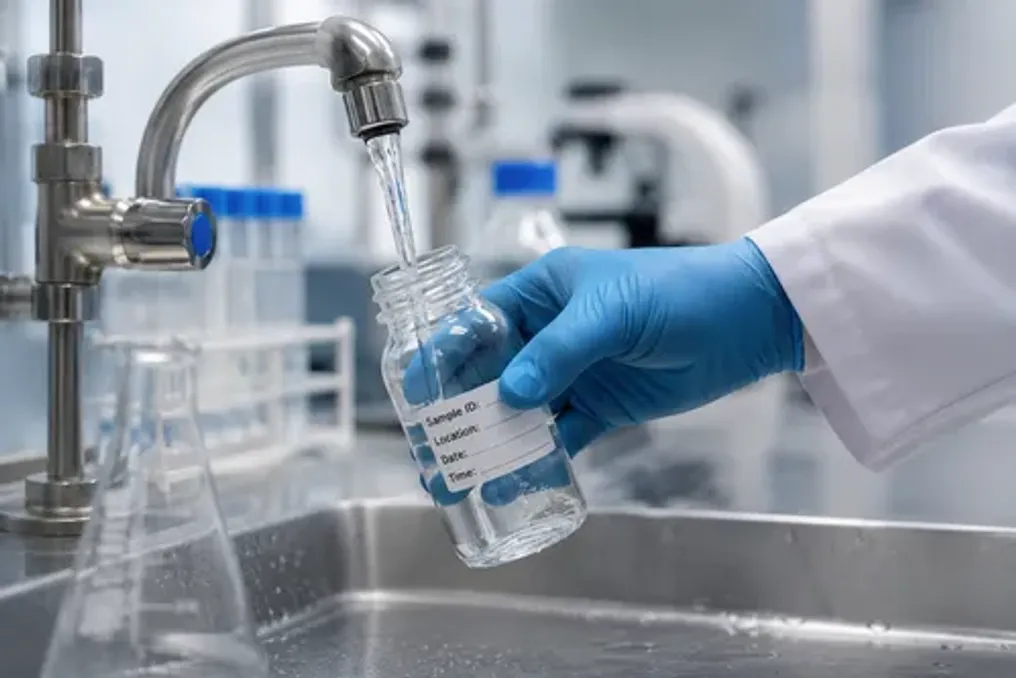
The Dubai Municipality has implemented an artificial intelligence (AI)-based system to accelerate water quality testing and enable more prompt detection of bacterial contamination, including species such as Legionella and Escherichia coli (E. coli).
Enhancing Water Control Standards
According to the municipality, the modernized service expands laboratory capabilities and contributes to protecting public health. The expanded testing system now covers a wider range of water sources used in domestic life and recreation, such as water storage tanks, taps, swimming pools, and non-bottled drinking water.
The application of AI technologies has significantly reduced the time required for laboratory analyses. Results for Legionella and E. coli are now provided much faster than with traditional methods, thanks to a fully digital analysis process, allowing for timely preventive measures when necessary.
Goals of the Initiative
Hind Mahmoud Ahmed, Director of the Dubai Municipality Central Laboratory Department, stated that the Dubai Municipality continues to utilize advanced technologies and artificial intelligence to provide laboratory solutions that strengthen proactive protection against public health risks. She emphasized that the current service improvement aims to speed up testing, increase reliability, and support faster preventative actions, reflecting a commitment to developing Dubai's healthcare ecosystem and its vision to become the best city in the world to live in.
This initiative is part of the Dubai Municipality's broader efforts to modernize laboratory services in line with international standards. The improved testing system is expected to support residential, hotel, recreational, and public facilities, helping to guarantee water quality safety and increasing trust in public health services.