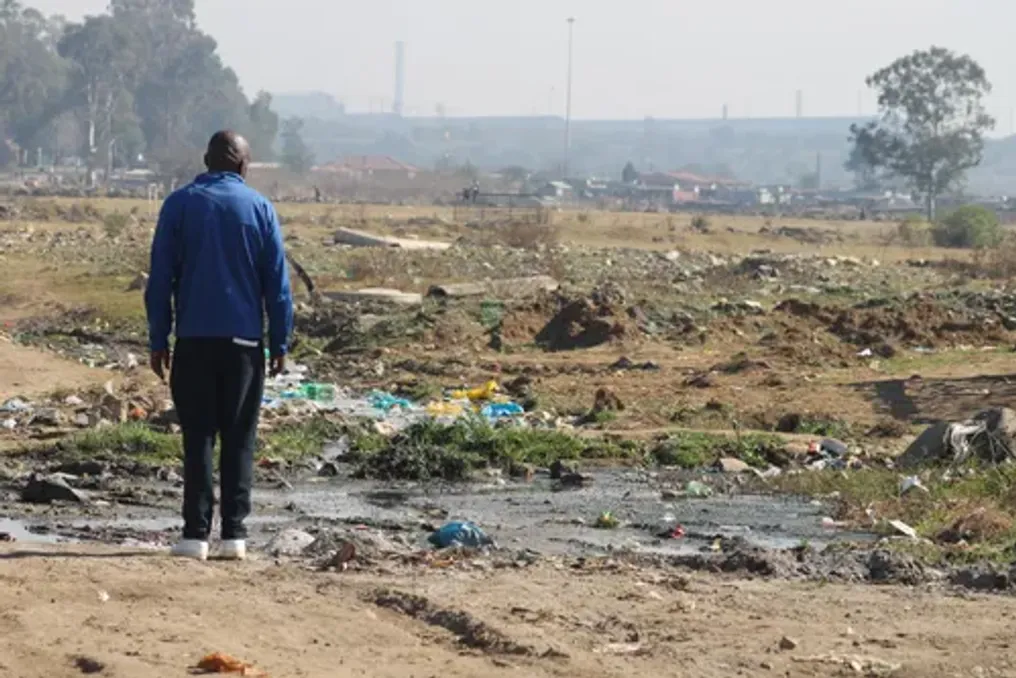
Even though over 70 million rand was spent on improving the sewage infrastructure in Boipatong, students at Lebohang High School are forced to attend classes near raw sewage. This leads to the contamination of the area, rendering sports fields unusable, and constant health problems that overshadow the educational process.
Situation at the School
The constant overflows have raised new questions about why students remain exposed to wastewater despite years of infrastructure modernization work. During a recent inspection visit, members of the school's safety and infrastructure committee described a learning environment that is increasingly polluted due to overflowing sewage.
They reported that regular sewer pipe bursts have made sports fields unusable, forcing students to play on paved areas outside the classrooms. One representative noted: 'Children now prefer to play on the pavement in front of the classrooms. The situation worsens during the rainy season. This negatively affects teachers, students, and all other school staff.'
Furthermore, it has been observed that the overflowing sewage regularly reaches the area near the school kitchen where food for students is prepared.
Reaction from Authorities and Municipality
Onwabile Lublelana, a representative of the Gauteng Department of Education, stated that the department is aware of the problem and dispatched a team to assess the conditions at the school. The assessment showed that the municipal sewer line runs through the school grounds, causing recurring flooding and sewage leaks on the schoolyard.
Lublelana added that although the Department completed the project to replace the sewage and wells on the school premises, they are in constant contact with the Emfuleni Municipality.
Mahosonke Sangweni, a representative of the Emfuleni Municipality, acknowledged that the main sewer modernization project is not yet complete, and the final unfinished section is expected to take another three or four weeks before the new line is operational. However, Sangweni insists that the recurring leaks at Lebohang High School are not solely related to this project; he claims that there are pre-existing drainage system issues at the school, as well as internal network changes requiring additional repairs, including the construction of a new well near the school kitchen.
The Municipality stated that it recognizes the impact of the situation on learning, knowledge acquisition, as well as on the health and safety of students and staff, and emphasized that a permanent solution will require urgent repair of the sewer line that directs wastewater from the school into the new main pipeline.
Questions Regarding Fund Expenditure
DA candidate for Mayor of Emfuleni, Kingsol Chabalala, questioned how over 80 million rand of public funds could be spent on modernizing sewage infrastructure and roads while students and residents continue to face recurring sewage overflows.
He stated that the residents of Boipatong deserve an explanation after the Emfuleni Municipality and the Gauteng Department of Roads and Transport spent over 80 million rand of public money to improve Sekati Street, including road surfacing and resolving long-standing sewage problems. Chabalala called this situation another example of poor project management, insufficient oversight, and an inability to ensure a return on investment for taxpayers.
He stressed that every penny of public funds must bring measurable benefit to the residents, and infrastructure projects must be carefully planned, professionally executed, and undergo strict quality control before contractors are paid. The Municipality reiterated that a permanent solution requires repairing the line that carries sewage from the school to the new main pipeline, and added that due to associated health risks, the work must be urgently carried out by the Metsi-a-Lekoa maintenance team.