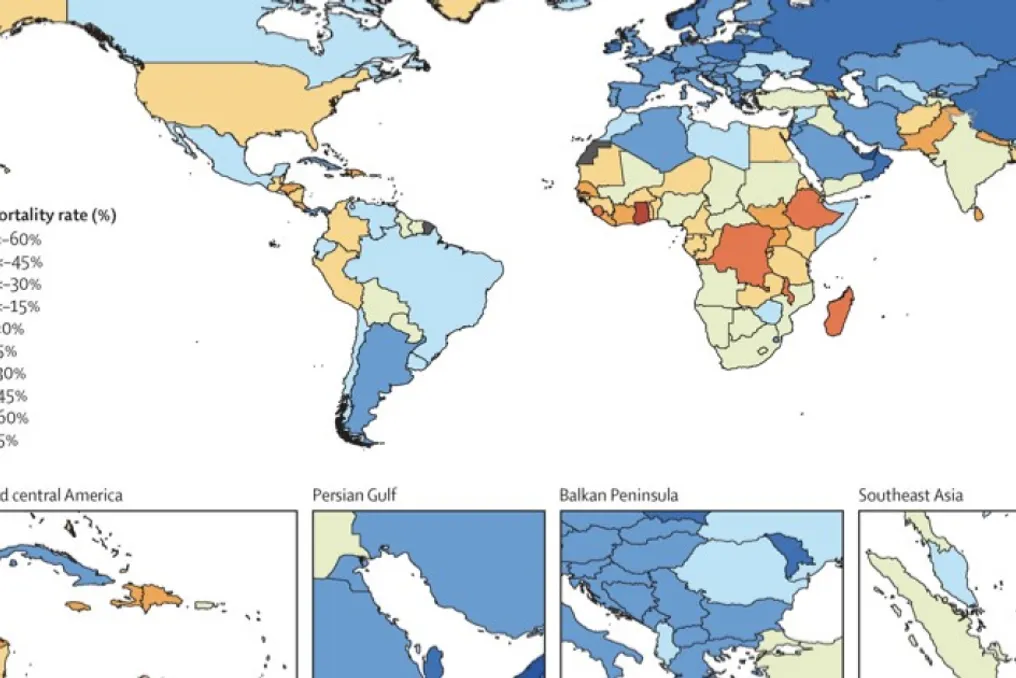
According to a study by the Global Burden of Disease, 50.9 million cases of traffic injuries and 1.34 million deaths were recorded worldwide in 2023. Traffic accidents are recognized as the leading cause of violent death among men aged 10 to 39 globally.
Trends in Injuries and Mortality
Analysis from 1990 to 2023 showed a 38.3 percent decrease in global age-standardized road injuries and a 32.3 percent decrease in mortality. In the Russian Federation, similar indicators decreased significantly: injuries fell by 43.8 percent, and mortality by 67.5 percent. These results were published in The Lancet Public Health.
Public Health Challenges
Despite the implementation of large-scale programs and strategies to prevent and reduce traffic injuries, target indicators have remained unmet for many decades. One of the key obstacles is the lack of sufficiently reliable global data on this type of injury.
Results of Global Epidemiological Analysis
The Global Burden of Disease collaboration conducted a comprehensive epidemiological study that provided internally consistent and comparable estimates for 375 diseases and injuries across 204 countries and territories from 1990 to 2023. In 2023, the global rate of road injuries was 623 cases per 100,000 population. The lowest injury rate was recorded in low-income countries (446.4 cases per 100,000 people), while the highest rate was noted in high-income countries (858.1 cases per 100,000 population).
Causes and Types of Injuries
Over thirty-three years, the age-standardized rate of road injuries decreased by 38.3 percent across all income groups. The most frequent causes of injury were motor vehicle injuries (38.8 percent of the total global number), pedestrian injuries (22.7 percent), cyclist injuries (19.8 percent), and motorcyclist injuries (13.2 percent). Among types of injuries, fractures were the most common (38.1 percent), followed by minor injuries (35.3 percent); head injuries accounted for 10.4 percent.
Mortality and Years of Life Lost
In 2023, the global mortality rate from traffic accidents reached 16.1 deaths per 100,000 population. Moreover, over 90 percent of these deaths occurred in low- and middle-income countries. Low-income countries recorded the highest mortality rate at 43.8 cases per 100,000 people, whereas in high-income countries, this figure was 7.5 cases per 100,000 people, which differs from the injury rates in the same group of countries.
Overall, over the last 33 years, the global age-standardized mortality rate from traffic injuries has decreased by 32.3 percent. Car accidents are responsible for 38.6 percent of road deaths, pedestrians for 29.9 percent, and motorcyclists for 23.8 percent. Traffic injuries are the leading cause of violent death among men aged 10–39 and the second most significant cause of violent death among children aged 5–9.
Situation in Russia
Losses of human life are estimated at 66.7 million lost years of life due to traffic accidents, with expected losses of working life amounting to 8.56 million, totaling 75.3 million disability-adjusted life years. In Russia in 2023, 1.37 million cases of traffic injuries were recorded, corresponding to an age-standardized rate of 987.5 cases per 100,000 people, demonstrating a 43.8 percent decrease since 1990. The age-standardized mortality rate in Russia in 2023 was 8.4 cases per 100,000 people, reflecting a 67.5 percent decrease compared to 1990.
Additional Risk Factors
Other, less obvious risk factors have been identified. For example, it was found that being diagnosed with migraines increases the probability of accidents in older people. Furthermore, in America, there is an increase in the number of traffic accident victims the day after mass shootings.
Social Media Behavior Study
A separate cross-study by American scientists showed a correlation between depression and more frequent posting on the social network X to gain likes. This relationship was confirmed in three different datasets, allowing researchers to suggest that such a behavioral pattern may be linked to mental health issues when using social media. The results of this analysis were published in JAMA Psychiatry.