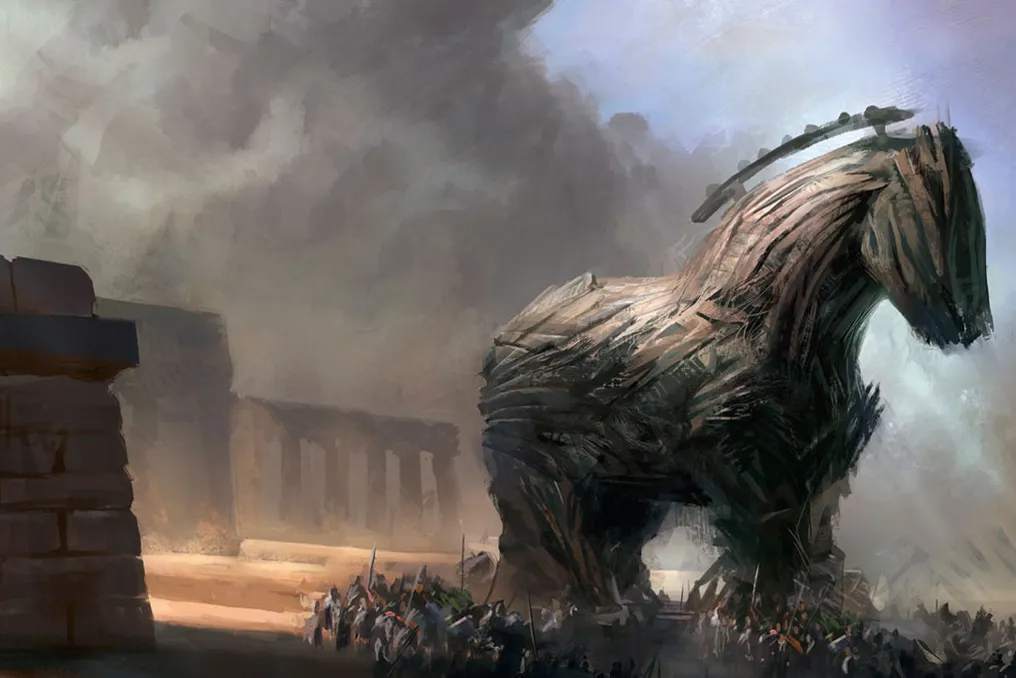
The works 'The Odyssey' and 'The Iliad' represent only two segments of a larger epic cycle, composed of eight distinct narratives related to the Trojan War. Much of the original material was lost over time, and crucial events, such as Achilles' death or Odysseus' murder by his own son, exist only through remaining fragments.
Context of the Epic Cycle
Many readers are familiar with the Trojan War, especially after recent cinematic adaptations, such as Christopher Nolan's. However, it is important to note that neither 'The Iliad' nor 'The Odyssey,' the Homeric poems considered pillars of Western literature, detail all these events. For example, the ingenious trick of the Trojan Horse is mentioned only superficially by Homer.
These central episodes belong to other literary works created in periods subsequent to the Homeric poems. 'The Iliad' and 'The Odyssey' are merely parts of a vast saga covering the preparations for the war, the unfolding of the conflict, and the fate of the heroes after the battle ends. Scholars call this collection the 'Epic Cycle,' which was traditionally recited by bards in Ancient Greece.
Loss and Attribution of the Works
Six of the eight narratives of this cycle were historically lost, leaving only the two Homeric poems. Knowledge of the lost works comes from summaries made by ancient authors and citations preserved in other literary creations.
Of the eight poems, only 'The Iliad' and 'The Odyssey' are directly credited to Homer. Although there is debate about the existence of a single author, it is accepted that Homer was regarded as the greatest poet by the ancient Greeks, and his works were essential in the education of the elite, which may have contributed to their preservation through copies on parchment and books.
The other six poems are by various authors and are most likely later than Homer's writings. They appear to have been elaborated to construct a cohesive chronology of the Trojan War, given that 'The Iliad' focuses on a specific segment of the conflict, and 'The Odyssey' narrates Odysseus' return after the war ends.
Chronological Analysis of the Poems
Below, we present the poems of the Epic Cycle in chronological order of the events they narrate:
1 – Cypria
Attributed to Stachys of Cyprus, written around the 7th century BC, this lost poem describes the beginning of the Trojan War. The prince Paris of Troy is chosen to judge a competition between the goddesses Aphrodite, Hera, and Athena, deciding that Aphrodite is the most beautiful. As a reward, Aphrodite grants Paris the love of Helen, married to the Spartan king Menelaus. When Paris takes Helen to Troy, the Greek kings declare war, initiating a ten-year conflict. Before marching, Agamemnon, King of Mycenae and Greek leader, sacrifices his daughter Iphigenia to the gods. The text narrates the preparation, the first battles, and the initial siege. Most of what is known about Cypria comes from a summary made by Procopius, and Aristotle even criticized the work, finding it inferior to the quality of Homer.
2 – Iliad
Written by Homer in the 8th century BC, this poem portrays part of the last year of the Trojan War, focusing on the hero Achilles. After an argument with Agamemnon, Achilles decides to leave the fighting. His friend Patroclus is killed by the Trojan prince Hector, forcing Achilles to return to the fight. Achilles confronts and kills Hector. The poem concludes with Priam, King of Troy, pleading with Achilles to return his son's body for burial, a request that is granted. This work is preserved in its entirety.
3 – Ethiopica
Attributed to Arctinus of Miletus, probably in the 7th century BC, this work follows directly after 'The Iliad.' It recounts the arrival of reinforcements to Troy against the Greeks. First, the Amazons, legendary warriors, arrive, and their queen, Penthesilea, is killed by Achilles. Next, the army led by the Ethiopian king Memnon arrives. Memnon kills the Greek hero Antilochus, provoking Achilles' fury, who kills him in revenge. The climax is Achilles' death, struck by an arrow shot by Paris. The poem ends with Achilles' funeral and a dispute over who will inherit his weapons: Odysseus or Ajax. Few original verses survived, with the story known through a summary by Procopius.
4 – Little Iliad
By Leschues, possibly in the 7th century BC, this narrative details the events following Achilles' death. It is in this poem that the episode of the Trojan Horse is detailed. During the dispute over the inheritance of Achilles' equipment between Odysseus and Ajax, the Greeks decide that Odysseus is the most deserving, leading Ajax to suicide out of shame. Paris is murdered by the Greek hero Philoctetes. The Greeks receive a prophecy that Troy would not fall while a statue of Athena remained in the city. Odysseus and Diomedes, another Greek hero, disguise themselves as beggars and enter the city, stealing the statue of Athena to take it to the Greek camp. Following Athena's advice, the Greeks build the famous horse and simulate surrender, ending with the Trojans bringing the horse inside the city. Several original verses survived through citations, and the complete narrative was summarized by Procopius.
5 – Iliupersis or The Sack of Troy
Attributed to Arctinus of Miletus, probably in the 7th century BC, this poem deals with the final destruction of Troy. Initially, the Trojans debate what to do with the Greek horse; the option of offering it to the goddess Athena prevails. They celebrate the apparent victory, but at night, the Greek soldier Sinon alerts the Greeks, who silently open the gates of Troy. The city is invaded, and the poem describes the massacre of civilians and the destruction of buildings. The King of Troy, Priam, is killed by Neoptolemus on a Zeus altar, an act considered sacrilegious. Menelaus recovers Helen. Subsequently, the Greeks sacrifice the Trojan princess Polyxena, daughter of Priam, in Achilles' tomb. The extreme Greek violence leads the goddess Athena to decide to punish them on their journeys home.
6 – Nostoi, or Returns
This poem, of uncertain authorship (possibly Eumelos) and uncertain dating (8th or 7th century BC), narrates the return of several Greek heroes after the fall of Troy, paralleling 'The Odyssey.' Due to the wrath of the gods over the atrocities committed during the sack, the heroes face challenges and curses on the way back. Menelaus, King of Sparta, is imprisoned in Egypt for years due to unfavorable divine winds. The most notorious story is that of Agamemnon, King of Mycenae, who is murdered by his wife, Clytemnestra, after ten years of war because she had kept a lover. Later, his son, Orestes, kills his mother and the lover in retaliation. In the end, all the Greek heroes returned or died, except Odysseus.
7 – The Odyssey
Attributed to Homer and dated to the 8th century BC, this is the known story, which includes the Cyclops, the sorceress Circe, the monsters Scylla and Charybdis, the island of Calypso, and a ten-year journey.
8 – Telegony
This direct sequel to 'The Odyssey,' of uncertain authorship (possibly Eugamon), presents a peculiar setting. It is discovered that Odysseus had a son with the sorceress Circe on her island, named Telegonus. Upon learning who his father is, Telegonus decides to sail in search of Odysseus. The poem also details Odysseus' adventures after his return to Ithaca, including a journey to the land of Tesporus, where he marries Queen Calydice and has a son. He participates in a neighboring war before returning to Ithaca, leaving his son to rule. A storm carries Telegonus to an unknown island, where he steals cattle and enters into conflict with the owner. In combat, Telegonus fatally wounds the man with a magical poisoned spear from Circe. He then realizes that the island is Ithaca and that the dying man is his father, Odysseus. The two recognize each other and mourn the tragedy. Telegonus decides to take his father's body to be buried on Circe's island, accompanied by Penelope and Telemachus. There, Circe grants immortality to the three. The bizarre conclusion involves Penelope marrying Telegonus and Telemachus marrying Circe. All this knowledge comes from Procopius.