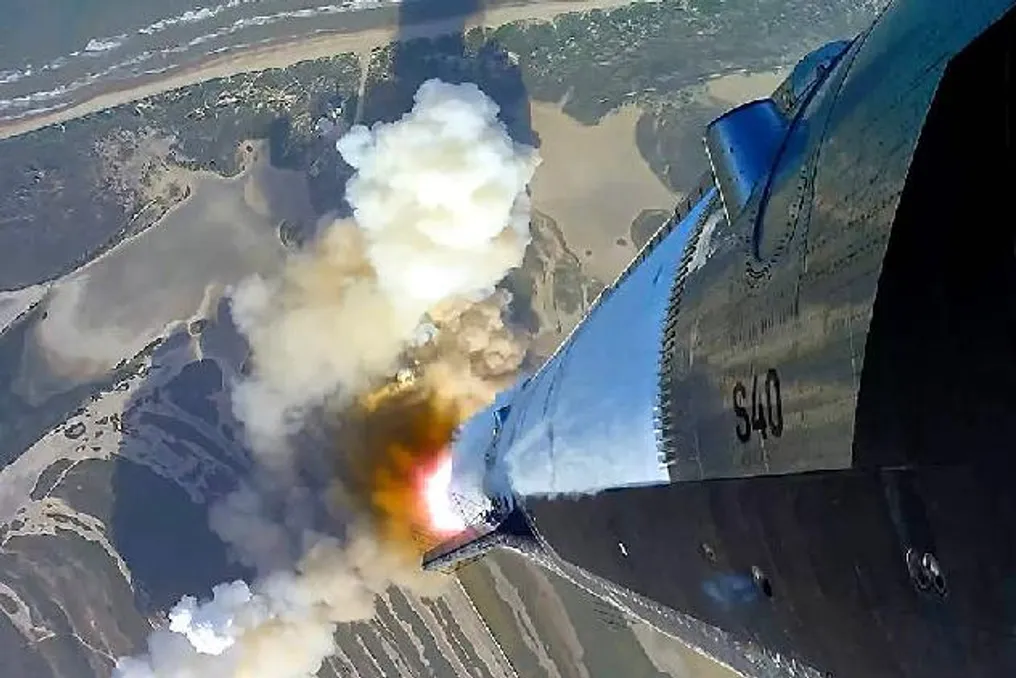
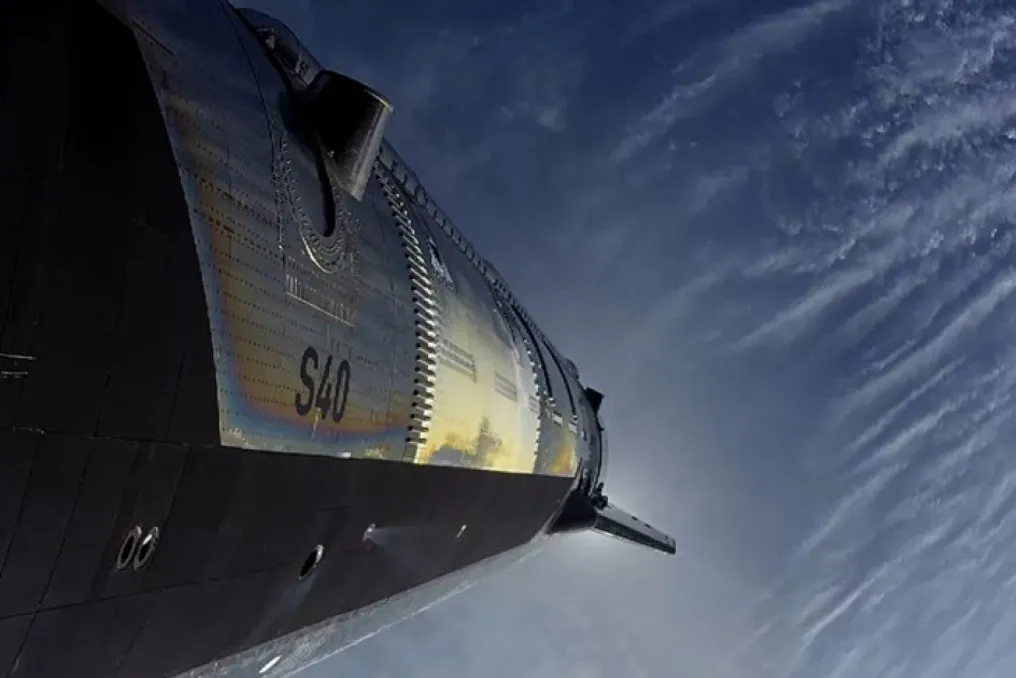
The second stage of the super-heavy Starship rocket successfully returned to the Indian Ocean following the thirteenth test flight, which is the second in the new third modification. Although the first stage failed to achieve a soft landing, the second stage fulfilled its mission: it placed twenty real third-generation Starlink satellites into orbit and maintained its structural integrity while continuing to transmit video footage from onboard cameras.
Starship Characteristics and Capabilities
Starship boasts a high payload capacity ranging from 100 to 250 tons and has the potential for multiple uses of both stages, as well as the capability to refuel the second stage directly in space. This launch vehicle is designed for flights not only to low Earth orbit but also to the Moon and Mars. Furthermore, the lunar version of the Starship second stage was selected by NASA to carry out the mission of delivering astronauts to the lunar surface as part of the Artemis program.
Test Flight History
In total, the entire system in full configuration has undergone twelve test flights. SpaceX has demonstrated the successful return of the first stage both to the ocean and to the launchpad, as well as the return of the second stage to the ocean, the restart of the second stage engine in space, and the launch of both mockups and modified satellites during the first flight of the third version of the rocket. However, during the twelfth flight, the second stage exploded after a successful splashdown in the Indian Ocean, executing a braking maneuver, and igniting its engines.
Details of the Thirteenth Flight
The thirteenth suborbital flight of Starship launched on July 25, 2026, at 01:51 Moscow time from the Starbase in Texas. This flight was the third attempt: the first ended unsuccessfully due to the failure of several first-stage engines (requiring the replacement of at least four engines), and the second was interrupted due to adverse weather conditions. Approximately two and a half minutes after launch, a hot firing of the second stage engines and stage separation occurred. The first stage managed to execute a turn, but during the final descent phase, not all thirteen engines required for braking activated, preventing it from effectively reducing speed and achieving a soft landing in the Gulf of Mexico nearly seven minutes after launch.
Second Stage Operations in Space
The second stage successfully reached the required trajectory for the suborbital flight. Seventeen minutes after launch, at an altitude between 191 and 197 kilometers, the stage opened its cargo bay. Over the subsequent eleven minutes, the deployment operation of twenty real next-generation V3 Starlink satellites was conducted; these satellites were equipped with larger antennas and solar panels. After the bay closed, the ground control center established communication with all satellites via radio and laser links. Six of these satellites were equipped with cameras to monitor the stage's heat shield, and all of them quickly burned up in the atmosphere. Additionally, the second stage performed a re-ignition of one of its engines in outer space.
Successful Splashdown and Prospects
In the final stage of the flight, the second stage entered the atmosphere and withstood all resulting loads. One hour and five minutes after launch, having executed a braking maneuver using two engines, it splashed down in the Indian Ocean. The company described this splashdown as 'record-soft' because the stage completely retained its structural integrity, did not explode upon hitting the water, and continued to float on the surface despite minor fires that quickly extinguished, while onboard cameras continued broadcasting. It is planned that in the future, the second stage will be able to perform its first orbital flight.
Other Space Projects
NASA shows significant interest in the developments of SpaceX and its competitor Blue Origin, which is creating the Blue Moon lunar lander. Both companies are expected to have flight prototypes of their modules ready for the planned Artemis-3 mission in 2027, which will take place in low Earth orbit.
MAVEN Mission Status
The completion of the MAVEN (Mars Atmosphere and Volatile EvolutioN) Martian orbiter was also announced, which stopped communicating with Earth in December 2025. Analysis of telemetry data showed that all systems were functioning normally before the spacecraft's last pass over Mars. However, after exiting the planet's shadow, MAVEN entered safe mode and began spinning at an abnormally high rate, indicating a deviation of the probe from its intended orbital trajectory. It is presumed that this rotation led to a complete battery discharge, causing the loss of communication with Earth. The agency stated that the root cause of this accident will be determined, and a final report will be presented this year.