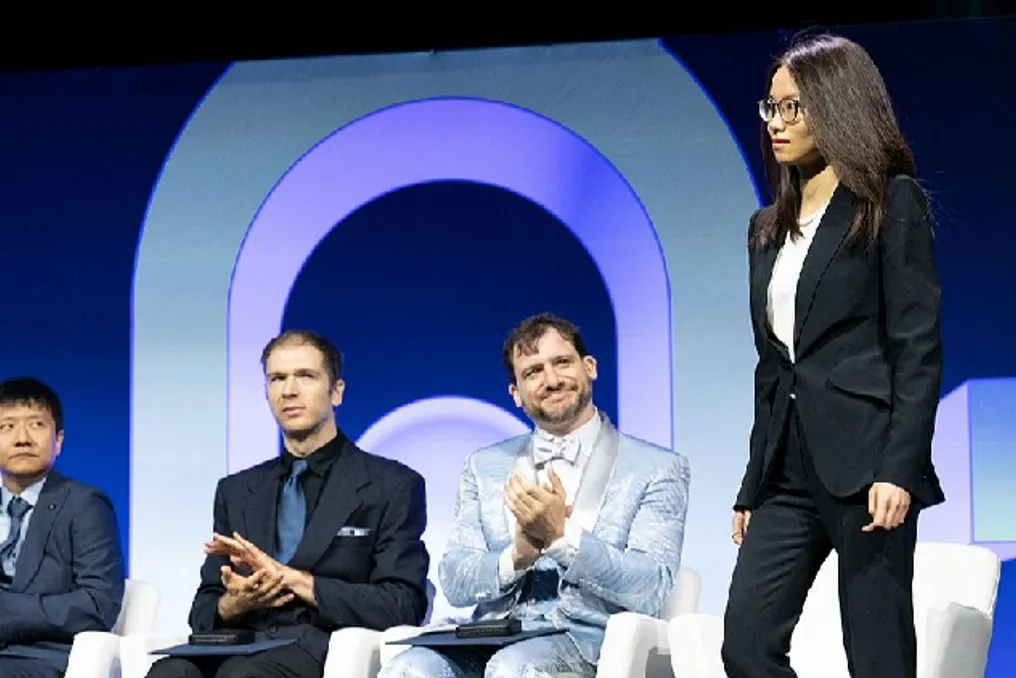
Artificial intelligence models from Huawei and Xiaohongshu achieved a perfect score by solving all problems in the International Mathematical Olympiad (IMO) in July, surpassing human participants. This case marks the first recorded instance where artificial intelligence technology has scored one hundred percent in such competitions.
Testing Conditions and Results
The testing was conducted without any human intervention, and the tasks were only made available to the AI models after the exam had been completed by the students. The Celia model from Huawei and dots-node-3.0 from Xiaohongshu completely solved the IMO test. It is worth noting that last year, Google and OpenAI also published positive, but not flawless, results.
Difficulty of the Test
According to Xiaohongshu, achieving one hundred percent is an extremely difficult task. This is confirmed by the results among humans: out of 666 participants in Shanghai, only seven managed to solve all the problems. The company stated that this was the first time its model had undergone testing on IMO tasks.
Additional Tests and Previous Achievements
According to Taipei Times, the tasks were provided to the AI models only after they had been completed by real students, and no human intervention was allowed during the solving process. Furthermore, the US venture capital firm Menlo Ventures conducted its own tests with a partner to check the success rate of American AIs, as they did not officially participate in the competition. In these tests, ChatGPT in the GPT-5.6 Sol version from OpenAI, Claude Fable 5 from Anthropic, and the Axiom Math tool also performed successfully.
History of AI Testing
Despite the current success, AI models have previously been tested at the IMO. In 2024, Google's DeepMind model 'received' a silver medal by solving four out of six problems, although the solving process took about three days. And in 2025, the same model received a sufficiently high score for gold, like ChatGPT, but did not achieve the maximum result. Moreover, the exact models used in previous tests were not disclosed.