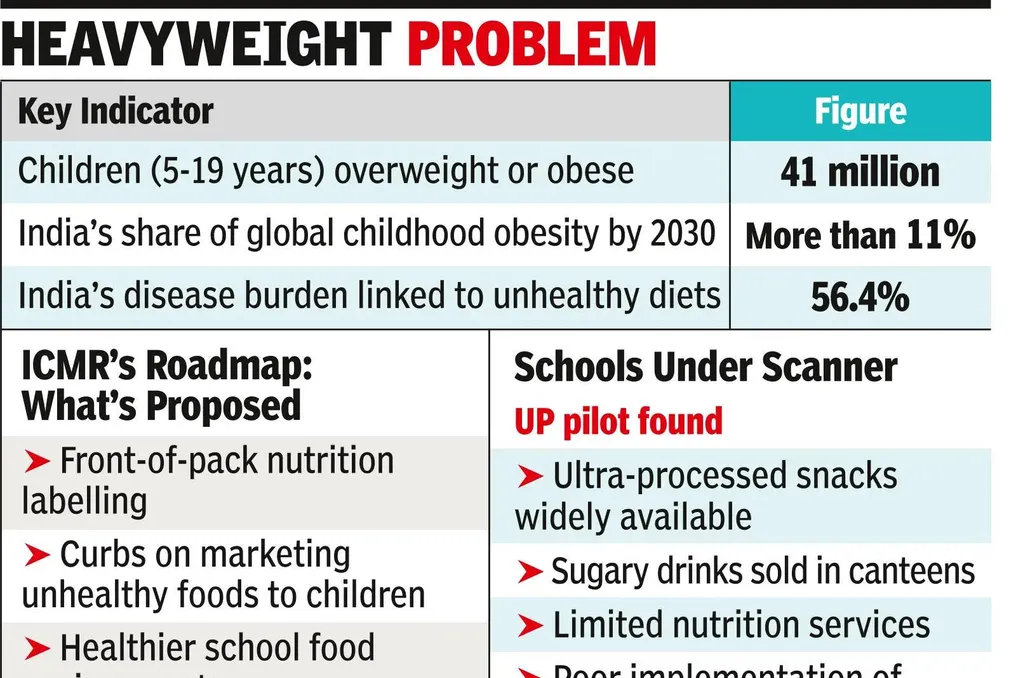
According to the World Obesity Atlas 2026, approximately 41 million children in India already suffer from overweight or obesity. In response, the Indian Council of Medical Research (ICMR) presented a roadmap this week aimed at halting this trend.
According to the World Obesity Atlas 2026, approximately 41 million children in India already suffer from overweight or obesity. In response, the Indian Council of Medical Research (ICMR) presented a roadmap this week aimed at halting this trend.
Key proposals include implementing food labeling on the front of packaging, restricting marketing of unhealthy food targeted at children, creating a healthier eating environment in schools, increasing nutritional literacy, and applying fiscal tools such as taxes on high-fat, high-salt, and high-sugar (HFSS) products.
The document also calls for stricter adherence to existing FSSAI regulations, which prohibit the sale and advertising of products high in saturated fats, trans fats, added sugar, and sodium within school campuses and within 50 meters of their gates. To improve compliance, regular inspections, enhanced monitoring, and increased accountability are recommended.
A pilot assessment conducted in private schools in the state of Uttar Pradesh (UP) revealed the widespread availability of ultra-processed snacks and sugary drinks in school cafeterias. It was noted that meal services are limited, and existing nutrition policies are being implemented ineffectively. The report indicates that the lack of a legally defined classification for HFSS products weakens regulatory enforcement.
The report warns that if current trends persist, India could contribute more than 11% to the global burden of childhood obesity by 2030. Furthermore, it is estimated that poor diet accounts for 56.4% of the disease burden in the country, with easy access to HFSS products, aggressive marketing, and low nutritional awareness contributing to obesity.
This roadmap was launched by M. Srinivasa, a member of the Niti Aayog (responsible for health), under the 'Let's Fix Our Food' initiative, led by ICMR and NIN. The document consolidates 10 policy analytical papers developed over nearly three years of research.
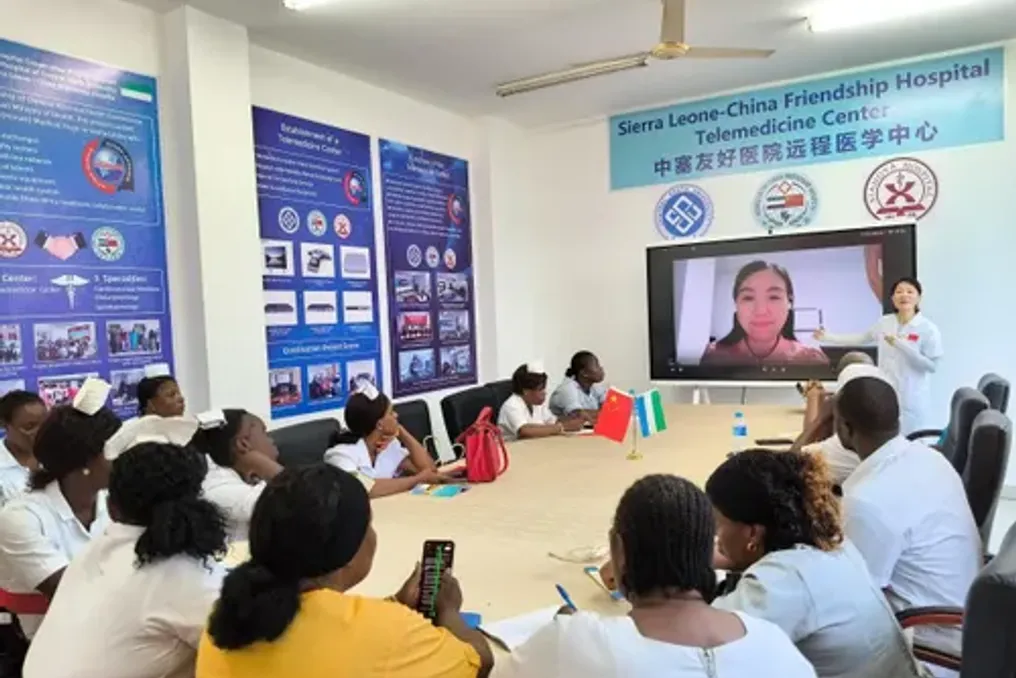
More than forty senior local nurses gathered on July 18th at the Telemedicine Center of the Sierra Leone-China Friendship Hospital in Freetown for a specialized training course. This event was part of an initiative to teach traditional Chinese medicine organized by Chinese doctors.
The training was conducted using a hybrid model that combined remote video lectures from specialists in Hunan Province with practical demonstration of clinical skills performed by doctors from the 27th Chinese medical team group. The session was organized via video conference and included a four-part program covering theory, simulation, a Q&A session, and clinical rounds.
During the lecture, Dr. Zhou Shenqian traced the historical development of acupuncture, starting from ancient methods using stone needles and the origins of moxibustion, to the theoretical foundations laid out in the work 'Huangdi Neijing'. He then presented Fu-needle therapy, a modern form of acupuncture adapted to the local clinical conditions in Sierra Leone, where chronic neck, shoulder, and joint pain is common, yet specialized acupuncture services remain scarce.
Dr. Zhou demonstrated Fu-needle therapy on an 18-year-old local university student who suffered from recurring knee pain and limited mobility for six months. Within two minutes of the procedure, the patient reported a significant reduction in pain syndrome and was able to squat, stand, and bend the joint again.
Concurrently, Tan Yan and Dr. Li Duandandan led clinical workstations on Gua Sha (scraping) and mobile cupping techniques. Tan demonstrated standard upper limb scraping, detailing the choice of instrument, the necessary 45-degree application angle, even pressure, and assessment of skin marks, as well as standard contraindications. Li showed cupping on the back, explaining negative pressure control and movement direction along the bladder meridian.
Zainab Bangura, a nurse registered at the Sierra Leone-China Friendship Hospital, noted that this course provides structured practical knowledge that meets daily clinical needs and addresses a clear gap in pain management services in the region. Since arriving in Sierra Leone, the 27th Chinese medical team has utilized the Traditional Chinese Medicine Center and the China-Sierra Leone Nursing Training Center as a dual platform for sustainable capacity building.
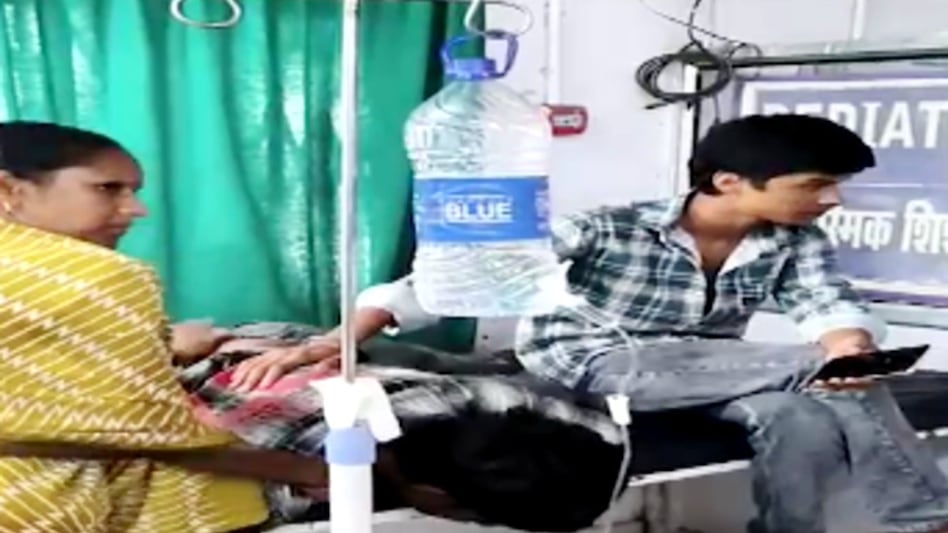
A doctor at a government hospital in the Dindori district of Madhya Pradesh was summoned for an explanation. He was accused of using bottled drinking water for a 'stomach pumping' procedure while treating a young man who had ingested rodenticide.
Gastric lavage, often referred to as 'stomach washing,' is performed in emergency situations. During this procedure, a tube is inserted into the stomach through the mouth, and the stomach is cleansed with sterile water or saline solution. Video footage of this case went viral and caused public outcry.
The Chief Medical and Health Officer, Dr. Manoj Pandey, stated that the doctor was summoned for an explanation, but he denied reports that the patient was administered bottled water intravenously. CMHO Manoj Pandey told a news agency: 'No medicines or water were administered intravenously.'
Dr. Pandey clarified that the junior doctor asked the patient's family to bring a bottle of bottled drinking water. Furthermore, the hospital has its own equipment for gastric lavage, and the water is supplied to the patient through a special 'Ryle' tube.
The patient, Satyam Yadav (18 years old), was admitted to the hospital's emergency department on Wednesday afternoon. It is alleged that he consumed rat poison. Sources report that the doctor asked a nurse to use a bottle of bottled drinking water during the procedure. When the nurse objected, the doctor performed the procedure himself.
The opposition leader in the Madhya Pradesh Legislative Assembly, Umang Singhare, criticized the Bharatiya Janata Party (BJP) government over this incident. He accused the government of deteriorating the public healthcare system and demanded that those responsible be held accountable.