Anthropic announced the launch of Claude Opus 5 on the 24th, its latest artificial intelligence. The startup reported that this new model offers performance comparable to its most sophisticated model, Fable 5, but at approximately half the cost.
Anthropic announced the launch of Claude Opus 5 on the 24th, its latest artificial intelligence. The startup reported that this new model offers performance comparable to its most sophisticated model, Fable 5, but at approximately half the cost.
The development of Opus 5 specifically aimed to meet the needs of routine office tasks and computer programming, serving as a more accessible option for users who do not require all the advanced features of the platform.
In conversation with Reuters, Dianne Penn, Anthropic's product leader, highlighted that the launch of Opus 5 demonstrates the rapid evolution of the company's AI models. She also mentioned that this new version offers greater efficiency compared to Opus 4.8, which was released in May.
Penn stated: 'We are building and consistently delivering cutting-edge intelligence, making it as accessible as possible with each model generation.'
Anthropic reported that internal tests indicated that Opus 5 has a lower capacity to exploit cybersecurity vulnerabilities compared to Fable 5. For this reason, the new model incorporates less stringent security safeguards than those applied to its most powerful model.
Furthermore, the startup communicated that Opus 5 proved less prone to being manipulated for improper purposes compared to other current company models. It is worth noting that Fable 5, launched in June, had its availability temporarily suspended due to concerns raised in the United States about the potential diversion of its capabilities to foreign military applications.
According to Penn, the decision on whether to use one model or another should be based on the nature of the task. She advised users to choose Opus 5 when prioritizing the best cost-to-performance ratio, while Fable 5 is better suited for 'highly autonomous, multi-day projects.'
During the interview, Penn also addressed Kimi K3, an open-source AI model created by the Chinese company Moonshot. There have been accusations from the United States that Anthropic benefited from Anthropic's technology. In response, the executive stated that it is still necessary to observe how open-weight models behave in complex real-world scenarios, similar to those requested by users from Claude.
Open-weight models allow users to download, run, and customize virtual AI systems, which differs from proprietary models that remain under the exclusive control of the developing corporations.
Shanghai has unveiled the document 'Plan for Accelerating the Development of Shanghai's International Shipping Center during the Fifteenth Five-Year Plan Period (2026–2030)'. According to this plan, by 2030, Shanghai is set to become a modern international maritime transport center with world-class connectivity, high-quality and efficient services, advanced innovations in smart and low-carbon technologies, a sustainable management system, and significantly increased capacity to distribute global shipping resources.
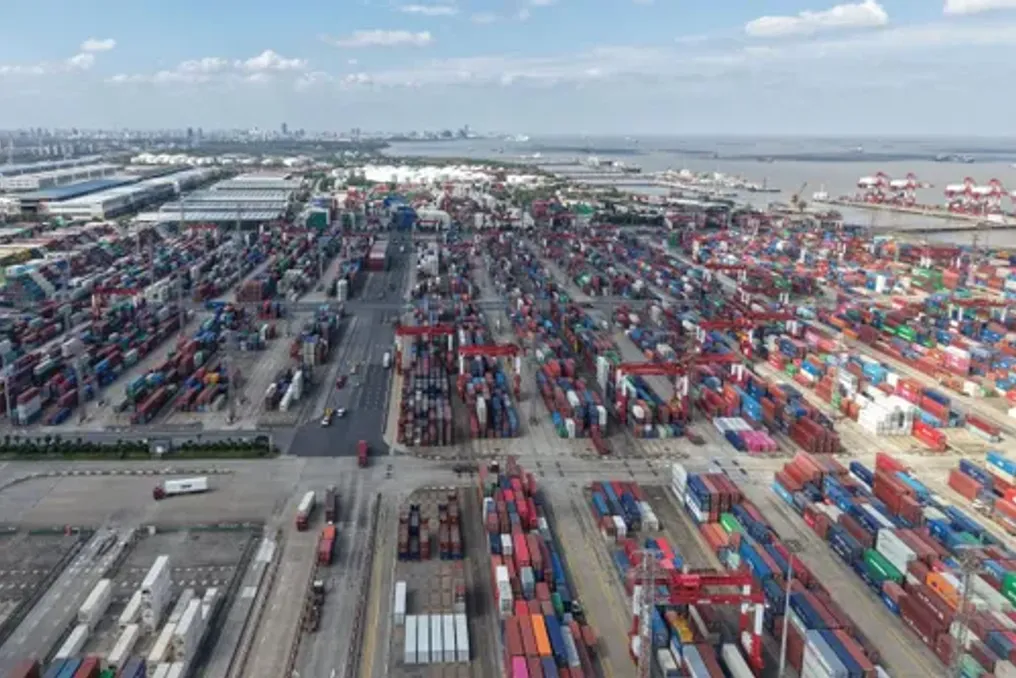
The development of Shanghai's International Shipping Center is part of a major national strategy and a key element of the city's efforts to strengthen its status as an international hub for economy, finance, trade, shipping, and technological innovation. During a press conference held as part of the Fifteenth Five-Year Plan, Shanghai Deputy Mayor He Qing announced that in 2025, the Port of Shanghai handled over 55.06 million Twenty-foot Equivalent Units (TEUs), thus maintaining its title as the world's busiest container port for the sixth consecutive year.
Furthermore, both of Shanghai's airports registered a combined passenger flow of 135 million people, ranking third among cities worldwide.
Building on existing strengths, the plan sets measurable goals for 2030. It is expected that the annual container throughput at the Port of Shanghai will exceed 58 million TEUs. With the planned commissioning of the fourth phase of expansion of Pudong International Airport in late 2028, Shanghai aims to become a leading aviation hub in the Asia-Pacific region, achieving an annual passenger flow of 150 million and a total volume of cargo and mail transport of approximately 4.7 million tons.
To achieve these goals, the plan outlines four main areas of work. Firstly, Shanghai intends to create a first-class international port hub by implementing major projects such as the Xiaoyangshan North Terminal and the Luojing Port Zone, as well as securing deep-water coastline resources to strengthen core port capacity.
Secondly, the city will develop a comprehensive aviation hub gateway. The fourth phase of expansion of Pudong International Airport and Shanghai East Railway Station will be completed and operationalized within the Fifteenth Five-Year Plan under the Oriental Hub project. Auxiliary transportation infrastructure, including the second phase of the Shanghai-Nantong railway and Metro Line 21, will also be implemented, significantly improving air-rail connectivity and expanding the airport's global network for passenger and cargo transport, as well as its capabilities as a transit hub.
Thirdly, Shanghai plans to enhance its capabilities in high-end shipping services. The city intends to accelerate the development of the marine insurance ecosystem by expanding specialized insurance products for vessels and multimodal transport, increasing the scale of aircraft and vessel chartering businesses, and promoting specialized arbitration in key sectors such as marine insurance to address gaps in premium shipping services.
Fourthly, Shanghai will accelerate the digital, intelligent, and ecological transformation of its shipping center. The city will expand the adoption of digital technologies in shipping and trade, focusing on creating a distributed shared data network for multimodal transport along the Yangtze River Economic Belt. Smart ports and airports will also be modernized, the development of intelligent inland waterways will be promoted, the use of ships powered by new and clean energy will be stimulated, and an international center for certification, bunkering, and trading green marine fuels will be established. In addition, Shanghai will promote the coordinated development of shipping-related industries and create a world-class environment for the shipping sector.
According to the latest Xinhua-Baltic International Shipping Center Development Index, Shanghai surpassed London for the first time, ranking second globally in overall competitiveness, reflecting the city's continuous progress in strengthening its shipping capabilities and services.
Lu Zheng, Deputy Director of the Shanghai Municipal Bureau of Justice, stated that the city will continue to improve its arbitration base and services to meet the changing needs of the shipping industry. Shanghai plans to expand the application of specialized arbitration in claims for losses under high-frequency marine insurance, strengthen arbitration practices in new areas such as electronic bills of lading and multimodal transport via a single transport document, and update arbitration platforms for the shipping and aviation sectors. Furthermore, guidelines for marine notary services will be issued, a unified cross-border platform for notarial certification and authentication will be established, and a center for judicial appraisal of maritime disputes will be set up to better manage operational risks for shipping companies.
In the first half of 2026, China's gross domestic product increased by 4.7% year-on-year. Furthermore, grain production exceeded 150 million tons in the summer for the first time, and total import and export operations reached a record 25 trillion yuan ($3.69 trillion).
Despite growing external uncertainty, the Chinese economy has maintained overall stability and continues its transition towards more innovative and high-quality growth, demonstrating significant resilience and vitality.
While global economic growth is slowing down overall this year, the International Monetary Fund (IMF) recently lowered its forecast for global growth in 2026 to 3.0%, but raised its forecast for China's economic growth for the entire year by 0.2 percentage points.
China's success in a complex global environment is explained by four main concepts: stability, innovation, vitality, and integration.
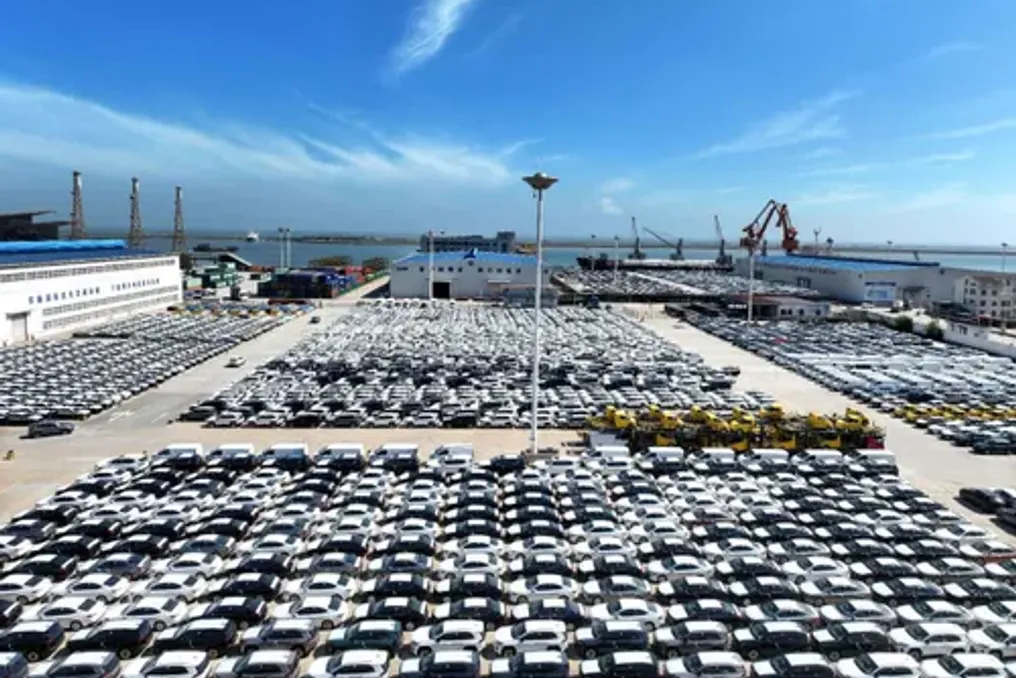
In the first five months of the current year, China exported 187 high value-added liquid cargo vessels worth over 64.3 billion yuan, representing an 188.8% increase compared to last year. In the first half of the year, China's car exports exceeded 5 million units for the first time, with electric vehicle deliveries growing by 68.7%.
The strong performance of China's shipbuilding and automotive industries reflects the stability and competitiveness of the entire Chinese economy. China's economic expansion in the first half of 2026 was the largest in the same period over the past five years. China's ability to quickly respond to changing demand, compete in advanced industries, and enter new markets is supported by its complete industrial system, as seen in the growth of microchip exports and the expansion of the digital small goods trading network in Yuyue city, Zhejiang province.
Some economic indicators have experienced short-term fluctuations caused by both external difficulties and internal structural adjustments, but such fluctuations do not change the long-term direction of China's economic development.
Two recent breakthroughs illustrate this momentum. The victory of the motorcycle manufacturer ZXMOTO from Chongqing in the international superbike championship marked the end of the dominance of European and Japanese brands, highlighting the modernization of the motorcycle supply chain in Chongqing and the upgrading of China's traditional manufacturing industries.
Attention was also drawn to the adoption of the 'Tao Law' by tech giant Huawei, which promotes 'temporal scaling' instead of traditional geometric scaling in chip design. The company has already brought 381 chip models into mass production, indicating the rapid development of China's new industries.
Major scientific and technological achievements also occurred this year: China's supercomputer LineShine became the fastest in the world, and the 'Deep March-10B' rocket carrier achieved the world's first sea lift using a marine mesh system.
As technological innovations continue to drive industrial modernization, new productive forces are forming faster. Preliminary estimates show that new growth drivers, including high-tech manufacturing, the digital economy, and modern services, contributed more than 40% to China's economic growth in the first half of the year, underscoring the increasingly innovation-oriented and high-quality development of the economy.
As of June 20, consumer goods trade programs this year generated over 1 trillion yuan in sales, covering 136 million consumers. The demand from over 1.4 billion people for an improved quality of life continues to unlock the enormous potential of China's vast consumer market.
Artificial intelligence is strengthening industries across all sectors, while grassroots cultural events, such as village football leagues and rural galas, revitalize rural communities. New demand generates new supply, and new supply creates new demand, generating a cycle that sustains economic dynamism.
Some international business leaders refer to China as the 'world's weight room,' where successful companies become more competitive globally. Others call China the 'most reliable partner.' In May, China provided zero-tariff processing on all commodity items to 53 African countries with which it has diplomatic relations. As a result, imports of aquatic products and textile raw materials from Africa showed double-digit year-on-year growth in May and June.
This year, several Chinese hard-tech companies, including Unitree Robotics, successfully completed internal listing reviews, while other technology enterprises with core innovations accelerated their entry into the stock market. Investments in physical assets and investments in people are becoming more closely linked, and innovation, industry, capital, and talent chains are increasingly integrated.
China has also launched the Xiangshan open processor system and the Ruyi native operating system, which are jointly supported and continuously improved by developers worldwide. Since the start of pilot operation, the High-Energy Photon Source has received over 1700 experiment applications from research groups both domestically and abroad. China is steadily transforming from a technological follower to a global source of innovation.
The country's reform agenda continues to emphasize deeper integration across multiple areas: promoting closer cooperation between enterprises, universities, research institutes, and end-users; advancing the comprehensive development of culture, trade, tourism, sports, and exhibitions; encouraging integrated urban and rural development; and accelerating the creation of a unified national market. This focus on integration serves not only as a key to deeper reforms and innovation but also opens broader prospects for high-quality development. Based on its development goals and leveraging existing momentum, China's economy is confidently moving towards long-term, high-quality development with a promising future.
BMW has implemented a feature that allows interested parties to build a vehicle from the brand by interacting directly with ChatGPT. The German automaker made a plugin available for OpenAI's artificial intelligence assistant, allowing the user to configure their ideal car through a fluid conversation, eliminating the need to navigate extensive menus and long lists of options.
Instead of using the conventional configurator on the website, the potential buyer can simply describe their preferences in common language. A command can be specific, such as requesting a red 3 Series with 19-inch wheels, or it can be more general, mentioning characteristics like the car's size, ground clearance, or engine type. According to BMW, this tool also offers the possibility of comparing operating costs and considering aspects such as dynamic performance and all-wheel drive availability.
The main advantage, according to the manufacturer, lies in the combination of generative AI's natural language processing capability and the company's data repository on products and configurations. The goal is to ensure that ChatGPT only presents combinations that actually exist in the catalog, preventing the customer from building an unfeasible model. Thus, even those without deep knowledge of the brand's lineup can achieve a suitable configuration just by expressing their needs and tastes.
However, accessing this function requires specific steps: one must go to the ChatGPT.com website, locate the plugins menu, and search for 'BMW'. It was not clarified whether this distribution is worldwide or if it is currently limited to certain markets, such as Germany. Furthermore, BMW is not the pioneer in this type of integration, as ChatGPT itself already integrates plugins from related sectors, such as Autotrader, Cars, CarMax, Carfax, and Edmunds, primarily focused on vehicle search and comparison.
Despite this, this initiative strengthens a larger trend in the automotive industry, which has been transferring part of consumer interaction to AI assistants. While digital configurators have already replaced traditional catalogs with interactive visual representations, BMW is now testing the complete replacement of clicking through menus with a conversation, when this technology is effective.