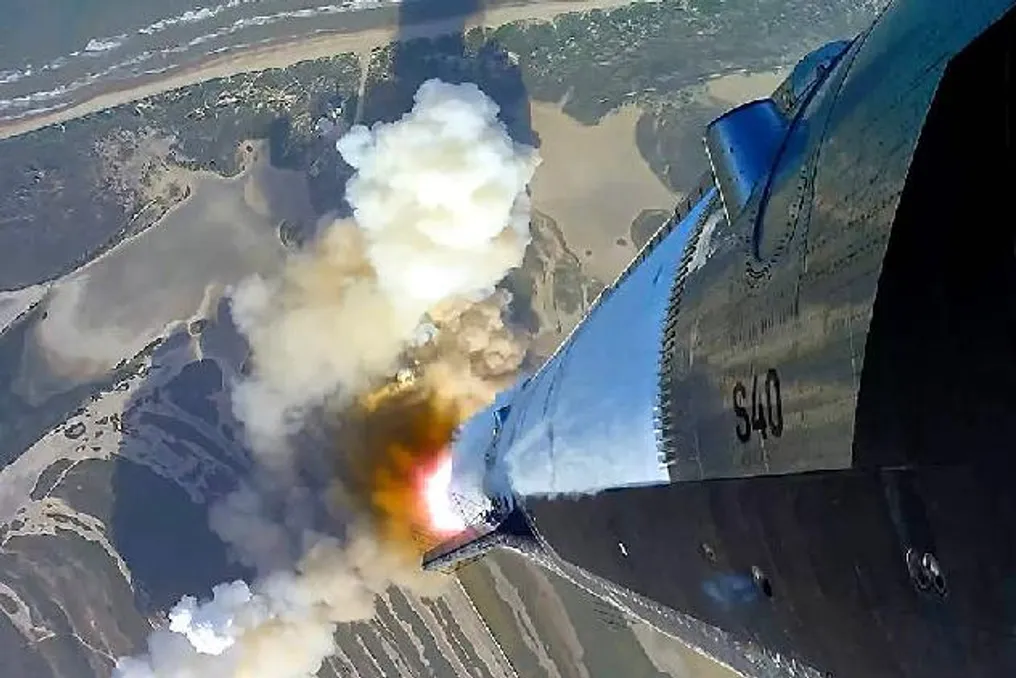
SpaceX successfully launched its next-generation Starship rocket using the Super Heavy V3 booster. The launch took place on July 24, 2026, from the Starbase in Boca Chica, Texas.
Mission Objectives and Progress
During this 13th test flight, the Starship rocket took off from Texas and deployed the first 20 upgraded Starlink satellites into a suborbital trajectory. This is one of several testing goals, as the company aims to begin regular operation of the rocket by the end of the current year.
The approximately 122-meter high Starship system launched around 6:50 PM Eastern Time (10:50 PM GMT) from the Starbase facility. The Super Heavy first stage propelled the Starship upper stage onto a suborbital trajectory. The mission, expected to last about an hour, will conclude with Starship re-entering Earth's atmosphere and landing in the Indian Ocean.
Booster Return and Satellite Deployment
Approximately 10 minutes into the flight, when Starship reached a speed of 26,400 kilometers per hour, the Super Heavy booster returned to Earth and landed in the Gulf of Mexico stronger than expected, according to SpaceX. Nevertheless, it ignited more engines than during the unsuccessful return in May, which occurred during the previous test flight.
Twenty minutes into the flight, Starship began deploying 20 Starlink V3 satellites, releasing them one by one using a payload deployment system resembling a 'Pez'. During the flight over the darkened Earth, at an altitude of 190 kilometers, a camera mounted on the rocket and broadcast live by SpaceX captured thunderstorms with lightning flashes.
Significance of Tests and Company Plans
This test flight is the thirteenth for SpaceX since 2023 and involves a new version of the rocket that is critical to the company's plans. These plans include expanding the Starlink network, landing humans on the Moon for NASA, and subsequently placing thousands of artificial intelligence satellites into orbit.
The Starlink satellites, which are the new V3 version with enhanced bandwidth capabilities, will temporarily connect to the existing SpaceX Starlink network of about 10,000 satellites in orbit after deploying solar panels and antennas. Although these satellites are the first launched by Starship, they will follow a suborbital trajectory through Earth's atmosphere and burn up.
Some of these satellites are equipped with cameras and spotlights that will record the Starship's heat shield during intense atmospheric friction at the end of the mission. This will provide SpaceX with vital data to assess the rocket's survivability upon returning from space. SpaceX plans to use Starship by the end of 2026 to launch thousands of Starlink V3 satellites, which will allow for the expansion of the constellation's capacity for direct connection to mobile devices, such as cell phones, unlike the current network that only works with Starlink branded discs.