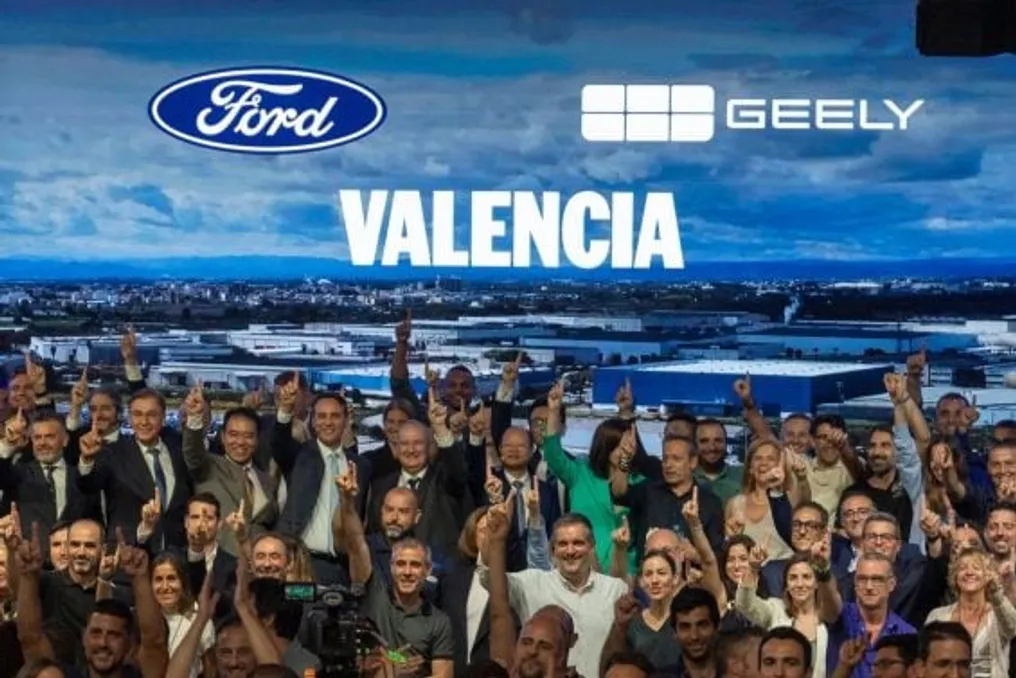
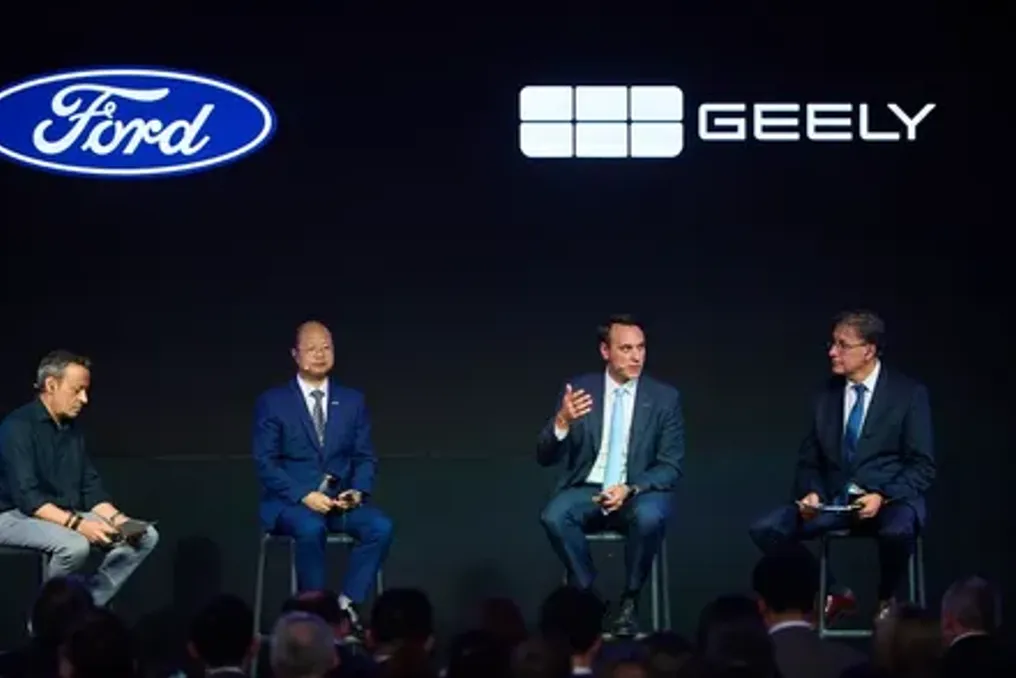
Ford Motor Company and Chinese automaker Geely Automobile Holdings have announced an agreement under which a new type of vehicle for the European market will be produced at the Ford plant in Valencia, Spain.
Joint Venture Details
This partnership will establish a joint venture where Ford holds a 66% stake and the Chinese manufacturer holds 34%. The Valencia plant is planned to produce two electric SUVs. The first vehicles are expected to enter the market in 2028.
Reasons for Utilizing Capacity
On the surface, this collaboration appears unusual—an American brand providing production space to a Chinese rival. However, a more detailed analysis shows that this is one of the clearest signs of the transformation of the global automotive industry. The Ford plant in Valencia was operating at low capacity, only 26% in 2025, indicating a significant amount of unused equipment and personnel.
According to Boston Consulting Group estimates, European car plants operate at an average utilization rate of about 60%, whereas approximately 80% is required to achieve real profitability. This creates excess capacity in Europe equivalent to more than 35 idle assembly lines.
The Competitive Race in Europe
Concurrently, Chinese automakers are actively seeking to secure European production sites before new regulations take effect. Brussels is finalizing norms that are expected to require electric vehicles to have at least 70% of their components manufactured in Europe to qualify for state subsidies. Furthermore, a broader 'sustainability test' will be introduced, which may restrict support for supply chains overly dependent on any single country outside the EU, primarily China.
Chinese brands such as BYD, Chery, Xpeng, and SAIC are rushing to establish European production bases, as securing a position now is far more valuable than applying after the new rules are implemented. The Geely deal in Valencia, Leapmotor's cooperation with Stellantis in Zaragoza, and Hongqi's negotiations with Stellantis for another Spanish plant are part of this overall race.
Geographical and Economic Factors
Spain is the second-largest car-producing country in Europe and is attractive due to lower labor and energy costs compared to Germany. These data underscore the urgency of the situation: China's share of the Western European market reached 8.6% at the beginning of 2026, nearly double the figure from the previous year. Moreover, investments in electric vehicles and batteries supported by China in Europe exceeded 30 billion euros just this year.
For Ford, the logic mirrors that of Geely. Ford's head in Europe, Jim Baumbick, stated directly that the goal is to 'load up' the underutilized facility. Ten years ago, Ford was the fourth-largest automaker in Europe, selling over a million cars annually; last year, this figure dropped to barely 426,000, and the company fell to eighth place. Filling the idle capacity with Geely's production, alongside launching its own Bronco SUV at the same plant, is viewed as a survival strategy, not just a partnership.
Political Aspect of the Deal
Not everyone welcomes this agreement. US Representative John Mulinar, chairman of the House Committee on China, called Ford's decision 'incomprehensible.' He noted the paradox: Ford is collaborating with a Chinese automaker in Europe while simultaneously lobbying for stricter restrictions on Chinese automakers entering the US market, where the Senate has just advanced legislation tightening such bans.
Ford's response was that the markets are different, the rules vary, and the competitive environment in Europe is changing rapidly, making inaction unacceptable. Local unions in Spain show cautious support but demand real technology transfer and the creation of an authentic local supply chain, rather than just an assembly line using foreign components. Union leader Juan José Picasso stated: 'We cannot just be an assembly plant.'
Broader Industry Picture
This deal concerns not so much Ford and Geely personally, but the restructuring of the entire automotive industry, which is happening along two simultaneous tracks: European regulation is attempting to slow down the entry of Chinese players into the market, while Chinese manufacturers are rushing to get inside before the doors close. Such joint plant usage deals are expected to become more frequent before the local Brussels rules come into full force.