A doctoral study conducted at the University of São Paulo (USP) presented a new methodology for categorizing organisms capable of surviving in environments with high salt concentrations.
Research in the Diamantina Region
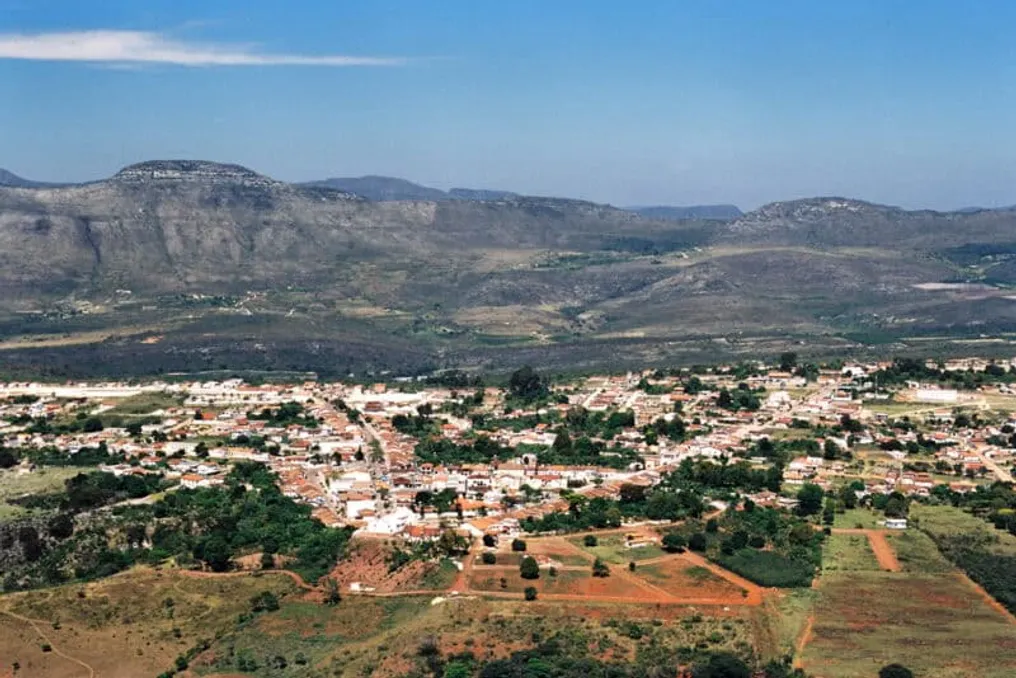
Molecular scientist Ana Paula Chiavo developed this work at the university's Chemistry Institute with support from the National Council for Scientific and Technological Development (CNPq). The study analyzed microorganisms found in the Diamantina region (Minas Gerais), where the soil is rich in iron and resembles conditions existing on Mars.
The main goal of the study was to understand how microscopic life forms can simultaneously resist high salinity and intense ultraviolet radiation.
Need for a New Classification
The proposal arose due to the lack of a universally accepted standard in the scientific community for defining different groups of extremophiles—organisms adapted to conditions considered harsh for most living beings. The new system uses statistical criteria based on the optimal growth of species at various salinity levels.
Halophile Classification
Halophiles belong to the group of extremophiles and are associated with environments containing large amounts of sodium chloride. Previously used categories to distinguish between weakly, moderately, or highly halophilic species depended on salt concentration ranges that, according to the researchers, lacked a unified scientific basis.
To create a new proposal, Chiavo gathered data on 1298 species described as halophilic or halotolerant from articles published between 1967 and 2021 in the International Journal of Systematic and Evolutionary Microbiology. The analysis revealed discrepancies in the criteria used by different studies, including the definition of extreme conditions.
The researcher also noted that some works incorrectly defined the optimal growth point of microorganisms—that is, the salinity level at which each species demonstrates the greatest capacity for development.
Methodology and Application
The system presented in the dissertation is based on a statistical approach, using quartiles—a mathematical tool for dividing datasets according to their distribution. The initial reference point was the average salt concentration in oceans. Based on this parameter, organisms whose optimal growth occurs at a salinity level similar to or lower than the marine environment are classified as non-halophilic or halotolerant. Above this threshold, microorganisms are distributed into categories of light, moderate, and extreme halophily depending on their adaptation to higher salt concentrations.
Contribution to Astrobiology
In addition to organizing the classification of halophiles, the work relates to astrobiology, the field dedicated to studying the origin, evolution, and distribution of life in the Universe. Mars is one of the main focuses of this field because it possesses environments with characteristics that help explore the limits of biological survival.
The planet has regions with high salt concentrations, including compounds harmful to terrestrial organisms, and is also subjected to intense ultraviolet radiation on its surface. The study suggests that if life existed on Mars, it might have inhabited underground environments, such as aquifers, protected and sustained by liquids due to the presence of salts.
The microorganisms studied in Minas Gerais were used as a benchmark for understanding adaptation strategies to multiple extreme conditions. It is expected that a standardized classification will facilitate interaction among scientists studying organisms resistant to high-salinity environments, including in the context of space exploration. The new proposal also led to the creation of a preliminary paper, 'Proposal for a New Halophile Classification System Based on the Statistical Rarity Definition of Extremophiles,' which is under review by a specialized scientific journal on extremophiles.