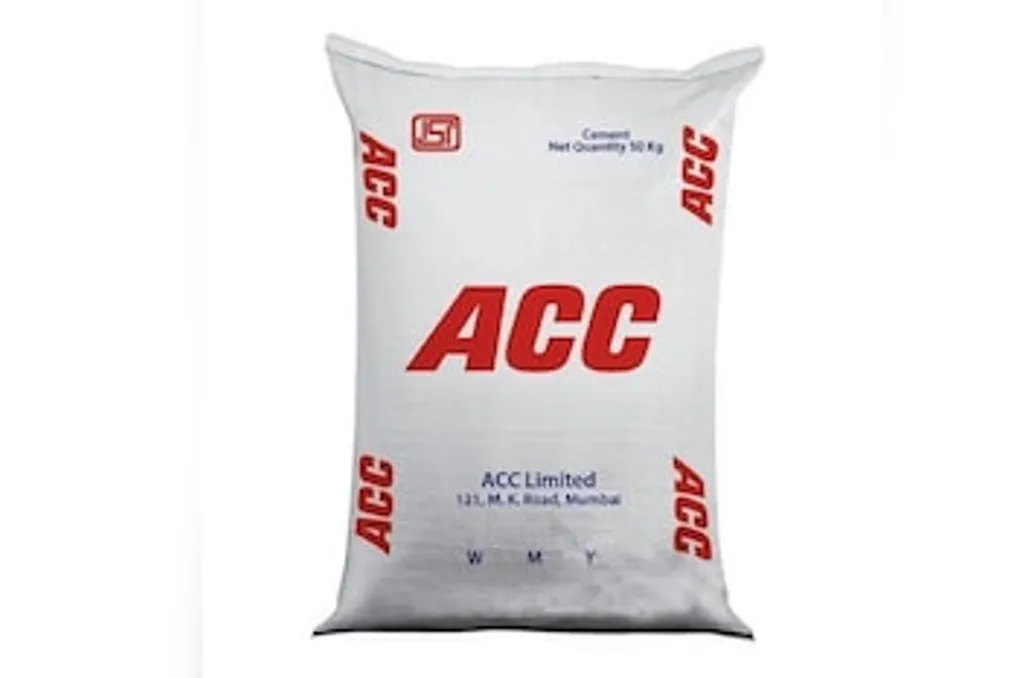
The net profit of cement manufacturer ACC for the first quarter of fiscal year 27 decreased by 60.90% compared to the same period last year, amounting to 147 crore rupees. The company attributed this decline to the impact of scheduled maintenance at large integrated plants, an increase in the Master Supply Agreement (MSA) with parent company Ambuja Cements, and a drop in sales, revenue, and margins.
First Quarter Financial Performance
ACC's operating revenue for the reporting quarter decreased by 8.22% year-on-year, reaching 5,808 crore rupees. Meanwhile, the company's total expenses for the period under review were reduced by 3.35% to 5,639 crore rupees. Sales volume also fell by 6.54% year-on-year, totaling 10 million tonnes, which was linked to the higher MSA with Ambuja.
Operations and MSA
ACC's Earnings Before Interest, Taxes, Depreciation, and Amortization (EBITDA) for the quarter stood at 457 crore rupees, which is 41.33% less than the previous year. The company's margin in the first quarter of FY27 was approximately 7.9%, compared to 12.3% in the first quarter of FY26. The company links the decrease in sales volume and operating EBITDA to the terms of the aforementioned MSA.
The MSA allows ACC and Ambuja to supply cement to each other to meet customer demand. Under this agreement, if one company faces a supply shortage or receives an order exceeding its production capacity, the other party can fulfill that need. During the quarter, a large portion of sales was channeled through the MSA, and scheduled maintenance at ACC's large integrated plants negatively affected the company's sales volumes and profitability.
Management Comments and Outlook
Vinod Bahati, Director and CEO of ACC, noted that the company started FY27 with stable figures, supported by the growth in trade volumes and continued premiumization. He emphasized that the quarterly profitability reflected the impact of scheduled maintenance and the increased MSA with parent Ambuja Cements, despite prioritizing value growth and quality earnings.
Furthermore, electricity and fuel costs in the first quarter of FY27 decreased by 8.93% year-on-year to 785 crore rupees, while the cost of consumed materials dropped by 10.29% to 1,002 crore rupees. Freight and expedition expenses amounted to 1,047 crore rupees, which is 8.47% lower year-on-year.
Bahati added that thanks to strategic capacity expansions in Salai Banwa and Kalamboli, operational excellence ensured by CiNOC, and customer-centric solutions, the company anticipates improved performance in upcoming quarters. He also stated that Adani Cement intends to achieve cost reductions of approximately 250 PMT (per metric ton) on a consolidated basis in FY27, leveraging the strengths of the integrated business model and group synergy.
History and Future Plans
The first quarter of FY27 marked the third consecutive quarter in which ACC reported a decline in profit. Previously, in the third quarter of FY26, profit fell by 62.97% year-on-year to 404.21 crore rupees, which was attributed to the high base effect in the third quarter of FY25. In the fourth quarter of FY26, profit declined by 68.27% year-on-year to 238.25 crore rupees due to pressure from fuel and diesel costs, restrictions on packaging bag supplies, rupee devaluation following the Middle East conflict, and the impact of one-off items in the fourth quarter of FY25.
Quarter-on-quarter (Q-o-Q), ACC's profit in the first quarter of FY27 decreased by 38.23%, and revenue by 18.72%. The company also announced progress in creating the One Cement platform through the proposed merger of ACC with Ambuja Cements. The no-objection certificate was obtained from the Securities and Exchange Board of India (Sebi) on June 4, 2026, and the application was filed with the National Company Law Tribunal (NCLT) on June 29, 2026. The merger is expected to be completed within FY27.
Regarding the Middle East conflict, ACC indicated that the Indian cement sector experienced cost pressures in the first quarter of FY27 due to higher prices for imported fuels such as petcoke and coal, as well as increased freight and logistics costs resulting from geopolitical events in the Middle East. The company noted that the expected impact of fuel price inflation will peak in the seasonally weaker second quarter, potentially affecting industry profitability in the near term, and it continues to mitigate this pressure through fuel mix optimization, increased use of renewable energy, enhanced logistical efficiency, focus on higher-margin markets, and disciplined cost management.