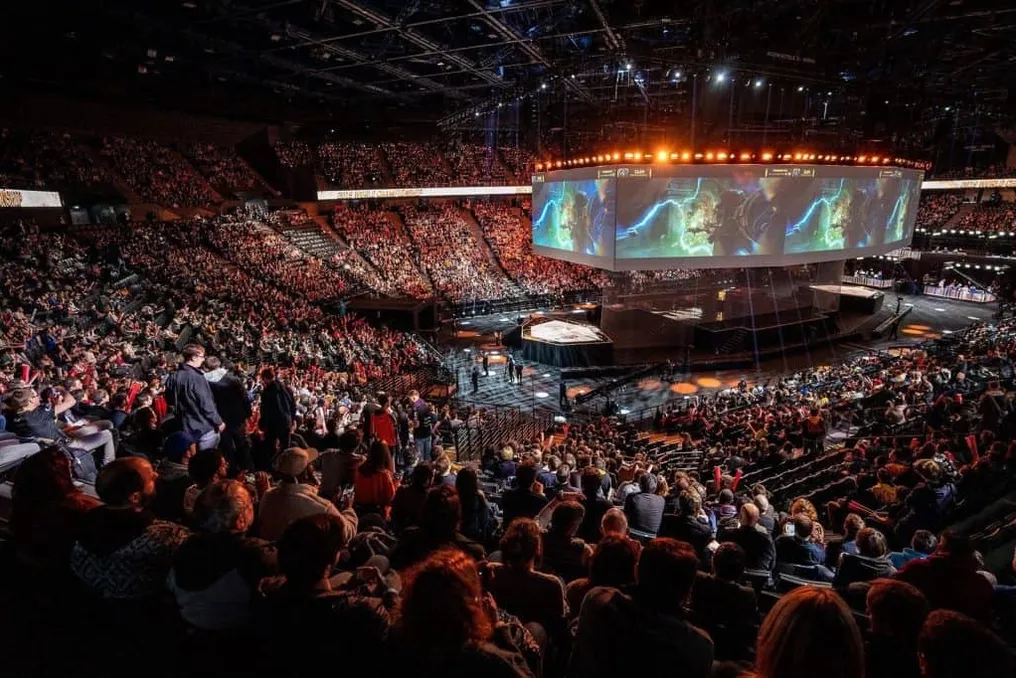
Electronic sports have established themselves as a robust professional market, characterized by audience, investment, and infrastructure. However, the operational mode of eSports presents significant distinctions compared to conventional sports, in addition to having its own specific characteristics. It is important to note that not every video game competition is automatically classified as an eSport.
Definition and Categories of eSports
In simple terms, eSports consist of video game competitions that follow well-defined rules, have an official format, and allow performance measurement through metrics such as scores, rankings, and match results. Just like traditional sports, electronic sports encompass various categories, which are macroscopically defined by the genres of the games. Currently, Strategy Games (MOBA), First Person Shooter Games (FPS), Fighting Games, Sports Games, and Battle Royale Games stand out.
Additionally, games are classified by themselves, citing examples such as League of Legends, Free Fire, and Street Fighter. For an electronic game competition to be considered an eSport, it is essential that there is a professional structure focused on the competitive aspect, ensuring a fair environment and competitive integrity. Other crucial elements include the popularity of the game, an established player base, and community engagement.
Structure of Professional Tournaments
To understand the mechanics of an eSports championship, one must analyze the 'competitive logistics,' as this determines how championships, leagues, and other aspects of the scene are organized. There are two main methodologies: open circuits and franchised leagues.
In open circuits, the organization is delegated to independent operators from the game publisher. A common example is CS2, where groups such as ESL, Intel, and BLAST operate with support from Valve, the game distributor. On the other hand, franchised leagues are managed and centralized by the publisher itself. This is the model adopted by Riot, whose official tournaments are organized by the company, although they receive some assistance from partner organizations, mainly at regional levels.
Models and Phases of Championships
These organizational formats also influence revenue distribution, determining who holds the broadcasting rights and receives sponsorships, whether endemic or non-endemic, in addition to being responsible for hiring talent and paying salaries.
Types of Competitions
eSports championships can be categorized into three levels: professional, semi-professional, and community. Professional competitions are those conducted directly by the publisher or licensed partners. Semi-professional tournaments serve as a transition to the professional level, being held by publishers themselves or by independent leagues or partner organizations. Community championships are autonomously organized by fans and players, although publishers, including Riot, occasionally support such events.
General Competitive Structure
Despite variations between games, the architecture of tournaments and leagues tends to be standardized, typically divided into three stages: qualifiers, group stage, and playoffs. Additionally, there is segmentation by countries, regions, and world championships.
Details of the Phases
Qualifiers constitute the initial and elimination stages, open to any team or invited professional teams, depending on the tournament. The format can vary between single-elimination, double-elimination with re-entry tables, or group system. The Group Stage follows the qualifiers and often uses formats known as Round Robin, Swiss System, or GSL Format, with the dispute usually based on points accumulation. Finally, the Playoffs represent the final stage, usually in single or double format. A loss implies elimination or participation in the re-entry, while a victory in the final secures substantial prize money and/or a spot in a larger event.
Geographical Scope of Competitions
National competitions elevate the most prominent teams to regional tournaments, which in turn grant access to the world championship. Some leagues do not have a specific national championship, leaving this responsibility to semi-professional tournaments, and each event occurs once or twice a year.
Financial Overview of eSports
Electronic sports show notable figures. In audience, eSports reached 640.8 million viewers in 2025, according to Stalista data, representing an increase of approximately 47% compared to 2020. Regarding market value, estimates range between US$2.6 billion and US$5.34 billion, according to different analysts. Despite discrepancies, most agree that the market is in continuous expansion, potentially reaching US$12 billion by 2031, according to the Grand View Research group.
Sources of Revenue
According to Mordor Intelligence, the main sources of revenue come from sponsorship and broadcasting rights. Media, advertising, and other sources account for 60.1%, while fees charged by the publisher and in-game sales correspond to 22%. Sponsorship contributes 39.9% of total revenue.
The Central Role of the Publisher
Unlike traditional sports, eSports have an owning entity: the publisher. This gives the publisher a more decisive role than sports federations, as it possesses the ability to modify game rules through updates, establish the official calendar, license tournaments, and control the ecosystem's brand.
This power is entirely linked to the company's vision and plans. It can drastically transform the scene by adjusting game balance, changing, adding, or removing maps and game modes. Furthermore, in fully online games, such as League of Legends and Dota 2, the publisher has the power to ban players or terminate the entire competitive scene by discontinuing the service. Historically, this autonomy is the main cause of conflict between eSports and traditional sports. However, there are companies, such as Valve, that exercise less invasive influence, limiting themselves to the highest levels of championships, contrasting with Riot's approach, which centralizes almost the entire competitive scene of its titles.