A recent study proposes a different view on the atypical behavior of animals during solar eclipses, suggesting that the cause may not lie in the celestial phenomenon, but rather in the presence and actions of human beings.
A recent study proposes a different view on the atypical behavior of animals during solar eclipses, suggesting that the cause may not lie in the celestial phenomenon, but rather in the presence and actions of human beings.
The next total solar eclipse will occur in less than three weeks, aligning the Sun and Moon for a few minutes on August 12th. This celestial event is expected to cover parts of Europe, including Greenland and Iceland, while also passing over Spain and partially reaching the North Atlantic and North Africa. Such impressive occurrences frequently provoke unusual reactions in animals, such as birds ceasing to sing, agitated primates, and insects altering their activity patterns.
In controlled environments, such as zoos, the manifestations are notable: elephants, gorillas, and flamingos seek their shelters, anticipating nighttime rest. Baboons gather in groups, and some giraffes exhibit unusual galloping.
Initially, researchers attributed these changes to the animals' biological clock, or circadian rhythm, which regulates daily functions like feeding and sleeping, being largely based on sunlight. When the eclipse darkness arrives, animals act as if it were night.
However, an article published in the journal Zoo Biology points out that this is not the only explanatory factor. The new theory suggests that the strange behavior may be induced by humans themselves, whose reaction can, in turn, affect the animals.
A group of scientists monitored a Canadian zoo during the total eclipse of 2024, when the facility was closed to the public. It was observed that most animals showed little reaction to the celestial event, which researchers attribute to the absence of humans. The only exceptions were Japanese macaques, which climbed to higher branches, and zebras, which showed stress peaks before returning to normal.
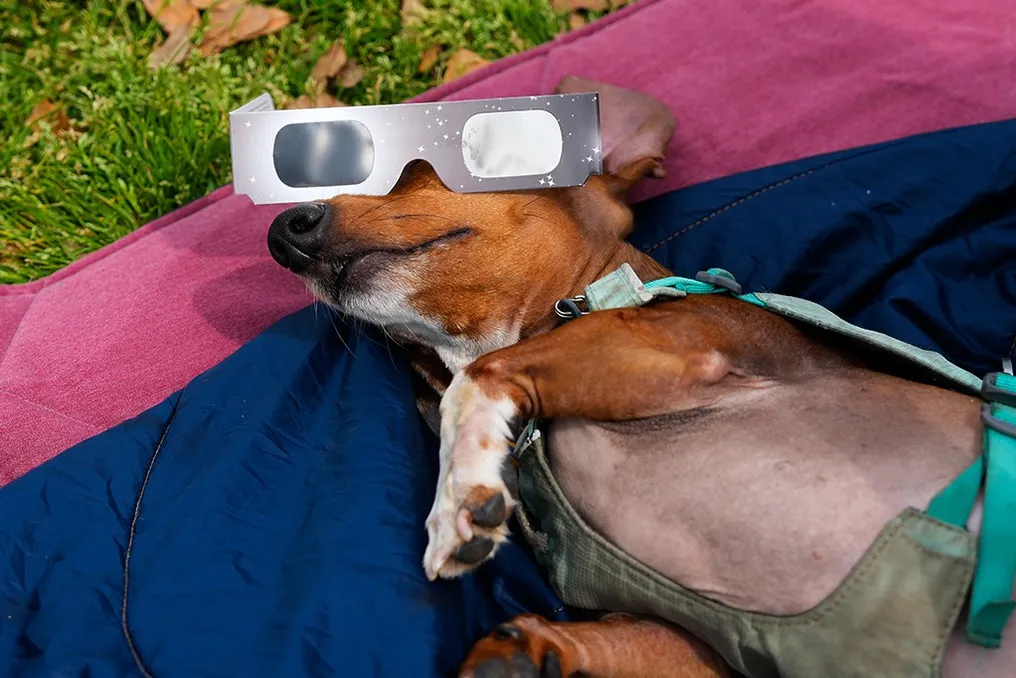
Based on this, the researchers developed a new premise: human demonstrations during the eclipse—such as applauding, vibrating, wearing special glasses, and gathering to watch the sky—may impact animal behavior.
Another group from North Carolina State University reached similar conclusions. In 2017, biologist Adam Hartstone-Rose was invited to observe the reaction of local fauna at the Columbia Zoo in South Carolina, which was full of anxious visitors. Contrary to expectations, he recorded several unexpected animal behaviors, detailed in a 2020 article, raising suspicion that the animals might have been frightened by people.
Hartstone-Rose stated to Scientific American that 'the animals that do the strangest things during an eclipse are far from it the people.' He emphasized that zoo animals perceive what happens to humans, just as humans perceive animals.
In 2024, the same researcher conducted a test at the Fort Worth Zoo, Texas. With a smaller audience, the animal reactions were more contained. In contrast, the Dallas zoo, which received large crowds, saw the animals react 'with much greater intensity' during the eclipse.
Studying animal behavior during eclipses is complex. Although the total phenomenon occurs on average every 18 months somewhere on the globe, it is rare for it to pass over the same spot. Furthermore, its duration is minimal; the largest eclipse of this century should last up to 6 minutes and 23 seconds. A future event will occur on August 2, 2027, visible in a narrow band crossing North Africa, the southern tip of Spain, and parts of the Arabian Peninsula.
Experts argue that the next step should be to standardize the methodology for assessing animal behavior during these events, defining clear criteria for what constitutes abnormal behavior and establishing a global observation plan.
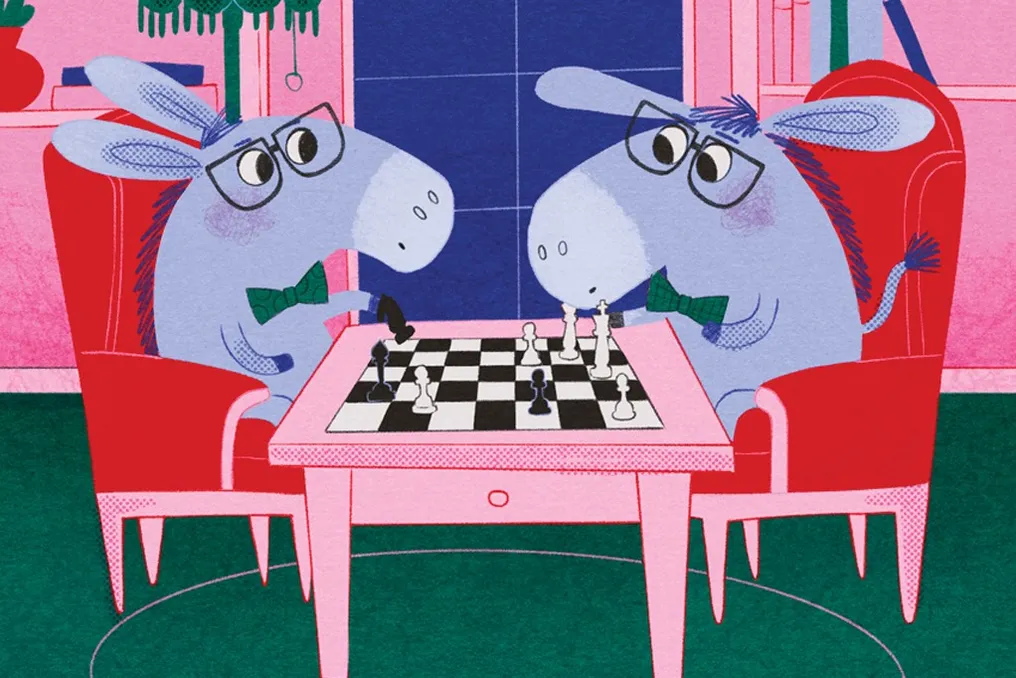
The association of donkeys, mules, and hinnies with negative traits, such as stubbornness and low intelligence, has deep historical roots, spanning over two millennia and not limited to the Portuguese language. Expressions like 'stubborn as a mule' in English and 'más terco que una mula' in Spanish reflect this tradition.
However, this label is considered unfair, given that equids—which include horses, hinnies, donkeys, and mules—are intelligent animals. Scientific research has proven that they possess the capacity for long-term memory storage, establish complex social relationships, and can be trained to perform specific tasks.
It is important to distinguish the species: horses (Equus caballus) and hinnies (Equus asinus) are distinct. Hinnies are also known by names such as asses, geldings, or jerries, and these terms can be used pejoratively. Donkeys and mules are classified as hybrids resulting from the crossbreeding of a mare and a male hinnie. A hybrid formed by crossing a male horse with a hinnie is called a bardot, which is less common due to difficulties in gestation and lower aptitude for work, although its name has not become an insult.
Some specialists suggest that the stigma may be linked to the differences in managing these animals. Chiara Albano, a professor at the School of Veterinary Medicine and Zootechnics of the Federal University of Bahia (UFBA), explains that 'taming hinnies and donkeys is more challenging than taming horses, because their natural behaviors are different.' She exemplifies that, when faced with a predator or danger, while horses tend to flee and observe from a distance, the hinnie tends to stop and analyze the situation, freezing if it perceives danger or distrust to ensure its safety.
This prejudice is extremely old. In Aesop's Fables, dating back to the 5th and 6th centuries BC, donkeys were already used to personify individuals who were naive, stubborn, and vain. An even older reference comes from a second-century book, where the Roman author Lucius Apuleius, in 'The Golden Ass,' narrates the story of a man who transforms into an ass. In this context, the Latin expression *asinina cogitatio*, which literally means 'donkey thought,' was used to designate foolishness.