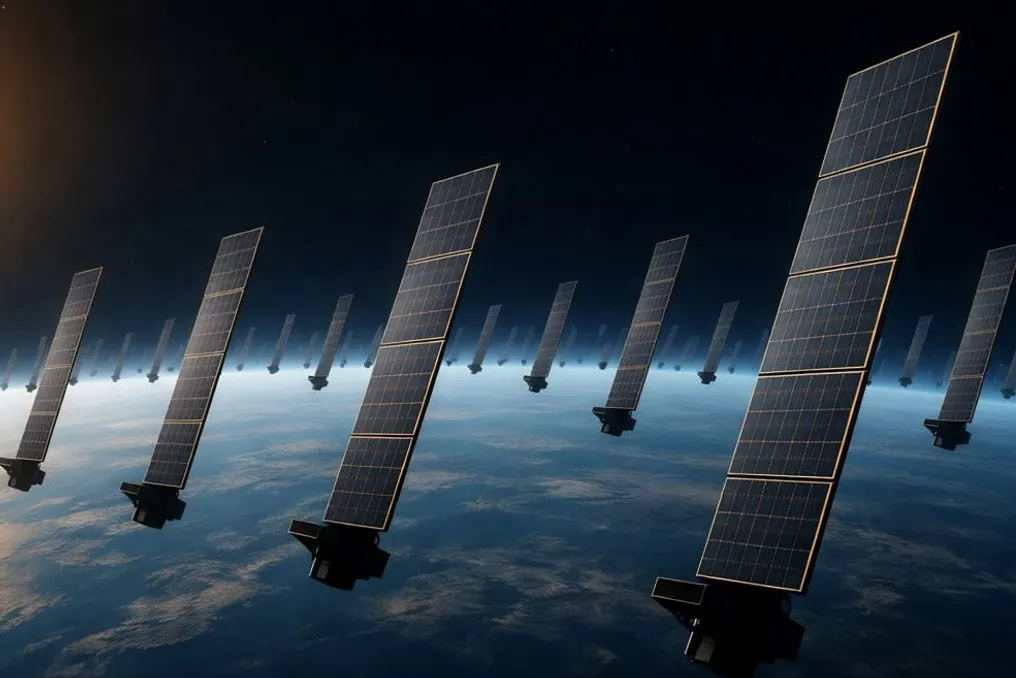
Technology companies, such as SpaceX and Blue Origin, are under scrutiny from experts and environmental groups due to their projects to install data centers in space. These proposals await approval from the U.S. Federal Communications Commission (FCC).
Environmental Concerns with Satellites
The main concern lies in the potential release of waste and chemical compounds into the atmosphere, generated during the launches, operations, and final disposal of these millions of satellites. Environmental organizations demand a detailed analysis of the impacts before any new project is authorized.
A petition has been filed in the United States requesting that the FCC suspend the granting of new licenses for these space structures until the possible damages to the climate, the ozone layer, astronomy, and terrestrial ecosystems have been assessed.
Risks of Orbital Occupation
The expansion of space data centers occurs parallel to the rapid growth of commercial satellite constellations. Companies began considering off-Earth computational infrastructure after encountering public resistance to large processing centers located on the ground.
However, this initiative has raised questions about the environmental effects of a much larger volume of equipment in orbit. The organization Public Employees for Environmental Responsibility (Peer), along with Earthjustice and DarkSky International, submitted a petition to the FCC pleading for a review of these projects.
According to the document, although the companies present these initiatives as revolutionary for the human future, they have not provided sufficient studies on the environmental, scientific, and economic implications.
Expert Analysis on Waste
Steve Volz, former head of the satellite office at the U.S. National Oceanic and Atmospheric Administration (NOAA), told The Guardian that the increase in the number of space objects represents a danger due to the materials released when they are destroyed.
Volz, a former member of the American agency, commented in an interview with the British newspaper: 'There is a lot of complex material in these devices, and even if they burn up, one should not fill the atmosphere with their waste in the same way one would not want to receive it coming from a chimney.'
The expert added that the effects of this deposition of materials in sensitive areas of the atmosphere are not yet fully understood.
Satellite Data and Atmospheric Risks
Currently, it is estimated that there are about 15 thousand active satellites in orbit, a number that has grown considerably compared to the approximately 1,400 registered in 2015. The request sent to the FCC predicts that this total could reach 100 thousand in the next decade, not counting the new networks intended for space data centers.
The environmental risks go beyond launches. Rockets can expel substances such as black carbon, nitrogen oxides, carbon monoxide, aluminum oxide, and other compounds during flight.
When satellites stop functioning and re-enter the atmosphere, their metallic components can fragment into particles and remain at high altitudes. Researchers warn that the understanding of how these elements interact with the natural composition of the stratosphere is limited.
Studies funded by NOAA identified, in 2023, the presence of metals in sulfuric acid aerosols in the stratosphere. These particles play a crucial role in atmospheric dynamics, potentially influencing the reflection of solar radiation and the circulation of pollutants between atmospheric layers.
Scientists involved in the research indicated that the link between metals from spacecraft, natural materials, and stratospheric aerosols remains poorly understood.
Light Impacts and Resources
In addition to atmospheric effects, environmental groups warn of changes in the night sky caused by the increasing number of satellites. DarkSky International advocates that artificial light and bright objects in orbit can harm environments that depend on natural darkness.
This entity works to preserve the sky against light pollution and points out that such changes can affect flora and fauna, including insects like fireflies.
Another aspect raised is the need for rare metals and other resources for the construction of vast satellite networks. Cole Donovan, a former NOAA space policy expert and member of the organization Stand Up for Science, pointed out that these materials already face availability limitations.
Positions of Involved Parties
Among the companies seeking authorizations is Cowboy Space Corporation, founded by the billionaire who is also executive co-president of Robinhood. This company plans to develop a network composed of 20 thousand satellites, with its first launch expected in 2028.
The request presented to the FCC mentions that SpaceX describes its orbital data centers as part of a strategy to expand the future of humanity in space. However, critics observe that the companies' documents contain little information on methods to mitigate environmental damage.
The petition argues that American legislation requires the assessment of environmental impacts before permitting projects of this type. The involved groups maintain that the U.S. National Environmental Policy Act (NEPA) must be applied to satellites, allowing for the analysis of risks, alternatives, and ways to reduce damage.
For the proponents of the request, the projected expansion of large orbital constellations requires an assessment of the cumulative effects before millions of new pieces of equipment are placed in Earth orbit.