Residents of South Africa are facing unprecedented financial pressure due to rising food prices, fuel costs, increasing electricity tariffs, and higher overall household expenses. This is forcing many families to reconsider their purchasing habits.
Residents of South Africa are facing unprecedented financial pressure due to rising food prices, fuel costs, increasing electricity tariffs, and higher overall household expenses. This is forcing many families to reconsider their purchasing habits.
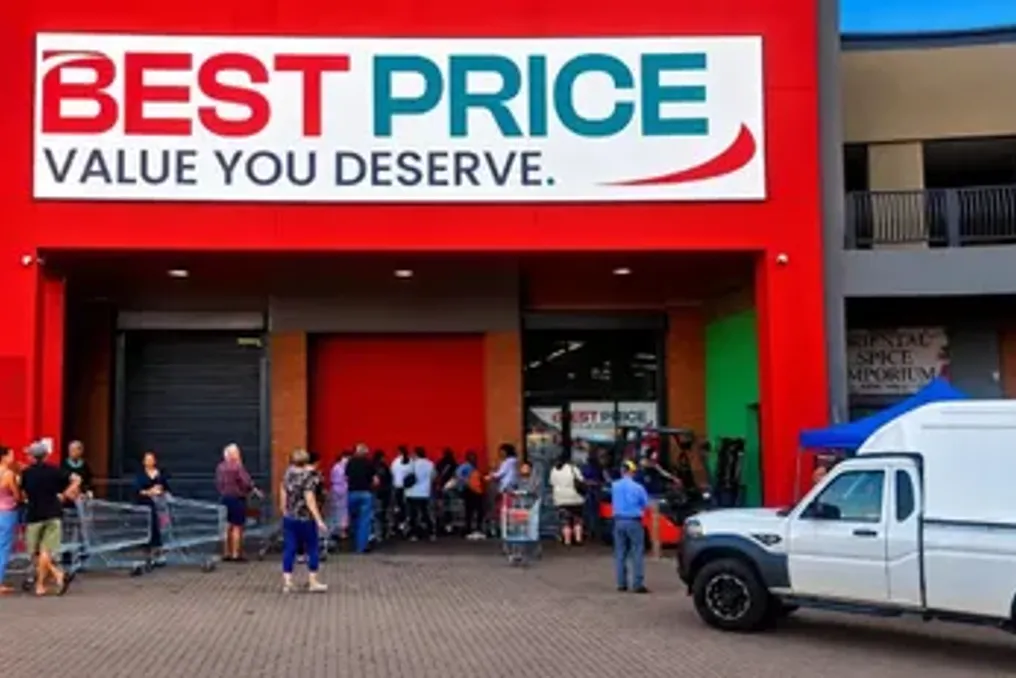
A growing number of consumers prefer not to buy less, but rather to make more thoughtful purchases and adopt budget strategies. This shift in consumer behavior is contributing to the rapid growth of Best Price, a South African discount retailer. The company specializes in offering quality products at significantly reduced prices by selling goods with limited shelf life or best-before dates.
Based on its motto 'Value You Deserve', the company has gained a loyal customer base by helping shoppers save money on everyday necessities without sacrificing trusted brands or quality. Best Price positions itself as a store that provides access to familiar and reliable products at substantially lower prices, allowing customers to save up to 80% on basic goods.
These savings are becoming critical for many families, as they allow them to stretch their monthly food budget while continuing to purchase branded household items. It is important to note that the 'best before' date differs from the expiry date: it indicates product quality, not food safety. With proper storage, many items remain safe to consume or use even after this date. At Best Price, all products are hermetically sealed, safe, and clearly labeled, giving buyers confidence when making decisions.
The retailer notes that among its customers are price-sensitive individuals such as pensioners, students, and families who understand the financial benefit of maximizing their budget. As awareness grows, more South Africans are comfortably purchasing such items for significant savings. The concept has already achieved international success, where discount stores specializing in surplus and short-dated goods continue to grow actively.
Best Price believes that South Africa is undergoing a similar transition. The company reports that shoppers are becoming increasingly value-oriented and actively seeking ways to reduce daily living costs while maintaining quality. This growing demand has fueled the expansion of Best Price's national network, which continues to open new stores across the country. A new location was recently opened in Witbank as part of the company's expansion plans.
To help consumers maximize savings, Best Price releases weekly special offers with large discounts on a wide range of products. Current promotions can be viewed on the retailer's social media platforms. Furthermore, pensioners receive a 5% discount on purchases every Wednesday. Best Price's goal remains simple: to put more money back into the pockets of ordinary South Africans during difficult economic times by ensuring access to affordable and quality products daily.
In a climate where many households are looking for practical ways to cut costs, discount retail is no longer just an alternative shopping option but is becoming an increasingly necessary part of modern consumer behavior. Currently, Best Price serves communities across South Africa through stores in Boksburg, Germiston, Pretoria, Brits, Marshalltown, and Witbank, offering tangible savings on everyday essentials.
The Shoprite Group recently established its three hundredth community garden outside of Bredasdorp, located in the Western Cape. The 'Zero Organic Waste in Landfills' project is being implemented in collaboration with the local municipality and the South African Zero Waste Association.
In 2021, this site was focused solely on waste diversion. Today, it collects organic food waste from 800 households to produce compost and grow fresh vegetables. Experts note that farmers interested in regenerative agriculture in Mzansi are moving in the right direction.
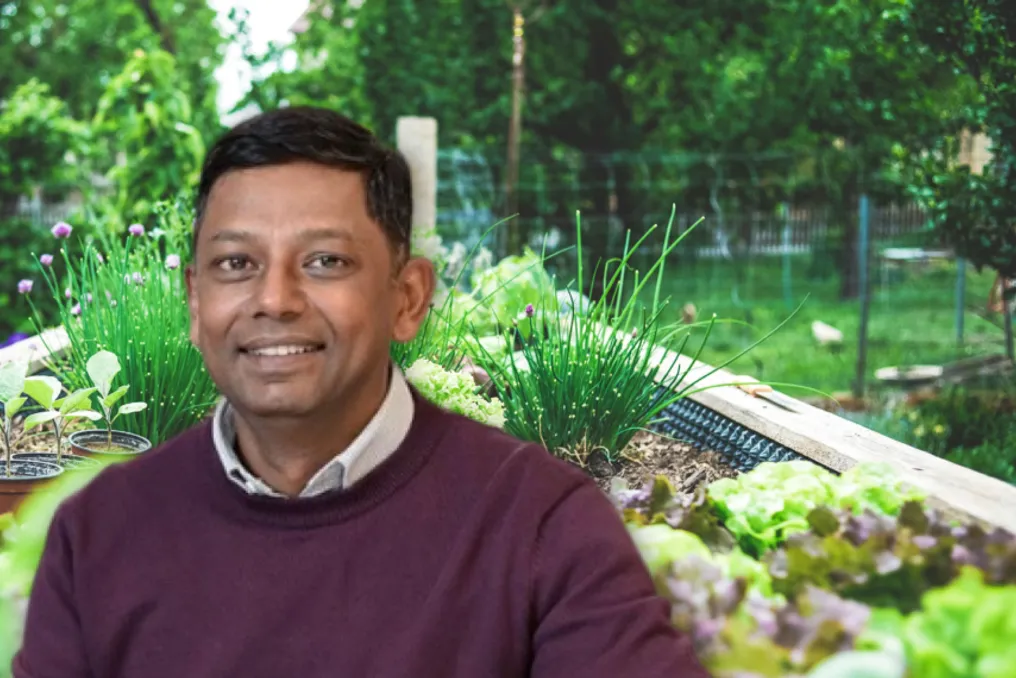
Food For Mzansi interviewed Sandjiv Ragubir, Head of Sustainability at the Shoprite Group, to learn about the mechanism of this project and the importance of local food systems.
Reaching the 300th milestone has been a significant moment for the Shoprite Group. Sandjiv Ragubir states that such gardens play a vital role as they increase the availability of fresh and nutritious produce, especially in underserved areas. He refers to the 2025 South African Food Security Index, which highlighted the critical importance of diverse nutrition. Community gardens contribute to this diversity by providing immediate access to various fresh vegetables.
Over the last decade, the program has expanded to 300 gardens across the country. In addition to soil preparation, the program provides 18 months of practical agricultural training, irrigation systems, water harvesting infrastructure, and continuous mentorship. These gardens not only produce food but also create local economic opportunities, develop practical skills, and strengthen long-term community sustainability.
The Bredasdorp project utilizes a circular economy model. Such initiatives change communities' perception of waste, viewing it as a valuable resource rather than something to be discarded. Bredasdorp serves as a clear example of this process. Organic waste from approximately 800 households is collected, sorted, and composted on-site.
This results in nutrient-rich compost that is returned directly to the soil for vegetable cultivation, forming a closed loop system just meters away from the waste disposal site. By preventing organic waste from reaching landfills, greenhouse gas emissions are reduced, soil health is improved, and sustainable local food production is supported. This demonstrates successful collaboration between municipalities, NGOs, and the private sector.
Regenerative methods are absolutely capable of strengthening community resilience in the face of climate change. They help communities cope with climatic challenges by improving soil health, increasing water retention, and boosting biodiversity. Healthy soil absorbs and retains moisture much better, allowing crops to withstand periods of drought and extreme weather conditions.
In Bredasdorp, the garden uses compost derived from local organic waste for natural soil enrichment. This reduces the need for synthetic fertilizers and protects long-term land productivity.
As food prices rise, local production becomes increasingly important. Price increases place immense pressure on family budgets, making it difficult to afford nutritious food. Local production helps alleviate this pressure by eliminating high transportation costs for goods over long distances. It makes fresh vegetables accessible right within the community. In the Bredasdorp project, vegetables are grown and sold near where people live, meaning food travels a very short distance from the ground to the table.
While local production cannot replace large-scale agriculture, it perfectly complements it. It improves immediate access to fresh produce, strengthens local food systems, and helps communities become less vulnerable to supply disruptions. This is why community gardens are becoming an increasingly valuable part of broader efforts to enhance food security and community sustainability across South Africa.
The current geopolitical crisis is exacerbating South Africa's existing economic difficulties, which stem from the country's dependence on an energy system vulnerable to global shocks and supply chain disruptions triggered by conflicts such as the war between the US, Israel, and Iran.
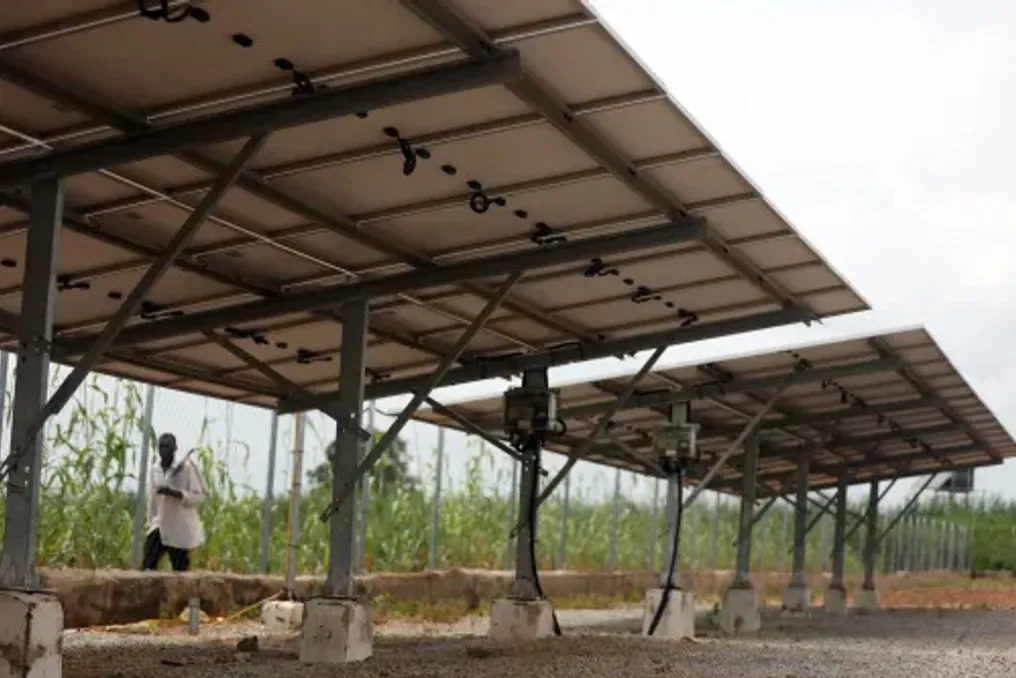
Against the backdrop of this conflict stands an existential and escalating climate crisis that demands not only technological innovation but also a fundamental overhaul of governance and financial architectures to advance development and growth. According to the 'Climate Finance Landscape Report, 2025' by the Presidential Climate Commission, South Africa, as the continent's most industrialized economy, attracts about 60% of its climate finance domestically, indicating a strong financial sector.
Nevertheless, the annual investment gap required to meet Nationally Determined Contributions (NDCs) and net-zero targets amounts to a substantial 203–404 billion South African Rand. Existing funding streams are heavily skewed towards energy, particularly renewable electricity, which accounts for 74.1% of tracked financing, while adaptation remains at only 11.3%. More tellingly, 78.2% of financial instruments consist of market-rate debt financing (45%) and equity capital (33.2%).
This reliance on commercial debt places the burden of transition onto balance sheets, a model ill-suited for community-level initiatives that lack collateral, credit history, or stable income sources in their early stages. Funding explicitly labeled as 'just transition' remains modest—averaging only 16.8 billion Rand annually—and primarily comes from governments and Development Finance Institutions (DFIs). The market itself does not ensure fairness.
Just transition is viewed not as a secondary issue, but as a normative foundation focusing on decent work, social inclusion, poverty eradication, and participation in decision-making. It envisions decentralized, diversely owned renewable energy systems and equitable access to resources. However, when climate finance is dominated by commercial players seeking risk-adjusted returns, the most affected communities, such as in coal regions like Mpumalanga, end up being either observers or, at best, recipients of symbolic programs.
Since the real impact of climate—rising temperatures, intensified storms, floods, and water scarcity—is ignored by aggregated financial flows, a targeted financing ecosystem that prioritizes community agency is necessary. A presentation on financing green initiatives at the community level in Africa, based on the South African experience, reveals a critical paradox: despite the growth in climate finance, it deeply diverges from the principles of just transition.
If the goal is to empower vulnerable groups—the poor, women, and youth—then the prevailing market-driven mechanisms are not merely insufficient, but structurally exclusionary. Data from South Africa demand a decisive shift in course: from debt-based, top-down investments to community-based, bottom-up resilience. The case of Mpumalanga serves as an example: as a province facing severe climate disruptions and the gradual phase-out of coal, its economic diversification should not depend on abstract market forces.
The true potential lies in creating region-specific value chains: critical mineral processing, green manufacturing, electric vehicle supply chains, green hydrogen, low-carbon fertilizers, and others. These sectors promise millions of new jobs, protection of existing ones, poverty reduction, and the prevention of thousands of premature deaths. Nevertheless, this potential will remain unrealized without a well-designed financing system that prioritizes community agency.
Socially owned renewable energy offers a compelling alternative to the current ownership structure in the energy generation sector. This requires appropriate governance structures, involvement in site selection, and crucially, a financial nexus that extends beyond traditional bankability, actively involving communities or workers in the local economy, thereby deepening economic democracy.
The central thesis of this article is that 'bankability must be redefined.' For community-led green initiatives, the project financing mechanism should not begin with commercial loans. It should start with grant funding for developing business cases, preliminary feasibility studies, comprehensive viability analysis, and preparation for bankability. Only then should concessional loans, blended finance, and finally, commercial debt be introduced.
This sequential approach to risk mitigation recognizes that community initiatives are not failed commercial ventures, but public goods with long-term social, economic, and environmental returns. Existing climate finance, obsessed with immediate risk-adjusted returns, systematically undervalues these co-benefits. Furthermore, adaptation finance—the forgotten child of climate flows—must be radically increased and redirected toward community-level actions. Adaptation is inherently local: early warning systems, drought-resistant agriculture, flood-resilient infrastructure, and water conservation cannot be designed remotely. Yet, at only 11.3% of tracked finance, adaptation remains a secondary concern, forcing communities to absorb shocks that strategic investment could mitigate.
Achieving a just transition in Africa requires more than just increasing the volume of climate finance; it demands a paradigm shift regarding who makes decisions, who benefits, and who bears the risks. The data from South Africa serve as a stark warning: commercial logic alone entrenches inequality. Policymakers, development institutions, and philanthropists must prioritize grant-based technical assistance, establish just transition conditions, and create dedicated funds for community-owned renewable energy and adaptation. Without such measures, the transition will be neither just nor sustainable. As the final slide of the presentation reminds us, community agency is not a charitable add-on, but the missing engine of transformative change. The question is no longer whether to finance green initiatives, but how to finance them justly.