A question arises: can the SCO become the foundation for establishing peace, stability, and cooperation? Roza Otunboeva emphasizes that building trust between people requires working to strengthen mutual trust, as information about neighboring peoples is often limited.
SCO's Humanitarian Mission
In Roza Otunboeva's opinion, the SCO's humanitarian mission goes far beyond simply holding conferences, forums, or festivals. Trust does not arise solely around the negotiating table. The SCO unites not only states but also great civilizations, including Chinese, Indian, Islamic, Orthodox Christian, and Central Asian civilizations.
She asserts that lasting peace begins not with agreements between states, but with trust between the people themselves. Roza Otunboeva, a state and political figure from Kyrgyzstan, holds the position of head of the international public organization 'Roza Otunboeva Tashabbuslari' and previously served as the Minister of Foreign Affairs of the Kyrgyz Republic, Ambassador to the USA and Canada, and Special Representative of the UN in Afghanistan, and also held presidential positions in the country from 2010–2011.
Discussion at the Forum
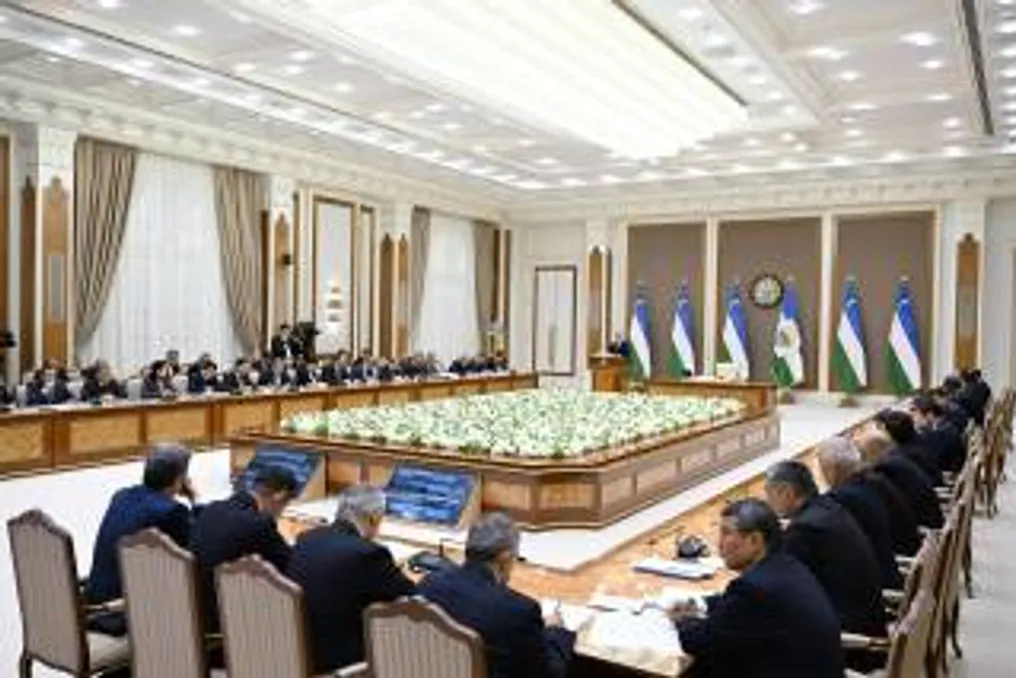
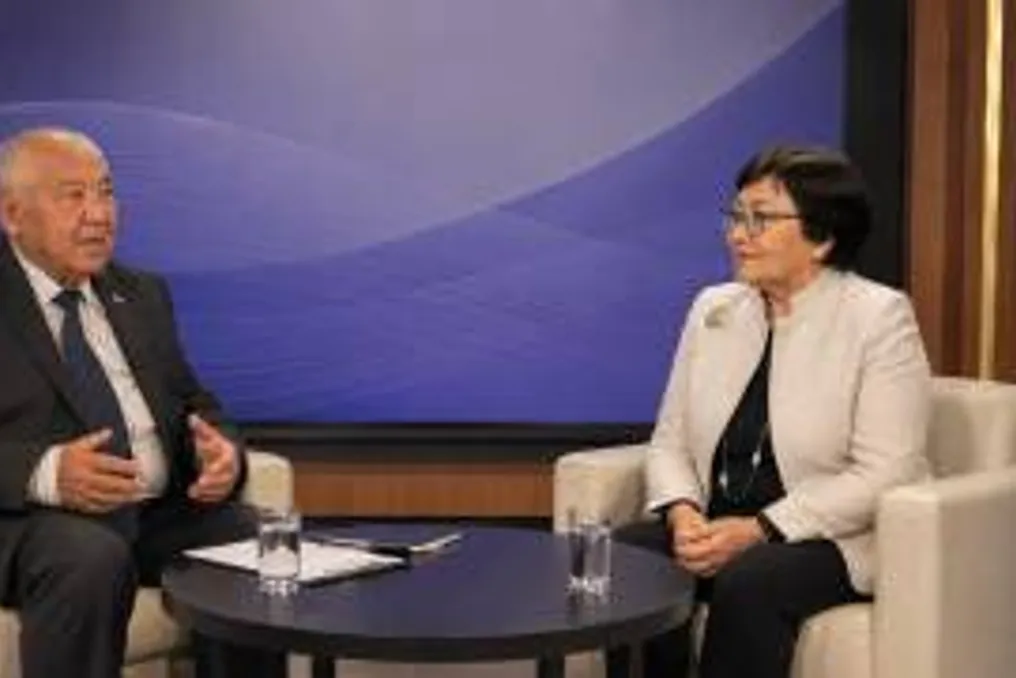
Mukhammadjon Obidov, a correspondent from Uzbekistan, met with Roza Otunboeva at an international forum in Bishkek dedicated to the 'Dialogue of Civilizations' on the occasion of the SCO's 25th anniversary. He asked for her views on the organization's activities and future tasks.
Otunboeva noted that the topic of 'Dialogue of Civilizations' is close to her both as someone who has spent many years dealing with international cooperation issues and as a participant in the early stages of the Shanghai Process, which began in the mid-1990s. At that time, the historical task was to teach states to trust each other and to form an atmosphere of trust among the five countries united by signed borders.
Evolution of Cooperation
Thanks to decades of active interaction, an environment of political trust, respect for sovereignty, and equal partnership has been created, despite initial mutual wariness. The Shanghai Cooperation Organization emerged on this foundation. Today, after 25 years of SCO development, a new stage is beginning. If the previous generation established a bridge of trust between states, the current generation must fulfill the historical mission of strengthening mutual trust between people and nations.
The Paradox of Knowledge and Trust
She notes that although we often speak of the dialogue of civilizations, civilizations do not communicate by themselves—people do. How well people know each other determines the nature of relations between countries twenty or thirty years later. In her opinion, we face an interesting paradox: in an era of open borders, digital technologies, and fast information, we know a lot about distant corners of the world, yet we know very little about our neighbors.
Otunboeva added that we are insufficiently informed about the history, literature, culture, and way of life of the peoples of the Eurasian space, and most importantly, about a common future. In fact, ignorance often becomes fertile ground for distrust, negative perceptions, and stereotypes. Therefore, in her conviction, the main task of the SCO today is to create conditions for people to get to know each other, rather than just organizing events like conferences or festivals.
The Need for Educational Exchange
There is a need to create broad opportunities for free communication, joint learning, scientific research, and creativity among schoolchildren, students, young scientists, and cultural figures. History teaches us that trust is formed not only at the negotiating table. It arises when children learn together, when friendships between students strengthen, when young scientists conduct joint research, when families visit each other, and when neighbors accept each other not as strangers, but as close people.
She expresses hope that the day will come when for the youth of any SCO member country, studying or conducting scientific research in a neighboring SCO member country will be as natural and simple as it is today, similar to how the desire to study in leading countries of the world is common practice.
Vision of the Future Through Education
Imagine if every school in an SCO member country established permanent contacts with partner schools in another SCO member country. If children communicated online, implemented joint educational and creative projects, studied each other's history, culture, and national holidays, and then the most active students could travel to neighboring countries for experience exchange, then the neighboring country would cease to be just a name on a map or an abstract concept; it would become a familiar, close place where friends live.
Otunboeva envisions a future where a young person twenty years later says: 'I was born in Bishkek. At school, I regularly corresponded with my friend from Xi'an. During my studies, I spent one semester in Delhi. I conducted scientific research in Kazan. I participated in a joint project in Tashkent. Today, my closest friends live in China, Pakistan, Iran, and other SCO countries. Therefore, I am not afraid of my neighbors because I understand them.'
Only then can it be said that the SCO's humanitarian mission has been fully realized. As an example, the Erasmus program is recognized as one of the most successful humanitarian initiatives of the European Union, allowing millions of young people to experience Europe through personal experience and deeply learn about the culture and values of other peoples.
Call for the Creation of a Fund
The SCO possesses the potential to implement a unique humanitarian initiative that reflects its civilizational characteristics and cultural diversity. Given that the SCO is a unique space uniting great civilizations such as Chinese, Indian, Islamic, Orthodox, Christian, and Central Asian, the question arises: why not create an 'SCO Civilizations Scholarship Fund'?
This project should not merely be an academic exchange program. It should provide young people with the opportunity to deeply study the language, history, philosophy, literature, and traditions of a neighboring civilization, as well as actively participate in the life of its universities, scientific laboratories, and cultural institutions, directly interacting with the daily life of its people. Most importantly, they should return home not only with a diploma and scientific experience but also as people who understand and respect another culture, having become a bridge of trust.
Over the past twenty-five years, the SCO has proven itself to be a reliable platform for peace, security, stability, and multilateral cooperation. Now, the organization faces an even higher task—forming a space of mutual trust between peoples and individuals. After all, sustainable peace is ensured not only by agreements concluded between states; it begins with mutual trust, respect, and understanding formed in the hearts of people.
If the SCO countries can contribute to their peoples knowing each other better, understanding more deeply, and forming a solid foundation of trust, this will be the greatest and most sustainable contribution not only to today's but also to the future of all Eurasia.