A joint Uzbek-Japanese university is planned to open in the city of Tashkent, specializing in training personnel in the fields of artificial intelligence, digital transformation, and business management.
A joint Uzbek-Japanese university is planned to open in the city of Tashkent, specializing in training personnel in the fields of artificial intelligence, digital transformation, and business management.
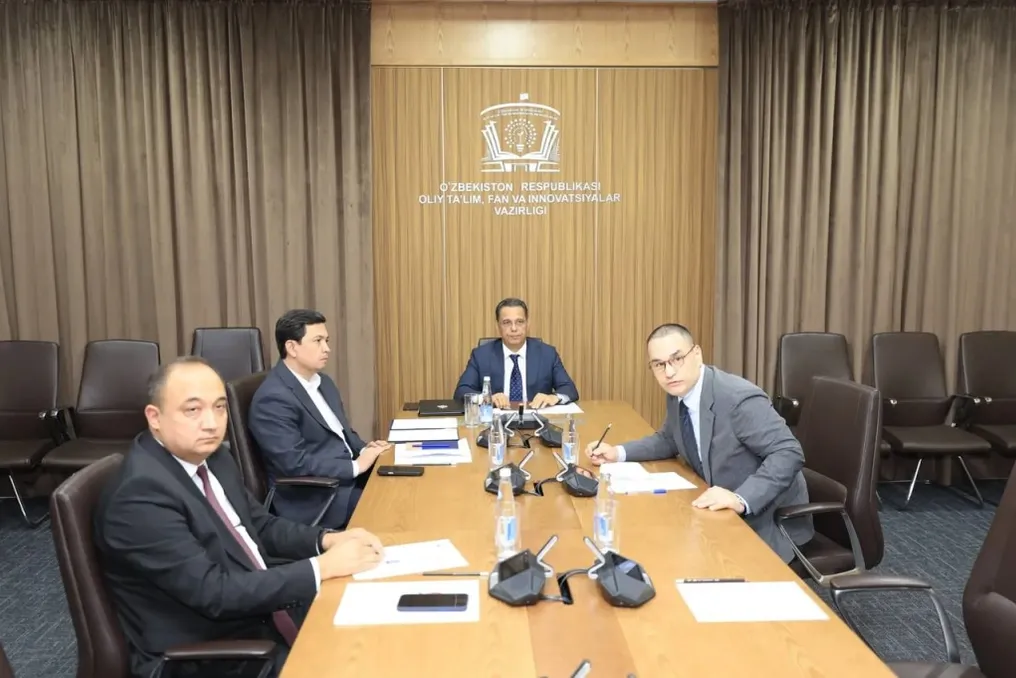
The agreement on the formation of the new higher education institution was signed via video conference. The signing parties were the Minister of Higher Education, Science and Innovation of Uzbekistan, Kungirotboy Sharipov, and the President of Tsukuba University, Kesuke Nagata.
The new university will operate as an independent legal entity under the current legislation of Uzbekistan. Its founders are the Ministry of Higher Education, Science and Innovation of the republic and a consortium of Japanese universities, whose activities will be supervised by Tsukuba University.
In the initial stage, the university plans to launch master's programs in artificial intelligence, digital transformation, and business management. In the future, there is provision for expanding the educational range by launching bachelor's and doctoral programs. Education will be conducted in English, following the model of Japanese higher education. Additionally, students will have access to short-term educational trips to Japan, as well as courses on studying the Japanese language and culture.
Under the reached agreements, Uzbekistan undertakes the obligation to ensure the creation of a modern campus, as well as all necessary educational and scientific infrastructure, including funding for the work of administrative and teaching staff. The Japanese side is responsible for developing curricula, attracting faculty members, organizing academic exchange, and coordinating the participation of Japanese universities in this project.
The preparatory office of the new university will begin operations in Tashkent in September 2026. The first intake of students for master's specialties is scheduled for the 2028/2029 academic year. It is expected that this university will become an important platform for strengthening ties between Uzbekistan and Japan in the field of education, contributing to the training of specialists who meet global standards.
Uzbekistan plans to create a Higher School of Integrated Programs with the aim of expanding the application of international educational standards. Corresponding measures are stipulated in the presidential decree 'On additional measures for the implementation of secondary vocational, professional, and higher education in the republic based on international educational standards' (No. PP-269 dated July 17, 2026).
This document provides for the further development of the integrated educational program system, which is implemented in partnership with the British educational organization IQF (Integrated Qualifications Framework). Previously, the Center for International Qualifications and Assessment was established for these purposes.
According to the decree, the Center has been assigned additional tasks to bring integrated educational programs into compliance with the academic requirements of foreign universities included in the top 100 global rankings of QS (Quacquarelli Symonds) or Times Higher Education (THE).
The Center will also be responsible for developing educational models such as '1+3' and '2+2' for bachelor's programs, as well as the '1+1' model for master's programs. It is expected that these programs will be recognized by foreign universities included in the top 100 global rankings.
Furthermore, the Center will prepare agreements on opening campuses, branches, franchises, centers for implementing educational programs, and other structures in Uzbekistan focused on issuing diplomas from leading foreign higher education institutions. As part of the experiment, the Higher School of Integrated Programs will be established at the Tashkent University of Architecture and Civil Engineering, and its activities are aimed at introducing integrated educational programs using best practices from Great Britain.