Scientific approaches are being applied in the National Park of Tigers and Leopards in Northeast China to protect wild animals. Zhang Yan, deputy director of the research center at the park's management and protection center, recorded animal tracks, noting: 'The soil is soft, the print is fresh, and the pad is about 9 centimeters wide. This must be a female Siberian tiger.'
Park Management Center Operations
Hunchun, a border town in Yanbian Autonomous Prefecture in Jilin Province, Northeast China, is located in the heart of the park. Since the park was launched as a pilot project in 2017, the team at the Hunchun management and protection center has been conducting regular field patrols and scientific research to conserve fauna using evidence-based methods.
Patrolling and Monitoring Methods
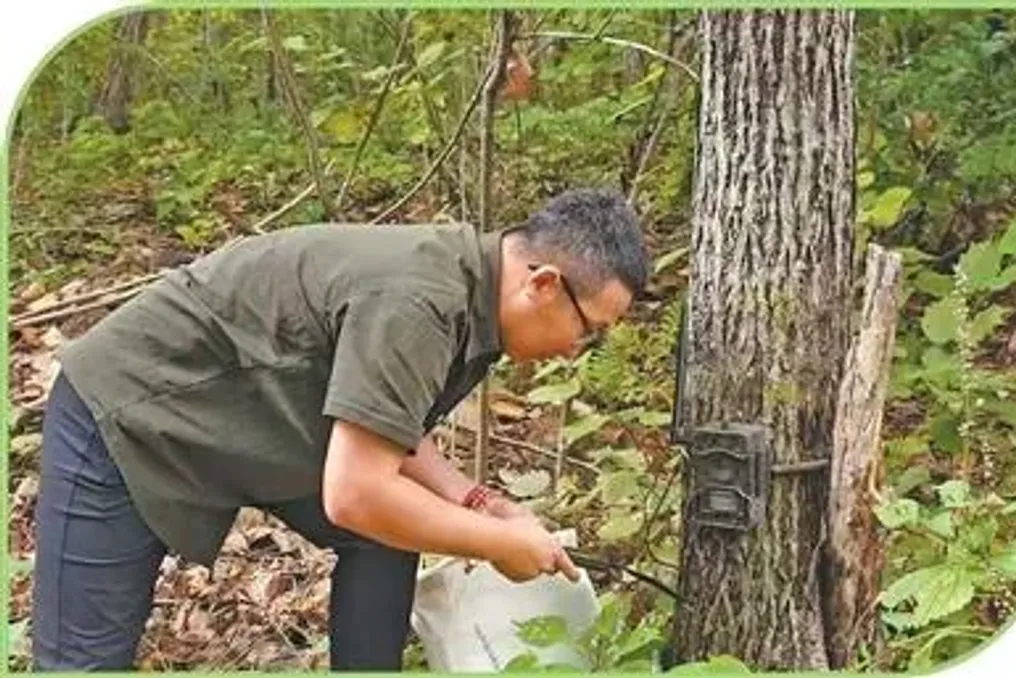
Patrolling is central to the center's work. Hundreds of patrol officers and local ecological rangers, many hired from nearby villages, monitor the forest and record the movements of wild animals. Hao Ruiping, deputy head of the center's protection department, noted that patrols help understand what is happening in the mountains and track animal routes. He added that ground checks are necessary even when infrared cameras are available.
Previously, patrols focused on detecting snares and traps, which were difficult to spot under fallen autumn leaves. However, due to increased awareness among local residents about nature conservation, the work has shifted towards maintaining infrared cameras and collecting biological samples, resulting in traps being encountered much less frequently.
Animal Tracking Technologies
Each patrol officer carries a backpack weighing about 5 kilograms, equipped with signal flares, an intercom, a air horn, infrared cameras, and other gear that Hao called a 'universal backpack.' Patrols are now conducted in groups of five people. Before setting out, they check the integrated space-air-ground monitoring system to see where animals have recently been sighted, allowing them to plan safer routes.
At the management and protection center, staff, including Duan Lianru, use this system on computers, viewing real-time video feeds from infrared cameras installed throughout the park to record tigers and leopards. This system covers the entire park, integrating digital technology and ensuring 24-hour monitoring, becoming a key source of data for tracking the movements and growth of Siberian tigers and Amur leopards.
Ecosystem Identification and Study
Duan compared the process to observing a growing child, periodically photographing the same tiger to see changes. She explained that individual tigers are identified by their unique and permanent stripe patterns, although distinguishing animals with such complex markings requires careful frame-by-frame comparison. Duan also mentioned that the collected data helps researchers study the territory and diet of the animals. Previously, Duan helped warn nearby villages about the appearance of tigers or leopards near settlements.
Zhang, along with patrol officers, would find an infrared camera mounted on a tree trunk, quickly change the battery, and review the recordings on his phone. Zhang has worked in these mountains for 16 years. He transitioned from forestry to wildlife protection after China ceased commercial logging of natural forests in key state forests in the region.
Zhang emphasized that grassroots work involves utilizing local proximity, maintaining infrared cameras, measuring population density, studying diseases, and tracking the movements of tigers and leopards. During one ungulate survey, he covered a route of 8 square kilometers daily to collect data. This work has shown an increase in animal numbers, indicating the return and establishment of more wildlife in Hunchun.
Today, in the vast forest, Siberian tigers and Amur leopards live undisturbed; noble deer and Siberian roe deer are often seen, as are rare species such as the Siberian musk deer, sable, and lynx. Zhang concluded that protecting these tigers and leopards is not only about caring for the animals themselves but also for the entire ecosystem they represent. In his free time, he gives lectures in local schools, striving to inspire the next generation of conservationists, asserting that protecting Siberian tigers and Amur leopards is protecting their own home.