Strengthening maritime security is becoming a priority for countries in the Indian Ocean region. South Africa is combating threats such as piracy and smuggling to stimulate the growth of its Blue Economy.
South Africa's Security Measures
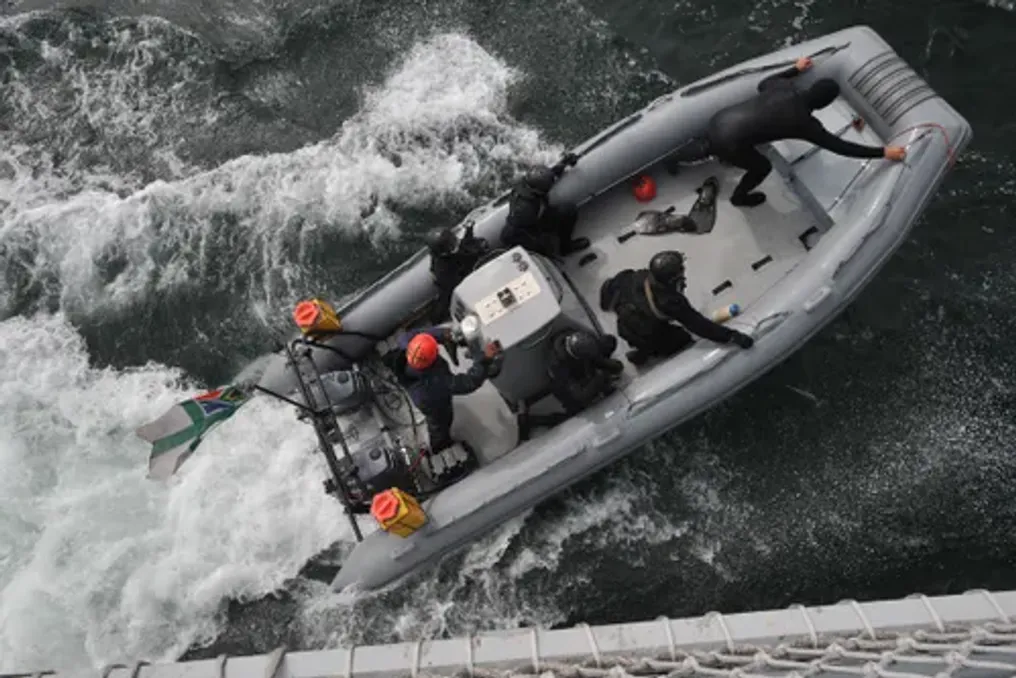
Threats, including illegal fishing, piracy, and smuggling, have prompted South Africa to link its maritime security with the development of the Blue Economy. Since over 90% of the country's trade volume depends on secure sea communication lines, the South African Navy is modernizing its understanding of the maritime domain through integrated coastal radar networks and satellite monitoring.
Infrastructure Development and Cooperation
To advance the Blue Economy, the country is improving port infrastructure and ship repair capabilities in centers like Durban and Cape Town, aiming to enhance global trade resilience. The 'Operation Fakisa' program, aquaculture, and fish processing are receiving targeted investments to create coastal jobs and ensure food security. Furthermore, South Africa has expanded its marine protected areas to restore fish stocks, which supports coastal tourism development.
Under the SADC Integrated Maritime Security Strategy, South Africa conducts joint patrols and standardizes efforts against maritime crime with neighboring African states. Former Minister of Forestry, Fisheries and the Environment, Willie Aukamp, speaking at the 7th Ministerial Conference of the Benguela Current Convention in Luanda, Angola, in May, emphasized South Africa's commitment to strengthening scientific cooperation through joint research and resource sharing, ensuring sustainable funding for the Commission, building regional capacity, and enhancing the fight against Illegal, Unreported, and Unregulated (IUU) fishing, guaranteeing that new maritime activities are guided by sound science.
India's Example and Military Achievements
The potential for South Africa's Blue Economy growth should be viewed through the lens of another developing nation—India, which has strengthened its maritime security while supporting its Blue Economy and solidifying its position as a leading maritime power. In June, India commissioned four new indigenous naval vessels within a month, significantly bolstering its naval capabilities at sea: INS Mahendragiri, INS Dunagiri, INS Sanshodhak, and INS Agray.
Leaders' Statements on Maritime Influence
During the launch, Indian Prime Minister Narendra Modi stated that the new warships will substantially increase the country's operational capabilities, improve maritime situational awareness, and strengthen the security of its coastal waters against geopolitical threats. Modi noted that the event marked an important milestone on the path to an assured and developed India, emphasizing that no nation can become a great power without strong maritime capabilities, as development, security, and prosperity are closely linked to the oceans.
He added that a large portion of global trade passes through sea routes, and vast global data networks operate beneath the oceans. Modi also pointed out that critical minerals, deep-sea resources, and future energy sources will increasingly be tied to the maritime domain, and a nation's economic and strategic influence directly depends on the strength of its maritime sector.
View on Economic Potential
President Cyril Ramaphosa also highlighted the impact of the maritime sector on South Africa's economy, stating that the country possesses vast natural resources that need to be utilized more extensively to stimulate economic growth and job creation. In April, after inspecting operations at the Ngqura port, Ramaphosa said that South Africa has 'vast and wonderful natural resources that we need to utilize at a higher level... we can grow our economy immensely and make South Africa a hub for ocean economy.'
Developing economies, such as India and South Africa, are increasingly recognizing the immense potential of the maritime sector in creating jobs, viewing it not as an isolated industry but as a primary driver of employment and economic growth.