Defence Minister Bantu Kholomisa stated that South Africa should study new financing models and public-private partnership (PPP) mechanisms to enhance the country's defence capabilities.
Defence Minister Bantu Kholomisa stated that South Africa should study new financing models and public-private partnership (PPP) mechanisms to enhance the country's defence capabilities.
Kholomisa welcomed the idea of seeking interaction with the commercial sector to support the South African National Defence Force (SANDF). He emphasized that such partnerships must be carefully planned and assessed considering national security requirements, accessibility, procurement laws, ownership issues, and long-term financial implications.
He stressed the need to include institutional investors, such as the Public Investment Corporation (PIC), in the financing formula to explore options for long-term infrastructure investments.
Concerns are raised that governance issues at PIC are exacerbated by internal power struggles. Most State-Owned Enterprises (SOEs), which should lead infrastructure development, show widespread dissatisfaction and disregard for governance principles. PIC is viewed as a sacred financial institution in the country.
It is important to note that Regulation 28 could make PIC a key player in South Africa's infrastructure lending. However, instead of mandating infrastructure investment, this regulation allows pension funds, such as the Government Employees Pension Fund (GEPF), which oversees PIC, to invest in infrastructure while adhering to fiduciary duty and prudent diversification.
After diversification and agreement from trustees, pension funds can invest up to 45% of their assets in various classes of infrastructure. PIC, managing assets exceeding 3 trillion rand, is the largest asset manager in Africa. Since most infrastructure projects require long-term funding, this aligns well with the long-term obligations of pension funds.
This allows PIC to act as a catalyst for financing long-term commercial infrastructure, including military, aiming to stimulate industrialization and job creation. The PPP proposed by Kholomisa has significant commercial and developmental merit, given South Africa's financial constraints. Nevertheless, it is critical to consider the tendency of private participants towards socializing risks and privatizing profits when involved in public processes.
Involving PIC as a catalyst can reduce the burden on the national debt, lower the cost of sovereign borrowing, attract private investment, and improve fiscal sustainability. This aligns with Treasury's goals of encouraging pension fund participation when delegating investment decisions to trustees. Pension capital is inherently better suited for long-term investments than commercial banks, which prefer shorter repayment periods.
Since PIC serves as a trigger for attracting private finance, infrastructure investments possess one of the highest economic multipliers. This can promote GDP growth, employment, industrialization, logistics efficiency, and export competitiveness. Improved infrastructure also attracts private investment from both domestic and foreign sources, as infrastructure assets often generate stable, predictable, and inflation-linked cash flows.
Despite the favorable foundation laid by Regulation 28, it does not solve the structural problem of a lack of bankable projects. Some consider this to be South Africa's biggest problem. Treasury itself noted during the reforms of Regulation 28 that the key limitation was not investment capacity but the availability of such projects. Added to this structural problem is the fiduciary duty, as PIC's primary mandate is to protect pensioners' savings.
Therefore, projects must demonstrate commercial viability, acceptable risk-adjusted returns, strong governance, and predictable cash flows, as development goals alone are insufficient. Due to past governance failures in SOEs, state-created risks have hindered economic growth. Leading pension investors, such as those from Canada and Australia, make significant infrastructure investments for several reasons: high quality project preparation, independent regulation, transparent procurement, robust concession agreements, and qualified asset management.
Despite substantial institutional capital, South Africa currently lacks a portfolio of investment-ready projects. PIC has improved its governance following the Mpathe Commission but still has several structural shortcomings compared to leading sovereign wealth funds and pension managers such as Norway's Government Pension Fund Global, Canada's CPP Investments, Singapore's GIC, Temasek, and Australia's Future Fund, as well as New Zealand's Super Fund. The main issues lie less in investment performance and more in governance, independence, accountability, and investment discipline.
The crisis of political influence leading to corruption, cronyism, and rent-seeking is the root cause of South Africa's massive structural obstacles. In line with global best practices, an asset manager should make investment decisions primarily based on fiduciary considerations or in the interest of beneficiaries. However, PIC operates in an environment where investment decisions can be influenced by political objectives. The Mpathe Commission found political interference and an inappropriate board composition.
Most international asset managers have boards composed of experts in various fields, including economics and capital markets, actuarial science, risk management, and pension management. In the past, the PIC board had political appointments and sometimes lacked adequate investment experience. The Mpathe Commission recommended improving the autonomy and competence of board members, as well as clarifying the distinction between management and oversight.
Conducting comprehensive investment due diligence is one barrier that PIC must eliminate in its institutional culture to become a successful investment catalyst. Deficiencies were identified in assessing commercial viability, legal vetting, financial modeling, and valuation in some contentious projects. Weak post-investment monitoring appears to be the norm for most South African Development Finance Institutions (DFIs).
Trusted foreign sovereign funds make significant efforts to monitor investments after deployment. The Mpathe Commission stated that PIC needs a stronger post-investment monitoring and evaluation process. International standards require full reporting, independent ethical review, recusal procedures, continuous disclosure of interests, and robust whistleblower protection. The Commission found several instances of poorly managed conflicts of interest.
Due to all these issues, the integrity of this powerful asset manager, which could serve as a pillar against financial constraints and difficulties, is diminished. ESG voting, reports, asset management programs, portfolio risk, governance ratings, and investment rationales are just some of the crucial and useful details that the corporation fails to disclose.
Despite some visible improvements following the Mpathe Commission, transparency still lags behind many international competitors. According to the Mpathe Commission, PIC's operating model is overly centralized and unsuitable for an asset manager of its scale. Large international asset managers typically have separate departments with clear divisions of authority for infrastructure, private equity, equities, bonds, real estate, risk, compliance, and portfolio analysis.
Although PIC has risk management structures, others argue that ineffective risk management has been compromised by governance deficiencies. Unlike traditional sovereign funds, PIC is often expected to support South Africa's development goals. This requires defining risk-adjusted performance criteria, quantitative socio-economic outcomes, commercial return requirements, and clear mandates before investment can be justified. Otherwise, fiduciary duties may conflict with development goals.
Loss of trust resulting from governance disputes is one of the huge intangible costs. Despite reforms, regulatory scrutiny of governance issues persists, as seen in recent FSCA investigations into governance and transparency. However, the following improvements could be implemented if PIC were to engage more closely with large international institutional investors:
The potential adoption by PIC of a dual-mandate framework, similar to what some development finance institutions do, is another reform that stands out in the context of infrastructure and development finance. With its own governance structure, risk tolerance, and performance metrics, this approach would allow commercially oriented pension investments to be separated from infrastructure investments for development. PIC could openly and responsibly support South Africa's aspirations in infrastructure and industrialization, while pensioners are better protected.
Furthermore, the political recommendation for an effective and successful PIC as a driver of economic growth should include the following. To maximize the benefits of Regulation 28, South Africa must move beyond merely encouraging infrastructure investment and instead create a comprehensive framework for project preparation and bankability. This should include:
With such a structure, PIC can invest with confidence and fulfill its fiduciary duties. Significant regulatory barriers to pension fund investment in infrastructure have been removed by Regulation 28. The regulation is no longer the main barrier to increasing PIC participation; rather, it is the lack of bankable, well-managed, investment-ready infrastructure projects. This proposal shifts the focus of political debate from 'How do we unlock pension funds?' to 'How do we create investable infrastructure?' This shift is crucial for South Africa's approach to infrastructure financing.
Thus, the practical PPP action plan proposed by Kholomisa, aimed at modernizing South Africa's defence capabilities, addressing military infrastructure, supporting local industry, and ensuring the sector generates bankable proposals, is neither idealistic nor mere talk.
The Maruti Suzuki Brezza Facelift has been released in the Indian market. The company has updated both the interior and exterior styling of the car. The 2026 model Maruti Suzuki Brezza now offers more engine options, including petrol, turbocharged petrol, and CNG.
Prior to its official launch, this vehicle received a five-star safety rating from India NCAP (B-NCAP). The new Brezza comes in several variants. Additionally, the placement of the CNG tank has been changed; it is now installed under the chassis, similar to how it is implemented in the Victoria.
The company introduced the Maruti Suzuki Brezza Facelift with a starting ex-showroom price of 7.40 lakh rupees. In addition to the introduction of a new engine, numerous changes have been made to the car. Key competitors for this model include the Hyundai Venue, Tata Nexon, Skoda Kodiaq, Mahindra XUV 3XO, Kia Sonet, and Citroen C3.
The 1.0-liter turbocharged petrol engine, capable of producing 110 hp and 170 Nm of torque, has finally been added to the Maruti Suzuki Brezza. Furthermore, the old 1.5-liter petrol engine, which produces 103 hp and 139 Nm of torque, remains available. The car will also be available with an CNG option. As expected, a subframe-mounted CNG tank has been installed, consistent with the Victoria's design. A six-speed manual transmission is standard for all power units, while the 1.5-liter petrol engine variant is equipped with a six-speed automatic transmission.
As households in South Africa face rising costs of living, consumers are strongly advised to be aware of the psychological tactics used by retailers to encourage impulse buying and manage their family budgets more effectively.
Retailers carefully design the customer experience using elements such as strategic placement of essential goods, attractive sale signs, and loyalty programs. These tactics often lead customers to spend significantly more than they initially planned.
Sarah Nicholson, a Customer Experience Manager at JustMoney, noted that companies invest heavily in studying consumer behavior and employ a range of psychological strategies to boost sales. According to her, retailers spend millions of Rands annually understanding the customer decision-making process.
Nicholson emphasized that every element in the store—from layout to lighting, music, and promotions—is designed to increase the likelihood of a purchase. Examples of such tactics include promotions like 'Christmas in July,' back-to-school discounts, and winter sales.
Understanding these methods allows consumers to make more informed purchasing decisions and gain greater control over their finances. Among the most common strategies is placing bread, milk, and eggs in the far corners of stores to prompt shoppers to pass by other items.
Positioning premium products next to mid-range alternatives is also used so that they appear more advantageous. Furthermore, bright advertising signs create the impression of substantial savings.
Retailers also rely on creating a pleasant atmosphere in the store, using factors such as the aroma of fresh bread or coffee, carefully selected music, attractive product packaging, and seasonal displays. Nicholson added that checkout queues are another key point where sellers aim to increase the average transaction value through small impulse purchases.
Items like chocolate, gum, magazines, and batteries are often placed near the tills. Larger trolleys can also encourage the purchase of more items because purchases inside them seem smaller. Promotions such as 'buy two, get one free' or limited-time offers also persuade buyers to acquire unplanned goods.
Nicholson called these methods 'simple smart marketing,' but problems arise when shoppers spend more than intended or buy unnecessary and unaffordable items. The worst-case scenario is when impulse purchases lead to debt.
Given that budgets are already under pressure due to inflation and the rising cost of living, Nicholson advised consumers to implement practical measures to cut unnecessary spending. She recommended comparing prices before leaving home, strictly adhering to a shopping list, setting a spending limit, and avoiding going to the store when hungry, tired, or stressed.
Consumers should also pay attention to the price per unit, not just discount offers, and pause before unplanned purchases. Nicholson advises asking oneself whether a special offer truly saves money if the item was not planned for purchase. She also recommended using a basket instead of a trolley for small purchases, avoiding unnecessary aisle wandering, and being cautious when buying short-dated items under 'multi-buy' deals. Ideally, one should shop alone to reduce requests for extra purchases from children.
Online shopping can also help consumers avoid many in-store tactics aimed at stimulating impulse buying. Nicholson predicts that retailers will continue to refine their marketing strategies as competition intensifies, but understanding the psychology behind these methods will help consumers enjoy shopping while remaining in control of their finances and keeping long-term goals in mind.
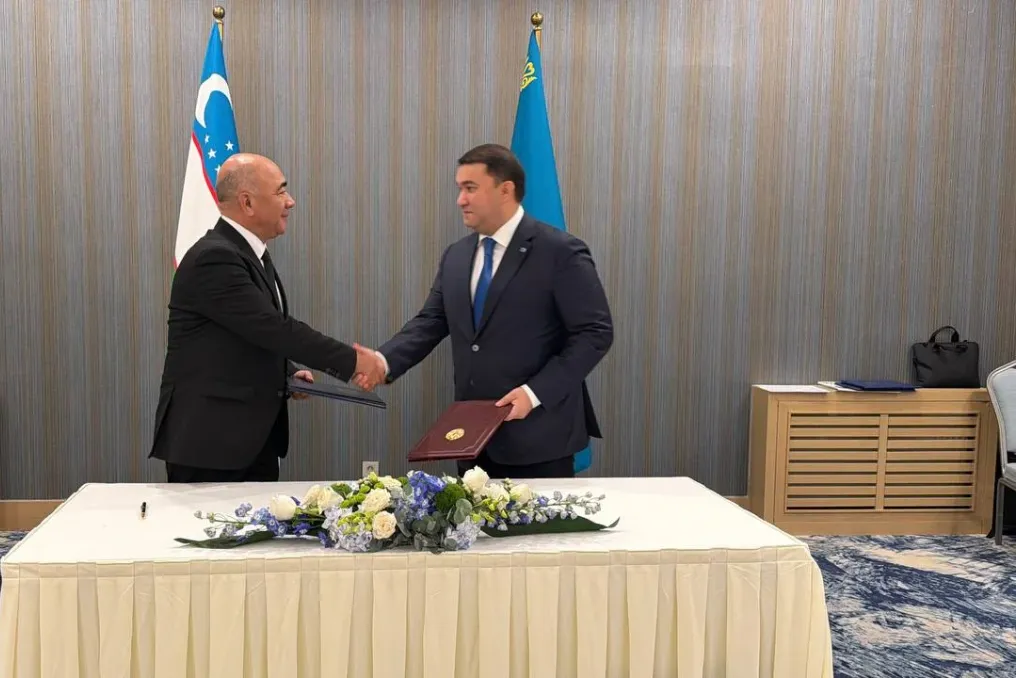
The regions of Tashkent and Turkistan signed an interregional agreement during the first meeting of the Council of Heads of Regions of the Republic of Uzbekistan and the Republic of Kazakhstan, which took place in Aktau.
The event was attended by the governor of the Tashkent region, Zoyir Mirzaev, who presented a report. Participants noted that this first meeting of the Council was a practical result of the good-neighborliness and mutually beneficial cooperation policy pursued by the President of Uzbekistan, Shavkat Mirziyoyev, and the President of Kazakhstan, Kassym-Jomart Tokayev.
Participants emphasized that the strategic partnership and allied relations between the two states have reached a qualitatively new level in recent years. Interregional interaction is actively expanding, covering trade, investment, industry, agriculture, transport and logistics, tourism, as well as cultural and humanitarian exchange.
Within the framework of the forum, governors Zoyir Mirzaev and Nuralkhan Kusherov of the Turkistan region signed a document aimed at deepening interregional interaction. It was noted that the delegation from the Turkistan region had previously visited the Tashkent region, after which the parties reached agreements on a wide range of areas of cooperation.
The signed document provides for strengthening ties between the regions, implementing joint projects, developing contacts between business communities, and promoting the improvement of the population's well-being.