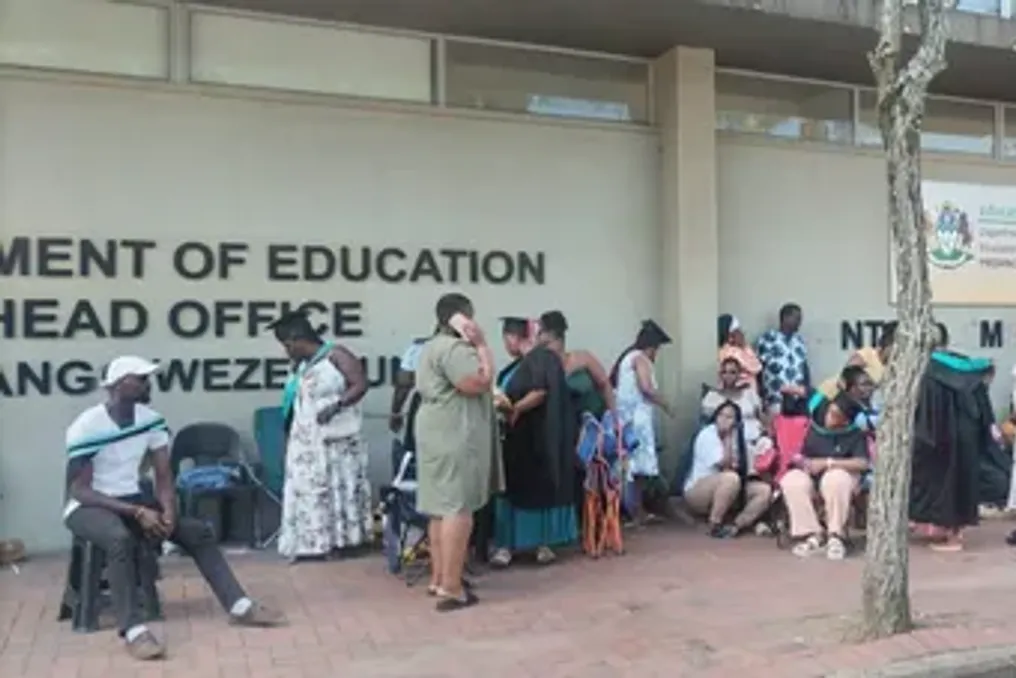
Some job-seeking teachers held a sit-down strike at the KwaZulu-Natal Department of Education's head office in Pietermaritzburg. One teacher from KwaMashu reported that unemployed educators were offered R30,000 to secure teaching positions.
The Legacy of Apartheid and Corruption
A negative feature of post-colonial societies like South Africa is that many atrocities and corrupt practices from the apartheid era easily transitioned into the new democracy. However, it was precisely the discriminatory and biased methods of apartheid that became the target of South Africans' struggle, many of whom sacrificed their lives for this noble cause. Recent revelations of senior officials selling teaching posts have caused concern, although the unpleasant truth is that this is not a new phenomenon.
The practice of nepotism, connections, and outright criminality in appointing new teachers and promoting staff is a long-standing problem that continues to threaten and weaken the already fragile education system. This issue requires far more sustained public attention than the periodic cycle of scandals it currently receives.
The Volmink Report and Systemic Issues
Ten years ago, in 2016, a Ministerial investigation into the sale and promotion of teaching posts led by Professor John Volmink unequivocally stated the widespread existence of 'improper influence'—a euphemism for corruption—and the need for decisive political will to rid the system of this disease. The growing number of lawsuits following annual promotion processes is a clear sign of the system's toxicity and, importantly, shows that the Volmink report has largely been ignored!
The Ministerial committee noted several weaknesses in the system that facilitate deliberate misconduct. The first is that crucial tasks related to appointments and promotions are delegated to School Governing Bodies (SGBs) and districts. In many parts of the country, SGB dysfunction is the norm, making them vulnerable to corrupt practices. In poor urban, suburban, and deeply rural areas, parents with low levels of formal education and literacy may struggle to understand official procedures and are easily influenced and exploited by opportunists.
Discrimination in Elite Schools
It is also important to understand that SGB corrupt practices are not limited to schools in poor communities. Some schools from the upper quintiles (4 and 5), formerly elite state schools like Model C, have manipulated selection and appointment processes for years to serve their own interests. Although these allegations are extremely difficult to prove, it is widely known that some former white, Indian, and Coloured schools deliberately and shamelessly sought to maintain a white or Indian staff profile.
Our country has a fractured and distorted history, especially regarding socialization over centuries concerning which population groups are intellectually superior to others and who can be reliable, cognitively healthy, and administratively astute for quality teaching and school management. It would be unfair to assume that these prejudiced and discriminatory ideas disappeared after 1994.
Union Influence and Politics
During the apartheid era, separate departments managed education for whites, Coloureds, Indians, and Africans, with African education further divided between the Department of Education and Training and various administrations of 'homelands.' These Bantustan bureaucracies used patronage instead of meritocracy. Teacher appointments were distributed based on political loyalty to the homeland leadership with minimal external auditing processes.
It is critical to recognize that this discretionary power of appointment was concentrated in a small group of poorly controlled officials. In other words, we inherited a culture of impunity. Thus, while the decentralization of promotion mechanisms after apartheid was intended to make the process more transparent and democratic, the process itself is now undermined and often operates under the guise of fixing the situation, actively hindering it.
Perhaps the most serious finding of the Ministry is the role of powerful unions in promotion committees. The South African Democratic Teachers Union (Sadtu) has been recognized as influencing SGB decisions and district approvals in at least three provinces. In some cases, unqualified or barely qualified candidates received positions, including leadership roles, to the detriment of better-qualified candidates who simply could not or would not pay.
The Ministerial committee clearly indicated that the controversial ANC staffing 'politics,' placing union members in executive positions on school promotion committees, and appointing union workers to senior administrative roles in districts and provinces further diminish the integrity of school education appointment and promotion processes.
This problem is exacerbated by the fact that the South African Council for Educators (Sace) is unhealthily close to the ruling party and dominated by one union (Sadtu). The Zondo Commission recently warned that staffing is allowing all aspects of the public sector, including the teaching profession, to be captured by the state!
Consequences of Corruption in Education
Readers are reminded that in some supposedly well-functioning schools and provinces, corrupt practices occur in subtler, less detectable, and more favorable conditions. Once this becomes the norm, ethical resistance becomes increasingly complex.
Thus, when some wealthy former Model C schools favor teachers paid by SGBs when state positions become available, or when internal candidates are preferred for promotion over external ones, the ethical code of fairness is violated, and the best candidate does not get the job. Essentially, a high level of functioning and prosperity in a school does not necessarily mean the absence of corruption.
The sale of teaching positions and promotion through nepotism and connections replaces meritocracy with purchasing power or political influence, whereas appointments should be based on qualification and competence. Corrupt appointments discriminate against honest candidates. The consequence of this is the erosion of public trust. A more serious outcome is that schools and the children who study there are deprived of the expertise they deserve.
The Ministerial working group presented a set of 16 justified recommendations. What is needed is the political will to combat corruption and restore the integrity of the system. The true cost is measured not in money exchanged behind closed doors, but in the opportunities quietly stolen from generations of South African children.