The youth protest movement in India gained momentum after a six-word post went viral. This post was published by Abhijit Dipke, a 30-year-old author, and he is now the central figure in the largest street protests against the government of Indian Prime Minister Narendra Modi since he took office in 2014.
Origin and Catalyst of the Protest
The post, placed by political communication strategist Dipke on May 16, was initially a witty response to comments by Supreme Court judge Surya Kant, who compared unemployed Indian youth to 'cockroaches' during a speech. Although Kant later stated that his remarks were misinterpreted, Dipke's post had already gone viral.
As a result of this event, a satirical platform called 'Cockroach Janta Party' (CJP) emerged, which became a gathering point for millions of young Indians. These young people expressed dissatisfaction with high unemployment rates and leaks of examination materials, while also demanding greater accountability from the government.
Demands and Outcomes of the Protests
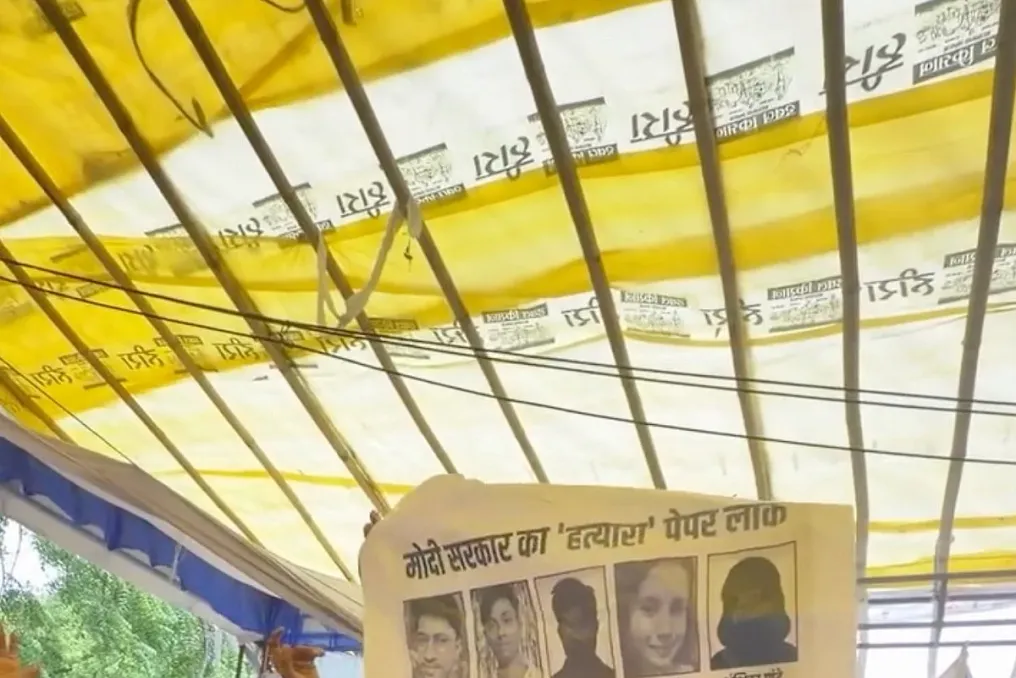
Over the past week, tens of thousands of people gathered in New Delhi, demanding the resignation of India's Education Minister Dharmendra Pradhan. The demands were related to the leak of medical entrance exam materials in May, which affected about two million students and was linked to several student suicides. Pradhan resigned on Saturday, which was a significant victory for the young protesters and one of Modi's biggest setbacks.
Protests also took place in other parts of the country, including the financial hub of Mumbai. Dipke is at the center of these events.
Path to the Protests
Before early June, Dipke was living in Boston, a city in the USA. He then returned to India to start a protest near the Jantar Mantar observatory in the heart of Delhi. Since then, especially after the police detained demonstrators on Monday, he has become a constant figure on the elevated platform at the protest site.
Dipke, dressed in a T-shirt and jeans, addresses crowds of hundreds, urging them to remain peaceful while simultaneously pressuring the government. Although CJP has several organizers, Dipke has become the most recognizable figure of this group, drawing both admiration and criticism.
Personal Roots and Political Activities
Dipke was born in Aurangabad, in the western state of Maharashtra, into a Dalit community family, which is one of the most historically marginalized in India. He told Reuters in May that his father came from a very humble background, and his grandfather was just a farmer.
His Dalit identity long shaped his political stance. When he arrived in Delhi on June 6, he held up a copy of B.R. Ambedkar's book, 'My Autobiography,' a defender of Dalit rights and a key architect of India's democratic constitution, while supporters and security personnel gathered around him.
In 2020, Dipke joined the social media team of the Aam Aadmi Party (AAP), where, according to him, he developed a style of political messaging based on memes, humor, and satire. He is currently not affiliated with this party, although AAP and several other opposition parties in India have supported this movement. In 2023, Dipke moved to the United States to pursue a master's degree in public relations in Boston but continued to closely follow Indian politics.
From Online Activity to Movement
Dipke admits that he is still trying to process his fame. One of the first to amplify the movement's coverage was Delhi YouTuber Meghnaad S. Shortly after Dipke's post, he and a friend used artificial intelligence tools to create a satirical website announcing the formation of the Cockroach Janta Party. Meghnaad noted that the page looked 'wickedly funny.'
The Instagram account gained 22 million followers in a matter of days, and recently this figure increased to 25 million. Meghnaad emphasized that the growth was 'organic.' However, as the online movement grew, so did the stakes. Speaking to Reuters from Boston in May, Dipke stated: 'This movement is aimed at changing the political discourse of India. The youth of India have largely disappeared from the main political discourse.'
Despite threats against himself and his family, Dipke decided to return to India. He stated that he would stay until the students received justice. Since June 6, Dipke has remained at the protest site as demonstrations intensify, often addressing protesters with a call to maintain peace, and also appearing before the media or taking short breaks.
} , {