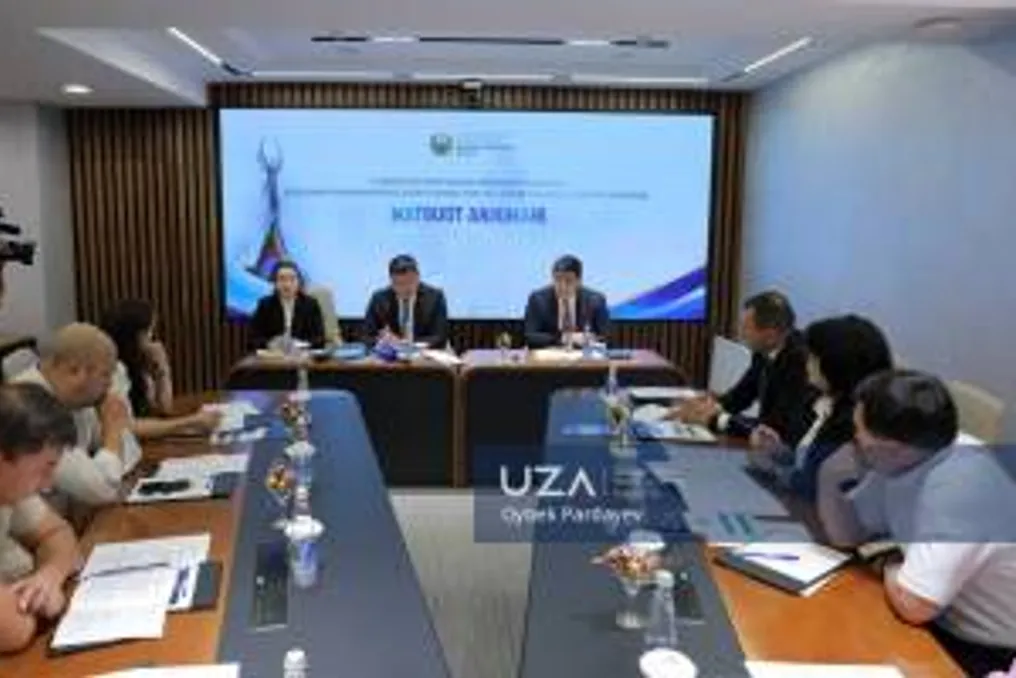
During a reporting meeting dedicated to the semi-annual functioning of the Agency for Improving Management Efficiency under the President of the Republic of Uzbekistan, sequential steps in human capital development were noted as a priority area of state policy.
Analysis and Implementation of Management Systems
It was reported that existing capabilities were revised in more than 40 districts and cities to implement a results-based management system. A deep analysis of economic potential, management processes, and the quality of public services was conducted in 16 districts and cities of the Samarkand region, as well as in the regions of Namangan, Syrdarya, Surkhandarya, Bukhara, Kashkadarya, Fergana, Jizzakh, and others.
For the first time, economic drivers for each district were determined using Big Data and SWOT analysis with artificial intelligence, which allowed for the formation of investment project maps.
New Service Centers and Digitalization
As part of the mahalla-level work system, new service centers were opened in the Kahramon Khovos mahalla of the Syrdarya region and the Yangi Namangan Norin mahalla of the Namangan region. These centers provided residents with the opportunity to use 980 types of public services directly in the mahalla, without needing to contact various departments.
In terms of personnel provision, the personnel database was updated, and a reserve of high-potential personnel strategically important to the country was formed. This reserve included 415 graduates of foreign higher education institutions and Presidential schools, 250 promising female leaders, laureates of the 'Zulfiya' award, and selected promising specialists from various fields. This reserve is intended to ensure that the public administration system has competitive leaders with modern knowledge and skills.
Personnel Assessment and Professional Development
At the end of the second quarter, the performance indicators of 435 managers and deputy managers from 113 republican organizations, as well as 1329 deputy hokims from 14 regions and 208 districts (cities), were assessed.
Additionally, 74 people out of 421 university graduates received promotions based on recommendations. The results of using artificial intelligence for strategic forecasting were presented. According to analyses, in the coming years, the country will have a need for more than 50 new modern specialties, including artificial intelligence, cybersecurity, data analysis, digital transformation, 'green' energy, urbanism, geographic information systems, agrotechnology, and digital water resource management.
In this regard, practical work has begun on training personnel, forming a personnel reserve, and adapting educational programs to market needs. During the reporting period, 5316 civil servants participated in various training programs. Seminars on experience exchange were organized with the participation of experts from the University of 'Yangi Uzbekistan' and the Singapore Business School.
International Cooperation and Development
1860 applicants participated in the admission process to the Academy of Public Policy and Administration, of which 1334 passed the next selection stage. In the framework of international cooperation, 7 seminars were held with the participation of over 600 civil servants. Work is also underway to send 50 participants of the 'Young Talents' program for international internships within the FAO system.
A number of joint projects have been implemented with international organizations such as KOICA and JICA. Specifically, measures were taken to improve the qualifications of up to 30 civil servants in Japan and up to 20 managerial personnel in the United Kingdom.
Digital Platforms and Internships
A new interaction channel, 'Hokim - Vazir', was launched on the 'Digital Office' platform. The information systems 'hrm.gov.uz' and 'samaradorlik.gov.uz' have been entered into the state register as objects of critical information infrastructure. 49 new services have been integrated into the Agency's information systems through the 'E-Government' system. Currently, 30 thousand civil servants actively use the 'MyDX' mobile application. During the reporting period, a new system of targeted foreign internships was also introduced, according to which every dispatched employee must develop a practical project based on the acquired knowledge and experience.
Interviews were conducted with 300 candidates for the next internship programs, from whom 107 were selected. They will study in countries such as Singapore, Germany, the United Kingdom, Japan, Korea, Finland, Malaysia, Turkey, China, Azerbaijan, and others. Under the KOICA program, 15 candidates were selected from 169, and under the JICA program, 18 for master's and 1 for doctoral programs. Additionally, candidates for master's programs—232 and for doctoral programs—38 were chosen through the 'Umid el-Yurt' fund.