Marriott International has signed an agreement with Misr Italia Properties and People & Places Real Estate Development. According to Masrawy, the deal involves the construction of nine new hotels and resorts across Egypt.
Marriott International has signed an agreement with Misr Italia Properties and People & Places Real Estate Development. According to Masrawy, the deal involves the construction of nine new hotels and resorts across Egypt.
This project will add over 1800 rooms and suites in the country's coastal and urban areas. The agreement covers five mixed-use complexes that will include 11 hotels, residential units under Marriott brands, and one standalone hotel.
The deal was signed by Shady Hassan, Marriott's Vice President for North Africa Development. He participated in the signing alongside the co-CEOs of Misr Italia Properties and the co-founders of People & Places, Mohamed Khaled El Assal and Karim Khaled El Assal.
Tourism Minister Sherif Fathy noted that the increase in hotel capacity aligns with state efforts to strengthen tourism infrastructure and meet the projected growth in foreign visitors. According to Mohamed Khaled El Assal, Misr Italia is investing more than 56.7 billion Egyptian pounds in the development of the hospitality sector.
These projects are expected to create around 6000 direct and indirect jobs and can accommodate up to 373,000 tourists annually. Karim Khaled El Assal added that the companies' joint efforts have already resulted in a portfolio of over 1800 hotel rooms and branded residences in key regions of the country.
PSG experts provide answers to questions regarding personal finance, budgeting, and insurance. The article presents advice from several financial consultants on various aspects of financial planning.
Bianca van Niekerk, a wealth consultant at PSG Wealth, advises that after receiving a promotion and salary increase, there is often a tendency to raise the standard of living. To use the increase to build long-term capital rather than just improve one's lifestyle, it is necessary to start by building an emergency fund. This fund should contain enough liquid funds to cover unforeseen situations, such as a car breakdown or the need to replace household appliances, thereby avoiding the use of credit cards.
After securing an emergency fund, one should start saving monthly into a savings product, such as a Tax-Free Investment Plan (TFIP). One can start with an amount of R500 per month, with an annual contribution limit of up to R46,000. It is important to set up this payment as an automatic deduction within monthly expenses. For long-term capital growth, tax-free investments must be diversified across different asset classes. Furthermore, interest, dividends, and capital gains remain tax-free if the annual limit is observed. Although investing is not fixed, allowing access to funds when needed, caution is recommended when withdrawing funds, as they cannot be accounted for in the contribution limit.
As income grows, the amount of this automatic deduction should be increased automatically. After reaching the maximum annual contribution, other investment instruments such as unit trusts or endowments can be considered. Nevertheless, maintaining the habit of saving should be a priority, although small rewards along the way are permissible.
Annalise De Meillon-Muller, Senior Legal Counsel at PSG Wealth, notes that many investors with years of experience regret past choices. For a 24-year-old starting their financial journey, the key step is to begin saving and investing as early as possible to avoid future regrets. Impulsive decisions based on autopilot must be avoided, and long-term risk should not be increased for immediate gratification.
Controlling finances step by step helps build confidence in making financial decisions. It is important to understand that success depends not on the initial amount, but on an early start and consistency. Although starting may create temporary pressure on pocket and bank accounts, it will yield positive results in the future. It is also recommended to consult a qualified financial advisor for assistance in managing one's financial future.
Gerhard Mare, a wealth consultant at PSG Wealth, suggests practical ways to analyze a budget and find opportunities for savings if there are issues with overspending. It is assumed that basic budgeting, which includes reducing unnecessary expenses and setting strict limits on leisure, is already practiced. One convenient method for budget management is using a credit card.
Although credit cards are often associated with excessive spending if misused, when used correctly, they can become a useful budgeting tool, especially when expenses change from month to month. Most cards offer an interest-free grace period, usually around 45–55 days. This allows purchases to be made now and the full amount repaid later without accruing interest, provided the full balance is paid by the due date. This approach helps smooth out fluctuations in the cost of living, such as fuel or food expenses, which may fall on different periods of the month.
It is important to view the credit card as a timing tool, not as a loan. Every transaction must be tracked against the actual budget, and one should not spend more than can be repaid from the next salary. Keeping a separate record helps prevent the 'interest-free' period from turning into 'I'll figure it out later.' Using a credit card that is paid off in full every month can provide some financial flexibility amid rising costs.
Ryno de Kock, Head of Distribution at PSG Insure, emphasizes the importance of considering insurance risks when launching a small business. Although entrepreneurs often focus on growth, clients, and operations at the beginning, insurance cannot be postponed. Including adequate insurance coverage from the outset protects the efforts invested in the business and creates a stronger foundation for overcoming unexpected difficulties.
This is particularly relevant in South Africa, where approximately 385,000 new companies were registered last year, yet up to 80% of businesses fail within five years. Insufficient risk protection is a critical area for business owners to understand. Less than one in five small and medium-sized enterprises in South Africa has formal business insurance, exposing them to risks of operational disruptions, cash flow issues, and long-term sustainability.
Key areas to consider include loss or damage to assets, business interruption, liability, cyber and data risks, as well as internal or personnel risks. Commercial property insurance protects against fire, theft, and natural disasters, while business interruption coverage supports income and additional expenses during operational downtime. Liability insurance is also critical, as third-party claims related to injury, property damage, or alleged negligence can have serious financial and reputational consequences. Depending on the type of business, this may include public liability and professional indemnity insurance.
Cyber risks cannot be ignored, as more and more companies use digital platforms. Cyber insurance helps protect against data breaches, ransomware, and fraud. Additionally, regular software updates, multi-factor authentication, and employee training reduce risks. Businesses must also consider personnel risks, including internal fraud through loyalty schemes and professional liability for consultants. A practical first step is consulting a qualified insurance advisor to identify gaps and structure coverage around specific business risks. Insurance should work in conjunction with risk management measures, such as security systems and emergency action plans.
The analysis of the best-selling vehicles during the first half of 2026 presented several unexpected results in the automotive market. Chinese manufacturers demonstrated significant growth, expanding their presence with new models and maintaining competitive prices.
Four brands of Eastern origin achieved leadership in important segments, including subcompact hatch, large sedan, mid-to-large SUV, and large SUV. Furthermore, these same brands dominated two subsegments defined by propulsion type: hybrid and electric vehicles.
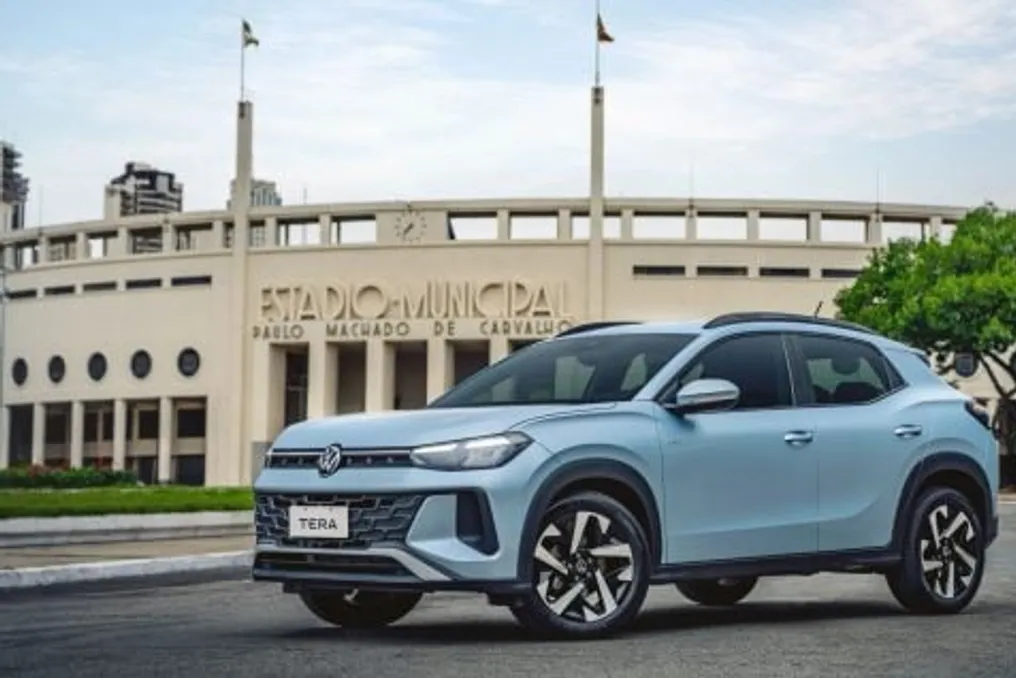
Other notable movements occurred in specific categories. In compact sedans, the HB20 surpassed the Onix by a very narrow margin. In the compact SUV segment, Volkswagen positioned the T-Cross and Tera in the top two places. In small pickup trucks, the Strada reinforced its leadership, raising its market share to 69%, up from 59% previously. In the sports car sector, the 911 consolidated its dominance, reaching 65% of the segment, an increase from the 56% recorded before.
The ranking presented in the column uses technical and proprietary criteria, classifying vehicles into 14 distinct categories, plus two specific categories for hybrid and electric vehicles. The main reference used was wheelbase, along with other relevant parameters. The study excluded high-end sedans with low sales volume and minivans due to a lack of options. The data was compiled based on the National Motor Vehicle Registry (Renavam) and only cites models that have the greatest representation within their respective segments. The compilation was carried out by Tião Oliveira, from the ADK consultancy.
In the best-selling subcompact hatch segment, the Dolphin Mini led with 35%, followed by the Mobi with 33% and the Kwid with 31%, marking the rise of a new leader.
For the compact hatch, the Polo remained strong with 27%, while the Argo came in second with 23%, followed by the Onix with 22%. The HB20 registered 19%, and the C3, City, and 208 models appeared with smaller shares (3.3%, 3%, and 1.4%, respectively).
In the compact sedan category, the HB20S led with 25.5%, with the Onix Plus closely behind at 24.8%, and the Virtus in third with 20%. The Cronos accounted for 15%, while the City and Versa held 9% and 5% of the share, respectively.
In mid-compact sedans, the Corolla showed resilience, capturing 56% of the market, surpassing the King (35%) and the Jetta (4%).
Mid-to-large sedans featured the BMW 3/4 Series as invincible, with 65% market share, followed by the Mercedes C-Class (19%) and Audi A5/RS5 (14%).
In the large sedan segment, the Seal obtained the lead with 73%, with the model's price cited as an explanatory factor, followed by the Panamera (14%) and Class E (6%).
In the sports category, the Mustang remained relevant with 44%, while the BMW M3/M4 reached 28% and the BMW M2 was at 24%.
In the sport segment, the 911 expanded its dominance, reaching 65%, ahead of the Corvette (11%) and Boxster/Cayman (10%).
Among the best-selling compact SUVs, the T-Cross led with 11%, followed by the Tera (10%), Creta (8%), Tracker (6.8%), Nivus (6.7%), Pulse (6%), Fastback (5.8%), HR-V (5.3%), Renegade (5%), WR-V (4%), Kicks (3.9%), Tiggo 5X (3.7%), and Yaris Cross (3.6%). The two VW models commanded this segment.
In the mid-compact SUV group, the Compass maintained the first position with 24%, followed by the Corolla Cross (16.3%) and Song Pro (15.6%).
Mid-to-large SUVs saw the H6 increase its advantage, holding 21%, while the Song Plus registered 14% and Commander 9%.
In the large SUV segment, there was a Chinese triumph, with the Wey 7 in first place with 19%, followed by the Atto 8 (13%) and Cayenne (11%).
In small pickup trucks, the Strada advanced even further, reaching 69% market share, surpassing the Saveiro (19%) and Montana (7%).
Mid-sized pickup trucks (with a load capacity of 1,000 kg) showed the Toro defending its position with 23%, followed by the Hilux (21%), Ranger (15%), and S10 (13%).
In hybrid vehicles, the competition is tight, with the Jaecoo at 7.4%, H6 at 3.7%, and Renegade at 3.6%. Finally, in the ranking of best-selling electric cars, the Dolphin Mini prevailed with 38%, followed by the Dolphin (19%) and EX2 (16%), indicating the strength of BYD.
Russia's Deputy Prime Minister Alexander Novak told the Russian press that a decision was made to extend the ban on gasoline exports for both producers and non-producers. This ban will be in effect until the end of the current year.
Regarding the ban on diesel fuel exports, according to the deputy prime minister, it will be lifted as the market recovers.
The deputy prime minister explained that this measure is aimed at preventing problems that oil refineries may face due to excess supply and reduced processing capacities. To mitigate the current situation, the Government has introduced a number of measures, including a ban on the export of gasoline and diesel fuel.
At the same time, Russian officials noted that the completion of restoration work at some refineries has allowed for increased supplies to the market and stabilization of the situation.
On July 10, Russia's deputy prime minister acknowledged the fuel shortage and queues at gas stations. At that time, he linked this to Ukraine's attacks on energy infrastructure, previously attributing the problem to increased demand caused by consumer panic.
Ukraine regularly strikes Russian oil refining industry facilities and the country's logistics structures with drones. According to international press reports, the fuel crisis caused by Ukraine's attacks on Russian refineries affects about one-third of the approximately 145 million residents of the Russian territory.